Dracocephalum royleanum
Dracocephalum royleanum · Accepted scientific name
Scientific literature: Very Sparse (10 studies) · ★☆☆☆☆
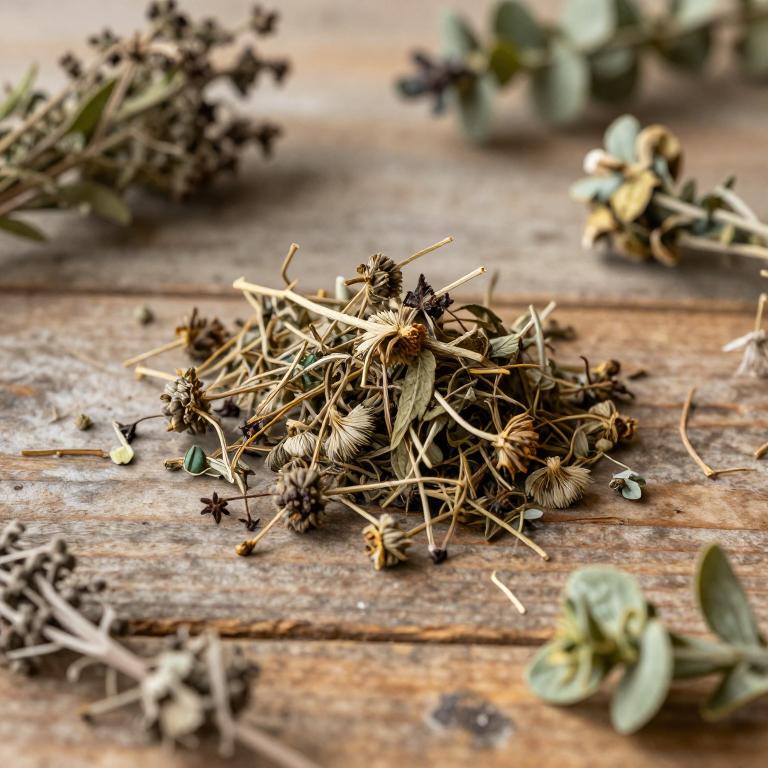
, scientifically known as Dracocephalum royleanum, is a perennial medicinal herb belonging to the Lamiaceae family. Commonly found in the Himalayan regions, this aromatic plant is celebrated for its potent therapeutic properties. It is widely used in traditional medicine to treat respiratory ailments, fever, and various digestive disorders.
- Family
- Lamiaceae
- Native range
- Asia-Temperate
- Parts used
- Seed
- Common names
- Not available
- Scientific synonyms
- Nepeta Erodiifolia · Lallemantia Royleana · 1 more
Names and Synonyms
Scientific Names
Accepted name
Dracocephalum royleanumSynonyms
- Nepeta erodiifolia
- Lallemantia royleana
- Dracocephalum inderiense
Sources: Wikidata
Taxonomical Classification
This plant belongs to the kingdom Plantae and is classified within the phylum Streptophyta and the class Equisetopsida. It falls under the subclass Magnoliidae and the order Lamiales, specifically within the family Lamiaceae. Finally, its taxonomic identity is defined by its placement in the genus Dracocephalum.
| Rank | Classification |
|---|---|
| Kingdom | Plantae |
| Phylum | Streptophyta |
| Class | Equisetopsida |
| Subclass | Magnoliidae |
| Order | Lamiales |
| Family | Lamiaceae |
| Genus | Dracocephalum |
Sources: The World Checklist of Vascular Plants (WCVP)
Distribution
This plant exhibits a broad geographical distribution across several distinct regions of Asia. In the northern reaches of its range, it can be found growing in West Siberia. Moving southward, the species is widely distributed throughout Central Asia. Specifically, it inhabits the territories of Kazakhstan and Kirgizstan. Its presence further extends to the regions of Turkmenistan and Tadzhikistan.
| Region | Area |
|---|---|
| Siberia | West Siberia |
| Central Asia | Kazakhstan |
| Central Asia | Kirgizstan |
| Central Asia | Turkmenistan |
| Central Asia | Tadzhikistan |
| Central Asia | Uzbekistan |
| Caucasus | Transcaucasus |
| Western Asia | Afghanistan |
| Western Asia | Iran |
| Western Asia | Lebanon-Syria |
Sources: The World Checklist of Vascular Plants (WCVP)
Plant Parts
Dracocephalum royleanum has 1 reported plant parts identified across 1 scientific publications and several other databases that are studied for medicinal purposes. The most consistently reported plant part include seed.
| Plant part | Supporting sources | Consensus |
|---|---|---|
| Seed | 1 supporting sources | ★☆☆☆☆ |
Seed
- Iranian journal of pharmaceutical research : IJPR
Chemicals
Dracocephalum royleanum has 8 reported phytochemicals identified across 1 scientific publications and several other databases. The most consistently reported chemicals include Carotenoids, Flavonoids, Lidocaine hydrochloride, Peroxidase, Triglyceride.
| Chemical | Supporting sources | Consensus |
|---|---|---|
| Carotenoids | 1 supporting sources | ★☆☆☆☆ |
| Flavonoids | 1 supporting sources | ★☆☆☆☆ |
| Lidocaine hydrochloride | 1 supporting sources | ★☆☆☆☆ |
| Peroxidase | 1 supporting sources | ★☆☆☆☆ |
| Triglyceride | 1 supporting sources | ★☆☆☆☆ |
| cholesterol | 1 supporting sources | ★☆☆☆☆ |
| lidocaine | 1 supporting sources | ★☆☆☆☆ |
| proline | 1 supporting sources | ★☆☆☆☆ |
Carotenoids
- Plant physiology and biochemistry : PPB
Flavonoids
- Microscopy research and technique
Lidocaine hydrochloride
- Iranian journal of pharmaceutical research : IJPR
Peroxidase
- Plant physiology and biochemistry : PPB
Triglyceride
- Avicenna journal of phytomedicine
cholesterol
- Avicenna journal of phytomedicine
lidocaine
- Iranian journal of pharmaceutical research : IJPR
proline
- Plant physiology and biochemistry : PPB
Preparations
Dracocephalum royleanum has 2 reported preparations identified across 1 scientific publications and several other databases. The most consistently reported preparations include essential oils, seed mucilage.
| Preparation | Supporting sources | Consensus |
|---|---|---|
| Essential oils | 1 supporting sources | ★☆☆☆☆ |
| Seed mucilage | 1 supporting sources | ★☆☆☆☆ |
Essential oils
- Cellular and molecular biology (Noisy-le-Grand, France)
Seed mucilage
- Iranian journal of pharmaceutical research : IJPR