dragon tree
Dracaena draco · Accepted scientific name
Scientific literature: Very Sparse (8 studies) · ★☆☆☆☆
Dragon tree, scientifically known as Dracaena draco, is a legendary evergreen species native to the Macaronesian islands. Renowned for its thick, succulent trunk and striking architectural canopy, it produces a vivid red resin called "dragon's blood." This storied plant holds significant historical value in traditional medicine and ancient folklore.
Names and Synonyms
Common Names
- Canary Island Dragon Tree
- Dragon Tree
- dragon-tree
- Canary Islands Dragon Tree
Scientific Names
Accepted name
Dracaena dracoSynonyms
- Palma draco
- Yucca draco
- Stoerkia draco
- Draco clusii
- Dracaena draco var. strictifolia
- Stoerkia cranziana
- Oedera dragonalis
- Oedera cranziana
- Asparagus draco
- Dracaena yucciformis
- Dracaena boerhaavei
- Drakaina draco
- Dracaena draco subsp. draco
- Dracaena draco var. laxifolia
- Dracaena draco var. pendulifolia
- Dracaena draco var. angustifolia
Regional and Traditional Names
Spanish:
- Dracaena drago
- Árbol de la sangre de drago
- Yucca draco
- Stoerkia draco
- Palma draco
- Draco dragonalis
- Arbol del drago
- Asparagus draco
- Árbol Gerión
- Drago de Canarias
- Árbol Gerion
- Drago canario
- Dragonal
- Arbol de la sangre de drago
- Árbol del drago
- Dragonero
- Drago de África
- Arbol Gerion
- Drago de Africa
- Drago
- Sangre De Drago
- Drago De Canarias
- Sangre De Drago
- Árbol dragón de las Canarias
- Drago
German:
- Kanarischer Drachenbaum
- Drachenbäume
- Drachenbaum
- Drachenblutbaum
- Kanarischer Drachenbaum
French:
- Dragonnier des Canaries
- Dragonnier commun
- Dragonnier des Canaries
Sources: Wikidata, Catalogue of Life
Taxonomical Classification
This plant belongs to the kingdom Plantae and is classified under the phylum Streptophyta within the class Equisetopsida. It is further categorized under the subclass Magnoliidae and the order Asparagales. Finally, it resides in the family Asparagaceae and is identified by the genus Dracaena.
| Rank | Classification |
|---|---|
| Kingdom | Plantae |
| Phylum | Streptophyta |
| Class | Equisetopsida |
| Subclass | Magnoliidae |
| Order | Asparagales |
| Family | Asparagaceae |
| Genus | Dracaena |
Sources: The World Checklist of Vascular Plants (WCVP)
Distribution
This plant exhibits a distinct geographical distribution spanning several regions across the Atlantic and Mediterranean. In Southwestern Europe, its presence can be found within the Baleares and Sardegna archipelagos. Moving toward the African continent, it is also established in Tunisia. The species extends its range into Macaronesia, specifically inhabiting the Azores. Finally, it is widely distributed throughout the Canary Is. within the same Macaronesian region.
| Region | Area |
|---|---|
| Southwestern Europe | Baleares |
| Southwestern Europe | Sardegna |
| Northern Africa | Tunisia |
| Macaronesia | Azores |
| Macaronesia | Canary Is. |
| Macaronesia | Madeira |
| New Zealand | New Zealand North |
Sources: The World Checklist of Vascular Plants (WCVP)
Botanical Identification
Ecology
The ecology of Dracaena draco is defined by its adaptation to specific altitudinal gradients within its native Macaronesian habitats, typically thriving in subtropical environments. This species is found across an elevational range that spans from a minimum of 100 m AMSL to a maximum of 600 m AMSL. Within this vertical distribution, the plant occupies various ecological niches, often favoring rocky slopes, cliffs, and coastal ravines where it can access necessary moisture while maintaining stability in rugged terrain. Its presence is closely tied to the specific microclimates found within these low-to-mid elevation zones, where it interacts with specialized soil compositions and local weather patterns to sustain its unique growth form.
- Elevational range max:
- 600 m AMSL
- Elevational range min:
- 100 m AMSL
Life history
The life history of Dracaena draco is characterized by its status as a perennial plant, allowing it to persist in its environment over many years. As a phanerophyte, it maintains its photosynthetic organs on elevated stems, typically growing into a large, woody tree-like structure. Throughout its life cycle, the plant remains evergreen, retaining its foliage consistently across seasons. Its architectural development as a phanerophyte ensures that its vital parts are held well above the ground, a key feature of its long-lived biological strategy.
- Deciduousness :
- evergreen
- Life form :
- phanerophyte
- Lifecycle :
- perennial
Morphology
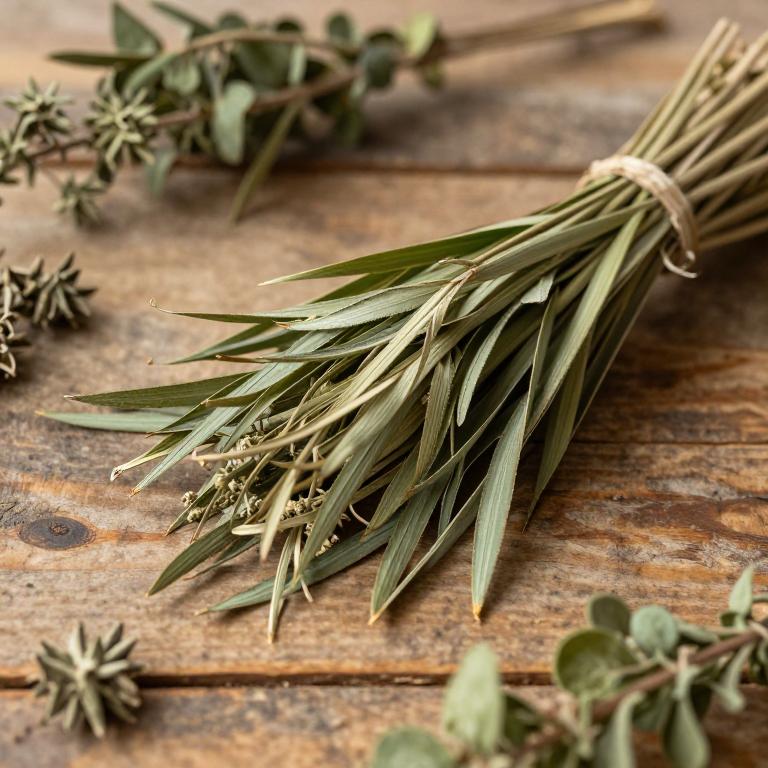
The morphology of Dracaena draco is characterized by its robust, woody growth form, primarily developing as a self-supporting tree. It exhibits a substantial stature, with a mean plant height of approximately 10 m, though it can reach a maximum height of up to 20 m. As an independent organism, it does not function as a parasite, nor is it an epiphyte, as it maintains a strictly terrestrial existence. The plant's structure is defined by its woody nature, providing the necessary stability for its significant vertical development.
- Climber :
- self-supporting
- Epiphyte :
- terrestrial
- Growth form :
- tree
- Parasite :
- independent
- Plant height max:
- 20 m
- Plant height mean:
- 10 m
- Woodiness :
- woody
Physiology
The physiology of Dracaena draco is characterized by specific morphological and metabolic adaptations, most notably its leaf structure and carbon fixation strategy. The plant features ensiform leaves that typically range in length from a minimum of 50 cm to a maximum of 60 cm. In terms of metabolic processes, it utilizes the C3 photosynthetic pathway to convert light energy into chemical energy. Additionally, the species does not function as a nitrogen fixer, meaning it relies on external nitrogen sources within the soil rather than biological nitrogen fixation to meet its nutritional requirements.
- Leaf form :
- ensiform
- Leaf length max:
- 60 cm
- Leaf length min:
- 50 cm
- Nitrogen fixer :
- no
- Photosynthetic pathway :
- C3
Reproduction
The reproduction of Dracaena draco is characterized by a sexual process occurring in dioecious individuals, meaning male and female flowers are found on separate plants. The plant produces green flowers arranged in a panicle inflorescence, which are subject to biotic pollination, specifically via an insect syndrome. The flowering period is highly variable but typically spans from December through September. Following successful pollination, the plant develops fleshy, indehiscent berries that are brown in color. These fruits are relatively uniform in size, measuring approximately 1 cm in both length and width. Each berry is highly prolific, containing more than 1,000 seeds. The seeds themselves have a mean mass of approximately 0.344915 g and a consistent volume of 390 mm³. Dispersal of the seeds is achieved through a zoochorous syndrome, specifically endozoochory, where animals ingest the fleshy fruit and disperse the seeds internally.
- Dehiscence :
- indehiscent
- Dispersal syndrome :
- zoochorous
- Dispersal syndrome :
- endozoochorous
- Flower colour :
- green
- Flowering time :
- Dec
- Flowering time :
- Sep
- Fruit colour :
- brown
- Fruit dryness :
- fleshy
- Fruit length max:
- 1 cm
- Fruit type :
- berry
- Fruit width max:
- 1 cm
- Inflorescence :
- panicle
- Pollination syndrome :
- insect
- Pollination syndrome :
- biotic
- Reproduction sexual :
- dioecious
- Seed mass max:
- 0.34483 g
- Seed mass mean:
- 0.344915 g
- Seed volume max:
- 390 mm³
- Seeds_per_fruit :
- >1000
- Self fertilization :
- absent
Sources: Global Inventory of Floras and Traits (GIFT)
Plant Parts
Dracaena draco has 1 reported plant parts identified across 1 scientific publications and several other databases that are studied for medicinal purposes. The most consistently reported plant part include stem.
| Plant part | Supporting sources | Consensus |
|---|---|---|
| Stem | 1 supporting sources | ★☆☆☆☆ |
Stem
- Journal of natural products
Chemicals
Dracaena draco has 3 reported phytochemicals identified across 1 scientific publications and several other databases. The most consistently reported chemicals include Loureirin B, Flavonoids, Loureirin A.
| Chemical | Supporting sources | Consensus |
|---|---|---|
| Loureirin B | 2 supporting sources | ★☆☆☆☆ |
| Flavonoids | 1 supporting sources | ★☆☆☆☆ |
| Loureirin A | 1 supporting sources | ★☆☆☆☆ |
Loureirin B
- Se pu = Chinese journal of chromatography
- Zhongguo Zhong yao za zhi = Zhongguo zhongyao zazhi = China journal of Chinese materia medica
Flavonoids
- Journal of ethnopharmacology
Loureirin A
- Se pu = Chinese journal of chromatography
Preparations
Dracaena draco has 4 reported preparations identified across 1 scientific publications and several other databases. The most consistently reported preparations include aerial parts, bark, resin "dragon's blood", stem bark.
| Preparation | Supporting sources | Consensus |
|---|---|---|
| Aerial parts | 1 supporting sources | ★☆☆☆☆ |
| Bark | 1 supporting sources | ★☆☆☆☆ |
| Resin "dragon's blood" | 1 supporting sources | ★☆☆☆☆ |
| Stem bark | 1 supporting sources | ★☆☆☆☆ |
Aerial parts
- Phytochemistry
Bark
- Journal of natural products
Resin "dragon's blood"
- Chemistry (Weinheim an der Bergstrasse, Germany)
Stem bark
- Journal of natural products