Abyssinian-gooseberry
Dovyalis abyssinica · Accepted scientific name
Scientific literature: Very Sparse (11 studies) · ★☆☆☆☆
Abyssinian-gooseberry, scientifically known as Dovyalis abyssinica, is a versatile medicinal shrub native to East Africa. Renowned for its potent bioactive compounds, this plant is traditionally utilized to treat diverse ailments, including digestive issues and skin inflammations. Its unique chemical profile offers significant promise for modern pharmacological research and development.
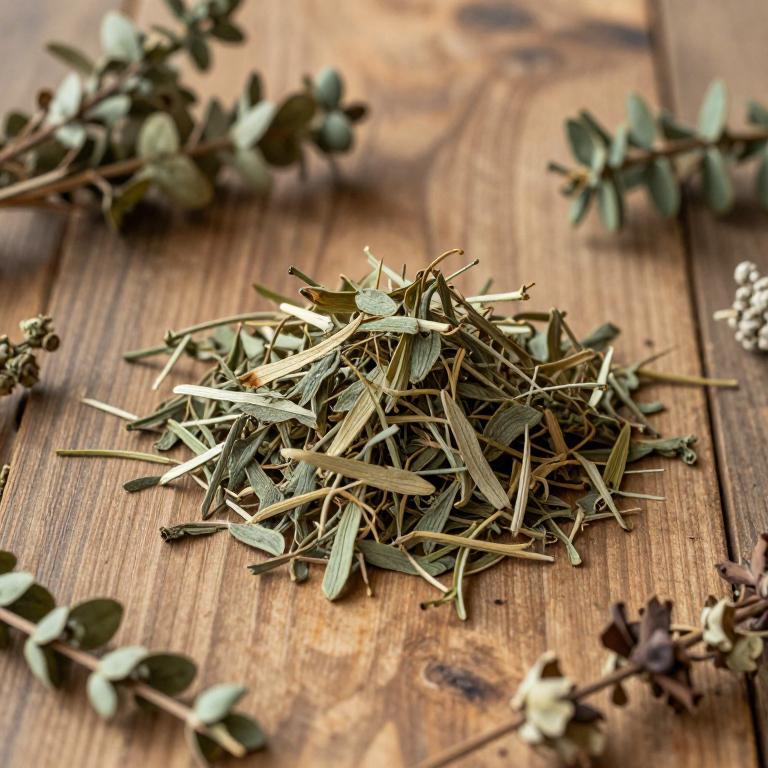
Names and Synonyms
Common Names
- Abyssinian-gooseberry
- African-gooseberry
- koshum
Scientific Names
Accepted name
Dovyalis abyssinicaSynonyms
- Hydnocarpus obtusus
- Flacourtia obtusata
- Dovyalis engleri
- Flacourtia obtusa
- Aberia abyssinica
- Rumea abyssinica
Sources: Wikidata, Catalogue of Life
Taxonomical Classification
This plant, Dovyalis abyssinica, belongs to the kingdom Plantae and the phylum Streptophyta. Within the class Equisetopsida and subclass Magnoliidae, it is classified under the order Malpighiales and the family Salicaceae. It is further identified by the genus Dovyalis.
| Rank | Classification |
|---|---|
| Kingdom | Plantae |
| Phylum | Streptophyta |
| Class | Equisetopsida |
| Subclass | Magnoliidae |
| Order | Malpighiales |
| Family | Salicaceae |
| Genus | Dovyalis |
Sources: The World Checklist of Vascular Plants (WCVP)
Distribution
This plant exhibits a specific distribution pattern primarily concentrated within the Northeast Tropical Africa region. Its range extends across several key territories, including Ethiopia and Somalia. Furthermore, it can be found in the areas of Sudan and South Sudan. The species also inhabits the island of Socotra within the Northeast Tropical zone. Finally, its presence reaches into East Tropical Africa, specifically within Kenya.
| Region | Area |
|---|---|
| Northeast Tropical Africa | Ethiopia |
| Northeast Tropical Africa | Socotra |
| Northeast Tropical Africa | Somalia |
| Northeast Tropical Africa | Sudan-South Sudan |
| East Tropical Africa | Kenya |
| East Tropical Africa | Tanzania |
| East Tropical Africa | Uganda |
| South Tropical Africa | Malawi |
Sources: The World Checklist of Vascular Plants (WCVP)
Botanical Identification
Life history
The life history of Dovyalis abyssinica is characterized by its status as a perennial organism, allowing it to persist through multiple growing seasons rather than completing its cycle in a single year. Throughout its existence, the plant maintains a consistent vegetative presence due to its evergreen nature, ensuring that its foliage remains functional and active without the seasonal shedding typical of deciduous species. This combination of a long-term life cycle and constant greenness enables the plant to maintain a stable ecological presence within its habitat.
- Deciduousness :
- evergreen
- Lifecycle :
- perennial
Morphology
The morphology of Dovyalis abyssinica is characterized by a robust, woody structure that allows it to reach a significant plant height, with a mean height of approximately 6 m. This species exhibits a complex growth form, manifesting as both a shrub and a tree, and functions as a self-supporting organism rather than an obligatory or facultative climber. As a terrestrial plant, it is neither aquatic nor an epiphyte, maintaining an independent existence without parasitic tendencies.
- Aquatic :
- terrestrial
- Climber :
- self-supporting
- Epiphyte :
- terrestrial
- Growth form :
- shrub
- Growth form :
- tree
- Parasite :
- independent
- Plant height mean:
- 6 m
- Woodiness :
- woody
Physiology
The physiology of Dovyalis abyssinica is characterized by a standard C3 photosynthetic pathway, meaning it utilizes the Calvin cycle to fix carbon dioxide through the enzyme RuBisCO without the specialized carbon-concentrating mechanisms found in C4 or CAM plants. This metabolic strategy typically requires consistent moisture and moderate temperatures to maintain optimal gas exchange and photosynthetic efficiency. Furthermore, the species is not a nitrogen fixer, lacking the symbiotic relationship with diazotrophic bacteria, such as those found in Rhizobia, required to convert atmospheric nitrogen into bioavailable forms; consequently, it relies on the uptake of nitrates and ammonium present in the soil substrate to fulfill its nitrogen requirements for protein synthesis and metabolic function.
- Nitrogen fixer :
- no
- Photosynthetic pathway :
- C3
Reproduction
The reproduction of Dovyalis abyssinicica is characterized by specific reproductive strategies and seed morphological properties. In terms of its pollination and breeding system, the species exhibits a lack of self-fertilization, as the trait for self-fertilization is documented as absent, suggesting a reliance on cross-pollination mechanisms to ensure genetic diversity. The resulting progeny are dispersed via seeds that demonstrate high uniformity in mass; the seed mass is recorded at a consistent value of 0.02821 g, with the mean, maximum, and minimum values all being identical at 0.02821 g. This lack of variance in seed mass indicates a highly standardized reproductive output per seed produced by the plant.
- Seed mass mean:
- 0.02821 g
- Self fertilization :
- absent
Sources: Global Inventory of Floras and Traits (GIFT)
Chemicals
Dovyalis abyssinica has 10 reported phytochemicals identified across 0 scientific publications and several other databases. The most consistently reported chemicals include 4-hydroxytremulacin, CH2Cl2, Dovyalicin A, Dovyalicin B, Dovyalicin C.
| Chemical | Supporting sources | Consensus |
|---|---|---|
| 4-hydroxytremulacin | 1 supporting sources | ★☆☆☆☆ |
| CH2Cl2 | 1 supporting sources | ★☆☆☆☆ |
| Dovyalicin A | 1 supporting sources | ★☆☆☆☆ |
| Dovyalicin B | 1 supporting sources | ★☆☆☆☆ |
| Dovyalicin C | 1 supporting sources | ★☆☆☆☆ |
| Dovyalicin E | 1 supporting sources | ★☆☆☆☆ |
| Dovyalicin F | 1 supporting sources | ★☆☆☆☆ |
| MeOH | 1 supporting sources | ★☆☆☆☆ |
| Tremulacin | 1 supporting sources | ★☆☆☆☆ |
| methyl 1-hydroxy-6-oxocyclohex-2-enecarboxylate | 1 supporting sources | ★☆☆☆☆ |
4-hydroxytremulacin
- Journal of natural products
CH2Cl2
- Zeitschrift fur Naturforschung. C, Journal of biosciences
Dovyalicin A
- Journal of natural products
Dovyalicin B
- Journal of natural products
Dovyalicin C
- Journal of natural products
Dovyalicin E
- Journal of natural products
Dovyalicin F
- Journal of natural products
MeOH
- Zeitschrift fur Naturforschung. C, Journal of biosciences
Tremulacin
- Journal of natural products
methyl 1-hydroxy-6-oxocyclohex-2-enecarboxylate
- Journal of natural products
Conditions
Dovyalis abyssinica has 1 reported investigations on conditions identified across 0 scientific publications and several other databases. The most consistently reported conditions include trypanosomiasis.
| Condition | Supporting sources | Consensus |
|---|---|---|
| Trypanosomiasis | 1 supporting sources | ★☆☆☆☆ |
Trypanosomiasis
- Zeitschrift fur Naturforschung. C, Journal of biosciences
Preparations
Dovyalis abyssinica has 2 reported preparations identified across 0 scientific publications and several other databases. The most consistently reported preparations include CH2Cl2 extract, MeOH extract.
| Preparation | Supporting sources | Consensus |
|---|---|---|
| Ch2cl2 extract | 1 supporting sources | ★☆☆☆☆ |
| Meoh extract | 1 supporting sources | ★☆☆☆☆ |
Ch2cl2 extract
- Zeitschrift fur Naturforschung. C, Journal of biosciences
Meoh extract
- Zeitschrift fur Naturforschung. C, Journal of biosciences