Dombeya rotundifolia
Dombeya rotundifolia · Accepted scientific name
Scientific literature: Very Sparse (16 studies) · ★☆☆☆☆
Dombeya rotundifolia, is a vibrant medicinal shrub prized for its diverse therapeutic properties. Native to tropical regions, this plant is frequently utilized in traditional medicine to treat ailments ranging from inflammation to digestive issues. Its lush foliage and striking blooms make it both a functional remedy and an ornamental beauty.
- Family
- Malvaceae
- Native range
- Africa
- Parts used
- Leaf
- Common names
- Not available
- Scientific synonyms
- Dombeya Cuanzensis · Dombeya Ringoetii · 16 more
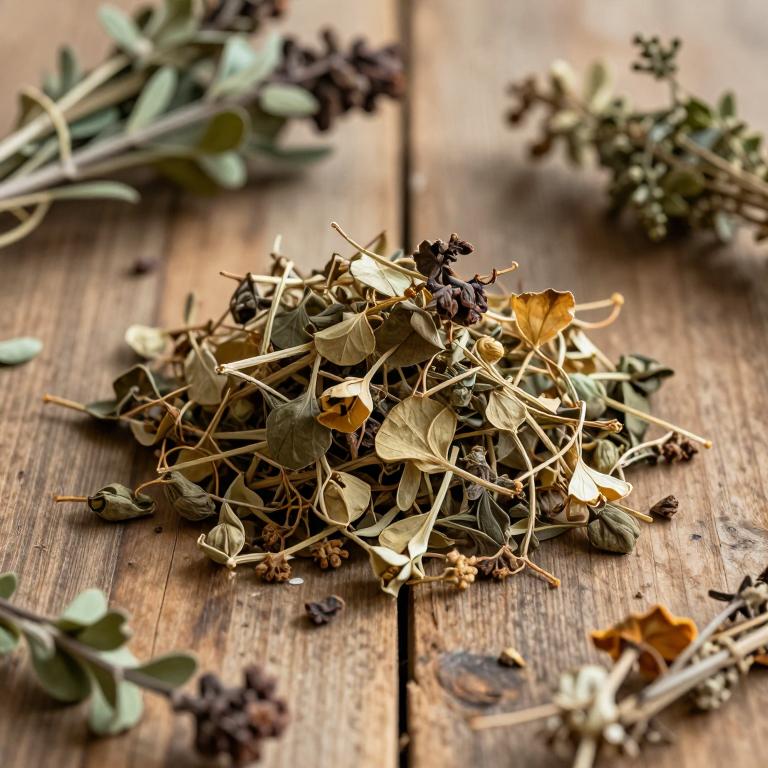
Names and Synonyms
Scientific Names
Accepted name
Dombeya rotundifoliaSynonyms
- Dombeya cuanzensis
- Dombeya ringoetii
- Dombeya rotundifolia var. velutina
- Assonia rotundifolia
- Dombeya subdichotoma
- Assonia myriantha
- Assonia densiflora
- Assonia cuanzensis
- Xeropetalum rotundifolium
- Dombeya melanostigma
- Dombeya myriantha
- Dombeya damarana
- Dombeya condensiflora
- Dombeya cerasiflora
- Dombeya dinteri
- Dombeya densiflora
- Dombeya delevoyi
- Dombeya gossweileri
Regional and Traditional Names
Spanish:
- Dombeya gossweileri
- Dombeya quinqueseta
- Assonia cuanzensis
- Assonia huillensis
- Dombeya delevoyi
- Dombeya condensiflora
- Dombeya melanostigma
- Dombeya dinteri
- Dombeya cerasiflora
- Dombeya myriantha
- Dombeya damarana
- Xeropetalum rotundifolium
- Dombeya huillensis
- Dombeya densiflora
- Dombeya subdichotoma
- Dombeya cuanzensis
Sources: Wikidata, Catalogue of Life
Taxonomical Classification
This plant belongs to the kingdom Plantae and the phylum Streptophyta, falling under the class Equisetopsida and subclass Magnoliidae. Within the order Malvales, it is classified under the family Malvaceae. Finally, it is categorized within the genus Dombeya.
| Rank | Classification |
|---|---|
| Kingdom | Plantae |
| Phylum | Streptophyta |
| Class | Equisetopsida |
| Subclass | Magnoliidae |
| Order | Malvales |
| Family | Malvaceae |
| Genus | Dombeya |
Sources: The World Checklist of Vascular Plants (WCVP)
Distribution
This plant exhibits a diverse geographical range spanning several key regions across the African continent. Within West-Central Tropical Africa, its presence is documented in Burundi, Rwanda, and the Democratic Republic of the Congo. Moving toward the northeast, the species can also be found within the borders of Ethiopia. Additionally, the distribution extends into East Tropical Africa, specifically in Kenya. Collectively, these locations highlight the plant's ability to thrive across various tropical environments.
| Region | Area |
|---|---|
| West-Central Tropical Africa | Burundi |
| West-Central Tropical Africa | Rwanda |
| West-Central Tropical Africa | DR Congo |
| Northeast Tropical Africa | Ethiopia |
| East Tropical Africa | Kenya |
| East Tropical Africa | Tanzania |
| East Tropical Africa | Uganda |
| South Tropical Africa | Angola |
| South Tropical Africa | Malawi |
| South Tropical Africa | Mozambique |
Sources: The World Checklist of Vascular Plants (WCVP)
Botanical Identification
Ecology
The ecology of Dombeya rotundifolia is defined by its broad adaptability across diverse altitudinal gradients, allowing it to occupy a wide variety of montane and lowland habitats. This species exhibits a significant vertical distribution, thriving in environments ranging from low-lying areas at an elevation of 60 m AMSL to high-altitude regions reaching up to 2135 m AMSL. This extensive elevational range suggests that the plant can tolerate a diverse spectrum of temperature regimes, moisture levels, and atmospheric pressures, facilitating its presence in both tropical foothills and more temperate montane ecosystems.
- Elevational range max:
- 2135 m AMSL
- Elevational range min:
- 60 m AMSL
Life history
The life history of Dombeya rotundifolia is characterized by its status as a perennial species, allowing it to persist in its environment over many growing seasons. Throughout its developmental stages, the plant exhibits a deciduous nature, shedding its foliage periodically as part of its seasonal biological cycle.
- Deciduousness :
- deciduous
- Lifecycle :
- perennial
Morphology
The morphology of Dombeya rotundifolia is characterized by a woody growth form that can manifest as either a shrub or a tree. As a terrestrial plant, it does not exhibit aquatic or epiphytic tendencies and functions as an independent organism rather than a parasite. The plant's stature is quite variable, with a height ranging from a minimum of 2 m to a maximum of 10 m, maintaining an average height of approximately 8.5 m. In terms of its structural habit, it is classified as self-supporting, meaning it does not require external structures for climbing like a liana or vine.
- Aquatic :
- terrestrial
- Climber :
- self-supporting
- Epiphyte :
- terrestrial
- Growth form :
- tree
- Growth form :
- shrub
- Parasite :
- independent
- Plant height max:
- 10 m
- Plant height mean:
- 8.5 m
- Plant height min:
- 2 m
- Woodiness :
- woody
Physiology
The physiology of Dombeya rotundifolia is characterized by a standard C3 photosynthetic pathway, a mechanism in which carbon dioxide is fixed directly through the Calvin cycle without the specialized anatomical adaptations found in C4 or CAM plants. This metabolic strategy dictates its resource requirements and environmental adaptations, typically favoring environments with moderate light and temperature profiles. Furthermore, this species does not function as a nitrogen fixer, meaning it lacks the symbiotic relationship with nitrogen-fixing bacteria required to convert atmospheric nitrogen into biologically available forms, and therefore relies on the uptake of nitrates and ammonium from the soil to satisfy its nutritional needs.
- Nitrogen fixer :
- no
- Photosynthetic pathway :
- C3
Reproduction
Reproduction in Dombeya rotundifolia is driven by a biotic pollination syndrome, relying on living organisms to facilitate the transfer of pollen. Specifically, the plant utilizes insect pollination, with a strong specialized association with bees to ensure successful fertilization. Following successful pollination, the plant produces seeds that exhibit a high degree of uniformity in size. The seed mass is characterized by an extremely narrow range, with a minimum mass of 0.00539 g, a maximum mass of 0.00543 g, and an average seed mass of 0.00541 g.
- Pollination syndrome :
- insect
- Pollination syndrome :
- bee
- Pollination syndrome :
- biotic
- Seed mass max:
- 0.00543 g
- Seed mass mean:
- 0.00541 g
- Seed mass min:
- 0.00539 g
Sources: Global Inventory of Floras and Traits (GIFT)
Plant Parts
Dombeya rotundifolia has 1 reported plant parts identified across 1 scientific publications and several other databases that are studied for medicinal purposes. The most consistently reported plant part include leaf.
| Plant part | Supporting sources | Consensus |
|---|---|---|
| Leaf | 1 supporting sources | ★☆☆☆☆ |
Leaf
- Journal of evidence-based integrative medicine
Chemicals
Dombeya rotundifolia has 8 reported phytochemicals identified across 1 scientific publications and several other databases. The most consistently reported chemicals include Flavonoid, Flavonoids, ROS, Saponins, Tannin.
| Chemical | Supporting sources | Consensus |
|---|---|---|
| Flavonoid | 1 supporting sources | ★☆☆☆☆ |
| Flavonoids | 1 supporting sources | ★☆☆☆☆ |
| ROS | 1 supporting sources | ★☆☆☆☆ |
| Saponins | 1 supporting sources | ★☆☆☆☆ |
| Tannin | 1 supporting sources | ★☆☆☆☆ |
| Tannins | 1 supporting sources | ★☆☆☆☆ |
| Terpenoids | 1 supporting sources | ★☆☆☆☆ |
| phenol | 1 supporting sources | ★☆☆☆☆ |
Flavonoid
- Journal of evidence-based integrative medicine
Flavonoids
- Journal of evidence-based integrative medicine
ROS
- BMC complementary and alternative medicine
Saponins
- Journal of evidence-based integrative medicine
Tannin
- Journal of evidence-based integrative medicine
Tannins
- Journal of evidence-based integrative medicine
Terpenoids
- Journal of evidence-based integrative medicine
phenol
- Journal of evidence-based integrative medicine
Activities
Dombeya rotundifolia has 3 reported activities identified across 1 scientific publications and several other databases. The most consistently reported activities include Antibacterial, Antioxidant, Cytotoxic.
| Activity | Supporting sources | Consensus |
|---|---|---|
| Antibacterial | 2 supporting sources | ★☆☆☆☆ |
| Antioxidant | 1 supporting sources | ★☆☆☆☆ |
| Cytotoxic | 1 supporting sources | ★☆☆☆☆ |
Antibacterial
- Journal of evidence-based integrative medicine
- BMC complementary and alternative medicine
Antioxidant
- Journal of evidence-based integrative medicine
Cytotoxic
- BMC complementary medicine and therapies
Conditions
Dombeya rotundifolia has 2 reported investigations on conditions identified across 1 scientific publications and several other databases. The most consistently reported conditions include Pseudomonas aeruginosa, cancer.
| Condition | Supporting sources | Consensus |
|---|---|---|
| Pseudomonas aeruginosa | 1 supporting sources | ★☆☆☆☆ |
| Cancer | 1 supporting sources | ★☆☆☆☆ |
Pseudomonas aeruginosa
- Journal of evidence-based integrative medicine
Cancer
- BMC complementary medicine and therapies
Preparations
Dombeya rotundifolia has 3 reported preparations identified across 1 scientific publications and several other databases. The most consistently reported preparations include acetone extracts, extracts, leaves.
| Preparation | Supporting sources | Consensus |
|---|---|---|
| Acetone extracts | 1 supporting sources | ★☆☆☆☆ |
| Extracts | 1 supporting sources | ★☆☆☆☆ |
| Leaves | 1 supporting sources | ★☆☆☆☆ |
Acetone extracts
- BMC complementary and alternative medicine
Extracts
- BMC complementary medicine and therapies
Leaves
- Journal of evidence-based integrative medicine