Costus
Dolomiaea costus · Accepted scientific name
Scientific literature: Very Extensive (463 studies) · ★★★★★
Costus, scientifically known as Dolomiaea costus, is a versatile medicinal plant valued in traditional healing systems. Often recognized for its aromatic properties, it contains bioactive compounds used to treat various ailments, including digestive issues and inflammation. This botanical treasure remains a significant subject of study in natural pharmacology.
- Family
- Asteraceae
- Native range
- Asia-Temperate
- Parts used
- Root · Leaf
- Common names
- Costus
- Scientific synonyms
- Saussurea Costus · Theodorea Costus · 4 more
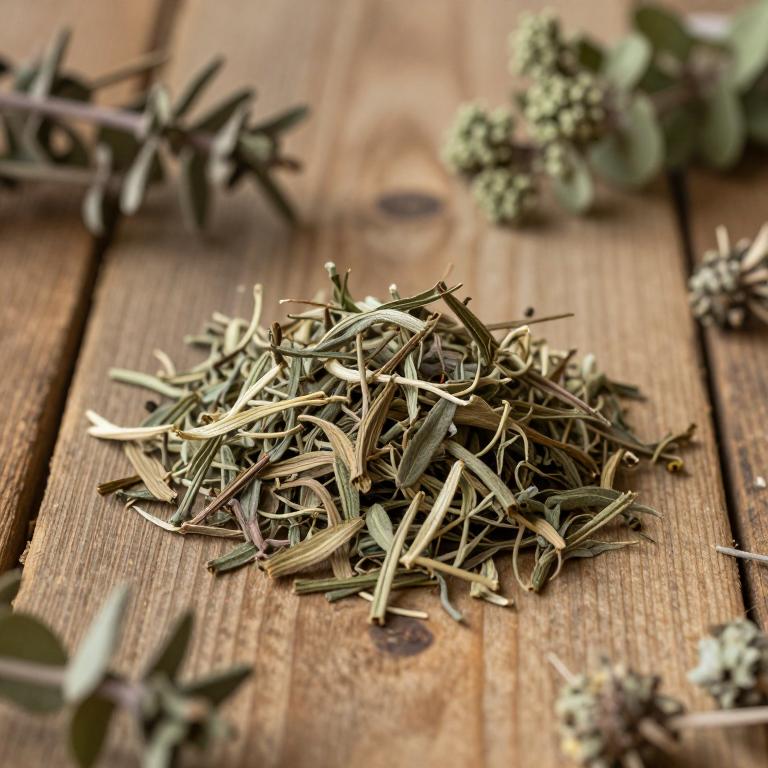
Names and Synonyms
Common Names
- Costus
Scientific Names
Accepted name
Dolomiaea costusSynonyms
- Saussurea costus
- Theodorea costus
- Aucklandia lappa
- Saussurea lappa
- Aucklandia costus
- Aplotaxis lappa
Sources: Wikidata, Catalogue of Life
Taxonomical Classification
This plant belongs to the kingdom Plantae and the phylum Streptophyta, falling under the class Equisetopsida and subclass Magnoliidae. It is further classified within the order Asterales and the family Asteraceae. Finally, it is identified by its genus, Dolomiaea, specifically as the species Dolomiaea costus.
| Rank | Classification |
|---|---|
| Kingdom | Plantae |
| Phylum | Streptophyta |
| Class | Equisetopsida |
| Subclass | Magnoliidae |
| Order | Asterales |
| Family | Asteraceae |
| Genus | Dolomiaea |
Sources: The World Checklist of Vascular Plants (WCVP)
Distribution
This plant exhibits a broad geographical distribution across various regions of China. It can be found growing in the South-Central areas of the country. Additionally, its presence extends to the tropical landscapes of Hainan. The species is also documented within the northern territories of Inner Mongolia and Manchuria. Finally, it inhabits the North-Central parts of China, completing its diverse range.
| Region | Area |
|---|---|
| China | China South-Central |
| China | Hainan |
| China | Inner Mongolia |
| China | Manchuria |
| China | China North-Central |
| China | Qinghai |
| China | China Southeast |
| China | Tibet |
| China | Xinjiang |
| Indian Subcontinent | East Himalaya |
Sources: The World Checklist of Vascular Plants (WCVP)
Botanical Identification
Ecology
The ecology of Dolomiaea costus is defined by a highly specialized niche, as it is strictly constrained to a specific altitudinal band within its natural habitat. This species exhibits a very narrow elevational range, occurring exclusively at an altitude of 2100 m AMSL. Because its minimum and maximum elevation thresholds both converge at 2100 m AMSL, the plant occupies a precise ecological zone, suggesting a high degree of sensitivity to the varying climatic conditions, such as temperature gradients, atmospheric pressure, and moisture availability, that shift with increasing altitude. This extreme specialization implies that the species is adapted to the specific environmental parameters found only at this precise level, making its distribution highly fragmented and dependent on the stability of its unique montane microclimate.
- Elevational range max:
- 2100 m AMSL
Life history
The life history of Dolomiaea costus is characterized by its status as a perennial plant, allowing it to persist in its natural habitat through multiple growing seasons. As a perennial species, it does not complete its life cycle in a single year like annuals or two years like biennials; instead, it maintains a continuous presence in the ecosystem, often developing robust rhizomatous structures that facilitate long-term survival and vegetative spread. This perennial nature enables the plant to establish deep root systems that store essential nutrients, providing the resilience necessary to endure seasonal fluctuations and regenerate each year. Through this extended lifecycle, the plant can invest significant energy into its complex reproductive structures, ensuring a stable and enduring presence within its specific ecological niche.
- Lifecycle :
- perennial
Morphology
The morphology of Dolomiaea costus is characterized by a growth form categorized as a herb and a forb, exhibiting a non-woody structure throughout its development. Although it possesses a robust presence, it does not develop woody tissue, maintaining a fleshy or herbaceous consistency. In terms of its climbing habits, the plant functions as a self-supporting entity, displaying characteristics of both a liana and a vine, while its climbing mechanism is classified as self-supporting rather than being an obligatory or facultative climber that requires external structures for stability.
- Climber :
- self-supporting
- Growth form :
- herb
- Growth form :
- forb
- Woodiness :
- non-woody
Reproduction
The reproduction of Dolomiaea costus involves the development of specialized fruiting structures that are remarkably consistent in their morphology. The fruit produced by this species is characterized by a highly uniform size, exhibiting no significant variation between individual specimens. Specifically, the fruit length maintains a constant value across all measured parameters, with a minimum length of 0.8 cm, a mean length of 0.8 cm, and a maximum length of 0.8 cm. This lack of variance in the fruit length suggests a highly stabilized reproductive mechanism within the species' developmental cycle.
- Fruit length max:
- 0.8 cm
Sources: Global Inventory of Floras and Traits (GIFT)
Plant Parts
Dolomiaea costus has 5 reported plant parts identified across 27 scientific publications and several other databases that are studied for medicinal purposes. The most consistently reported plant part include root, leaf, flower, rhizome, seed.
| Plant part | Supporting sources | Consensus |
|---|---|---|
| Root | 19 supporting sources | ★★★★★ |
| Leaf | 5 supporting sources | ★★★☆☆ |
| Flower | 1 supporting sources | ★☆☆☆☆ |
| Rhizome | 1 supporting sources | ★☆☆☆☆ |
| Seed | 1 supporting sources | ★☆☆☆☆ |
Root
- Food chemistry
- Journal of ethnopharmacology
- Environmental toxicology
- Pharmaceuticals (Basel, Switzerland)
- Saudi journal of biological sciences
View 14 additional sources
- Saudi pharmaceutical journal : SPJ : the official publication of the Saudi Pharmaceutical Society
- Acta parasitologica
- Journal of natural products
- International immunopharmacology
- Bioorganic & medicinal chemistry
- Immunopharmacology and immunotoxicology
- International journal of biological macromolecules
- Journal of nanoscience and nanotechnology
- Frontiers in bioengineering and biotechnology
- Frontiers in plant science
- Journal of experimental pharmacology
- Ultrasonics sonochemistry
- JPMA. The Journal of the Pakistan Medical Association
- Natural product research
Leaf
- Pharmaceuticals (Basel, Switzerland)
- Saudi journal of biological sciences
- Chinese journal of natural medicines
- International journal of biological macromolecules
- Frontiers in bioengineering and biotechnology
Flower
- Saudi journal of biological sciences
Rhizome
- Natural product research
Seed
- Saudi journal of biological sciences
Chemicals
Dolomiaea costus has 104 reported phytochemicals identified across 27 scientific publications and several other databases. The most consistently reported chemicals include Costunolide, Dehydrocostus lactone, Flavonoids, Alantolactone, CHLOROGENIC ACID.
| Chemical | Supporting sources | Consensus |
|---|---|---|
| Costunolide | 16 supporting sources | ★★★★★ |
| Dehydrocostus lactone | 14 supporting sources | ★★★★★ |
| Flavonoids | 7 supporting sources | ★★★★☆ |
| Alantolactone | 3 supporting sources | ★★☆☆☆ |
| CHLOROGENIC ACID | 3 supporting sources | ★★☆☆☆ |
| Cynaropicrin | 3 supporting sources | ★★☆☆☆ |
| Sesquiterpenes | 3 supporting sources | ★★☆☆☆ |
| dehydrocostuslactone | 3 supporting sources | ★★☆☆☆ |
| ALPHA-IONONE | 2 supporting sources | ★☆☆☆☆ |
| ALPHA-PHELLANDRENE | 2 supporting sources | ★☆☆☆☆ |
Costunolide
- Dr. Duke
- Journal of Asian natural products research
- Molecules (Basel, Switzerland)
- Bioorganic chemistry
- Journal of natural products
View 11 additional sources
- Zhong yao cai = Zhongyaocai = Journal of Chinese medicinal materials
- Bioorganic & medicinal chemistry
- Biomedical chromatography : BMC
- Journal of ethnopharmacology
- International journal of biological macromolecules
- Physiology and molecular biology of plants : an international journal of functional plant biology
- Functional & integrative genomics
- Ultrasonics sonochemistry
- Phytotherapy research : PTR
- Frontiers in pharmacology
- Natural product research
Dehydrocostus lactone
- Dr. Duke
- Journal of Asian natural products research
- Molecules (Basel, Switzerland)
- Bioorganic chemistry
- European journal of pharmacology
View 9 additional sources
- Planta medica
- Bioorganic & medicinal chemistry
- Biomedical chromatography : BMC
- Journal of ethnopharmacology
- Physiology and molecular biology of plants : an international journal of functional plant biology
- Functional & integrative genomics
- Ultrasonics sonochemistry
- Frontiers in pharmacology
- Natural product research
Flavonoids
- Journal of ethnopharmacology
- Naunyn-Schmiedeberg's archives of pharmacology
- BMC complementary medicine and therapies
- Ultrasonics sonochemistry
- Journal of nanoscience and nanotechnology
View 2 additional sources
- Journal of experimental pharmacology
- RSC advances
Alantolactone
- Journal of ethnopharmacology
- Phytotherapy research : PTR
- Natural product research
CHLOROGENIC ACID
- Acta pharmaceutica (Zagreb, Croatia)
- Ultrasonics sonochemistry
- Journal of ethnopharmacology
Cynaropicrin
- Computers in biology and medicine
- Journal of ethnopharmacology
- Planta medica
Sesquiterpenes
- Journal of ethnopharmacology
- Naunyn-Schmiedeberg's archives of pharmacology
- Ultrasonics sonochemistry
dehydrocostuslactone
- Journal of natural products
- Zhong yao cai = Zhongyaocai = Journal of Chinese medicinal materials
- Phytotherapy research : PTR
ALPHA-IONONE
- Dr. Duke
- Zhong yao cai = Zhongyaocai = Journal of Chinese medicinal materials
ALPHA-PHELLANDRENE
- Dr. Duke
- Zhong yao cai = Zhongyaocai = Journal of Chinese medicinal materials
Activities
Dolomiaea costus has 199 reported activities identified across 27 scientific publications and several other databases. The most consistently reported activities include Anticancer, Antioxidant, Antimicrobial, Cytotoxic, Hepatoprotective.
| Activity | Supporting sources | Consensus |
|---|---|---|
| Anticancer | 6 supporting sources | ★★★☆☆ |
| Antioxidant | 6 supporting sources | ★★★☆☆ |
| Antimicrobial | 5 supporting sources | ★★★☆☆ |
| Cytotoxic | 4 supporting sources | ★★☆☆☆ |
| Hepatoprotective | 4 supporting sources | ★★☆☆☆ |
| Antidiabetic | 3 supporting sources | ★★☆☆☆ |
| Antiviral | 3 supporting sources | ★★☆☆☆ |
| Anthelmintic | 2 supporting sources | ★☆☆☆☆ |
| Antiinflammatory | 2 supporting sources | ★☆☆☆☆ |
| Antiulcer | 2 supporting sources | ★☆☆☆☆ |
Anticancer
- Dr. Duke
- Molecules (Basel, Switzerland)
- Heliyon
- Journal of ethnopharmacology
- Antioxidants (Basel, Switzerland)
View 1 additional sources
- RSC advances
Antioxidant
- Dr. Duke
- Pharmaceuticals (Basel, Switzerland)
- Heliyon
- Antioxidants (Basel, Switzerland)
- Journal of experimental pharmacology
View 1 additional sources
- RSC advances
Antimicrobial
- Pharmaceuticals (Basel, Switzerland)
- Heliyon
- Journal of experimental pharmacology
- Antioxidants (Basel, Switzerland)
- RSC advances
Cytotoxic
- Dr. Duke
- Saudi journal of biological sciences
- Journal of natural products
- Immunopharmacology and immunotoxicology
Hepatoprotective
- Dr. Duke
- Journal of ethnopharmacology
- Molecules (Basel, Switzerland)
- Naunyn-Schmiedeberg's archives of pharmacology
Antidiabetic
- Dr. Duke
- International journal of pharmaceutics
- Journal of ethnopharmacology
Antiviral
- Dr. Duke
- Computers in biology and medicine
- Heliyon
Anthelmintic
- Dr. Duke
- Acta parasitologica
Antiinflammatory
- Dr. Duke
- Phytotherapy research : PTR
Antiulcer
- Dr. Duke
- Molecules (Basel, Switzerland)
Conditions
Dolomiaea costus has 4 reported investigations on conditions identified across 27 scientific publications and several other databases. The most consistently reported conditions include antidiabetic, antiseptic, aphrodisiac, expectorant.
| Condition | Supporting sources | Consensus |
|---|---|---|
| Antidiabetic | 1 supporting sources | ★☆☆☆☆ |
| Antiseptic | 1 supporting sources | ★☆☆☆☆ |
| Aphrodisiac | 1 supporting sources | ★☆☆☆☆ |
| Expectorant | 1 supporting sources | ★☆☆☆☆ |
Antidiabetic
- Journal of ethnopharmacology
Antiseptic
- Journal of ethnopharmacology
Aphrodisiac
- Journal of ethnopharmacology
Expectorant
- Journal of ethnopharmacology
Preparations
Dolomiaea costus has 36 reported preparations identified across 27 scientific publications and several other databases. The most consistently reported preparations include KM1608, extracts, root extract, 70% ethanol extract, Ethanolic Extract.
| Preparation | Supporting sources | Consensus |
|---|---|---|
| Km1608 | 2 supporting sources | ★☆☆☆☆ |
| Extracts | 2 supporting sources | ★☆☆☆☆ |
| Root extract | 2 supporting sources | ★☆☆☆☆ |
| 70% ethanol extract | 1 supporting sources | ★☆☆☆☆ |
| Ethanolic extract | 1 supporting sources | ★☆☆☆☆ |
| Ethanolic extract | 1 supporting sources | ★☆☆☆☆ |
| Organic extracts | 1 supporting sources | ★☆☆☆☆ |
| S. costus extracts | 1 supporting sources | ★☆☆☆☆ |
| Acetic acid extract | 1 supporting sources | ★☆☆☆☆ |
| Aqueous leaf extract | 1 supporting sources | ★☆☆☆☆ |
Km1608
- Biomolecules
- Plants (Basel, Switzerland)
Extracts
- Fitoterapia
- Scientific reports
Root extract
- Journal of ethnopharmacology
- Pharmaceuticals (Basel, Switzerland)
70% ethanol extract
- BMC complementary medicine and therapies
Ethanolic extract
- Antioxidants (Basel, Switzerland)
Ethanolic extract
- Journal of ethnopharmacology
Organic extracts
- Environmental and molecular mutagenesis
S. costus extracts
- RSC advances
Acetic acid extract
- Plants (Basel, Switzerland)
Aqueous leaf extract
- Pharmaceuticals (Basel, Switzerland)