Doliocarpus dentatus
Doliocarpus dentatus · Accepted scientific name
Scientific literature: Very Sparse (11 studies) · ★☆☆☆☆
, scientifically known as Doliocarpus dentatus, is a remarkable medicinal plant valued for its diverse therapeutic properties. Native to specific tropical regions, this species is utilized in traditional medicine to treat various ailments. Understanding its botanical characteristics and bioactive compounds is essential for exploring its potential in modern pharmacology.
- Family
- Dilleniaceae
- Native range
- Northern America
- Parts used
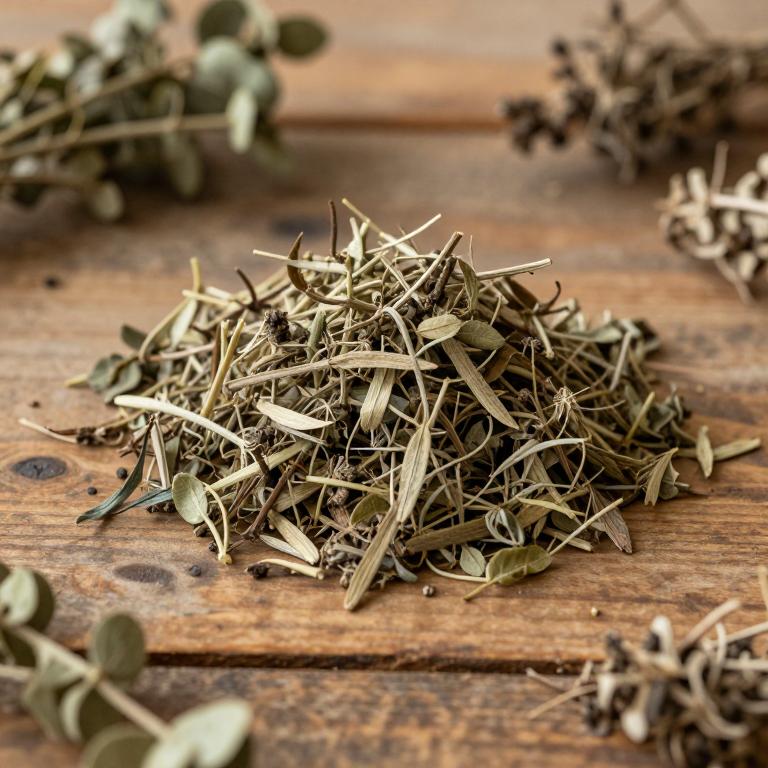
- Leaf
- Common names
- Not available
- Scientific synonyms
- Tigarea Dentata
Names and Synonyms
Scientific Names
Accepted name
Doliocarpus dentatusSynonyms
- Tigarea dentata
Regional and Traditional Names
Spanish:
- Bejuco rosa
- bejuco tomé
Sources: Wikidata, Catalogue of Life
Taxonomical Classification
This plant belongs to the kingdom Plantae and is classified under the phylum Streptophyta within the class Equisetopsida. As a member of the subclass Magnoliidae and the order Dilleniales, it falls into the family Dilleniaceae. Ultimately, its specific taxonomic identity is defined by its placement within the genus Doliocarpus.
| Rank | Classification |
|---|---|
| Kingdom | Plantae |
| Phylum | Streptophyta |
| Class | Equisetopsida |
| Subclass | Magnoliidae |
| Order | Dilleniales |
| Family | Dilleniaceae |
| Genus | Doliocarpus |
Sources: The World Checklist of Vascular Plants (WCVP)
Distribution
This plant exhibits a diverse range of habitats across several distinct regions. In Mexico, its presence is noted in the central territories as well as along the Gulf coast. It also extends into the southwestern parts of the country and reaches towards the southeast. Beyond the borders of Mexico, the species is found within the tropical landscapes of Central America. Specifically, its distribution includes the nation of Belize.
| Region | Area |
|---|---|
| Mexico | Mexico Central |
| Mexico | Mexico Gulf |
| Mexico | Mexico Southwest |
| Mexico | Mexico Southeast |
| Central America | Belize |
| Central America | Costa Rica |
| Central America | El Salvador |
| Central America | Guatemala |
| Central America | Honduras |
| Central America | Nicaragua |
Sources: The World Checklist of Vascular Plants (WCVP)
Botanical Identification
Ecology
The ecology of Doliocarpus dentatus is characterized by a broad environmental adaptability, allowing it to thrive across a diverse array of Brazilian biomes and forest types. It is found in varied habitats including the Caatinga (strictu sensu), Campinarana, Cerrado (lato sensu), and several distinct forest ecosystems such as Floresta Ciliar or Galeria, Floresta de Igapó, Floresta de Terra Firmre, Floresta de Várzea, and Floresta Ombrófila (also known as Floresta Pluvial). This wide distributional range is further reflected in its significant elevational tolerance; the species inhabits areas ranging from sea level (0 m AMSL) up to a maximum altitude of 2000 m AMSL, maintaining a mean elevation of approximately 400 m AMSL.
- Elevational range max:
- 2000 m AMSL
- Elevational range mean:
- 400 m AMSL
- Elevational range min:
- 0 m AMSL
- Habitat :
- Caatinga (stricto sensu), Campinarana, Cerrado (lato sensu), Floresta Ciliar ou Galeria, Floresta de Igapó, Floresta de Terra Firme, Floresta de Várzea, Floresta Ombrófila (= Floresta Pluvial)
Life history
The life history of Doliocarpus dentatus is characterized by its classification as a perennial organism, allowing it to persist through multiple growing seasons rather than completing its cycle in a single year. As a long-lived species, it establishes a stable presence within its ecosystem, undergoing successive stages of vegetative growth and reproductive development over an extended period. This perennial nature enables the plant to accumulate biomass and resources over time, which supports its ability to withstand seasonal variations and invest in complex reproductive structures during favorable environmental conditions.
- Lifecycle :
- perennial
Morphology
The morphology of Doliocarpus dentatus is characterized by a woody growth form, specifically manifesting as a shrub. It functions as an independent organism, lacking parasitic tendencies, and is categorized as a terrestrial plant rather than an aquatic or semiaquatic species. Although it exhibits characteristics associated with climbing habits, it is specifically described as a liana, acting as an obligatory climber to navigate its environment. In terms of its ecological positioning, it is a terrestrial species rather than an epiphyte, maintaining a stable growth habit consistent with its shrubby, woody structure.
- Aquatic :
- terrestrial
- Climber :
- liana
- Climber :
- obligatory
- Epiphyte :
- terrestrial
- Growth form :
- shrub
- Parasite :
- independent
- Woodiness :
- woody
Reproduction
The reproduction of Doliocarpus dentatus is characterized by the production of fleshy fruits classified as drupes. These fruits are indehiscent, meaning they do not split open at maturity to release their contents, and instead rely on a fleshy consistency to facilitate dispersal. The plant exhibits a zoochorous dispersal syndrome, suggesting that its seeds are spread via animals. The seeds themselves are relatively uniform in size, with a recorded seed volume that remains constant at a mean, minimum, and maximum of 57 mm³. Additionally, the average mass of a single seed is approximately 0.26 g.
- Dehiscence :
- indehiscent
- Dispersal syndrome :
- zoochorous
- Fruit dryness :
- fleshy
- Fruit type :
- drupe
- Seed mass mean:
- 0.26 g
- Seed volume max:
- 57 mm³
Sources: Global Inventory of Floras and Traits (GIFT)
Plant Parts
Doliocarpus dentatus has 1 reported plant parts identified across 1 scientific publications and several other databases that are studied for medicinal purposes. The most consistently reported plant part include leaf.
| Plant part | Supporting sources | Consensus |
|---|---|---|
| Leaf | 1 supporting sources | ★☆☆☆☆ |
Leaf
- Journal of ethnopharmacology
Chemicals
Doliocarpus dentatus has 5 reported phytochemicals identified across 1 scientific publications and several other databases. The most consistently reported chemicals include betulinic acid, Betulin, Flavonoids, Phenols, Tannins.
| Chemical | Supporting sources | Consensus |
|---|---|---|
| betulinic acid | 2 supporting sources | ★☆☆☆☆ |
| Betulin | 1 supporting sources | ★☆☆☆☆ |
| Flavonoids | 1 supporting sources | ★☆☆☆☆ |
| Phenols | 1 supporting sources | ★☆☆☆☆ |
| Tannins | 1 supporting sources | ★☆☆☆☆ |
betulinic acid
- Journal of natural products
- Journal of ethnopharmacology
Betulin
- Journal of ethnopharmacology
Flavonoids
- Journal of ethnopharmacology
Phenols
- Journal of ethnopharmacology
Tannins
- Journal of ethnopharmacology
Activities
Doliocarpus dentatus has 2 reported activities identified across 1 scientific publications and several other databases. The most consistently reported activities include Antiproliferative, Genotoxic.
| Activity | Supporting sources | Consensus |
|---|---|---|
| Antiproliferative | 1 supporting sources | ★☆☆☆☆ |
| Genotoxic | 1 supporting sources | ★☆☆☆☆ |
Antiproliferative
- Journal of natural products
Genotoxic
- Journal of ethnopharmacology
Conditions
Doliocarpus dentatus has 2 reported investigations on conditions identified across 1 scientific publications and several other databases. The most consistently reported conditions include Mycobacterium tuberculosis, urinary retention.
| Condition | Supporting sources | Consensus |
|---|---|---|
| Mycobacterium tuberculosis | 1 supporting sources | ★☆☆☆☆ |
| Urinary retention | 1 supporting sources | ★☆☆☆☆ |
Mycobacterium tuberculosis
- Journal of ethnopharmacology
Urinary retention
- Journal of ethnopharmacology
Preparations
Doliocarpus dentatus has 2 reported preparations identified across 1 scientific publications and several other databases. The most consistently reported preparations include ethanolic extract obtained from the leaves of D. dentatus, ethanolic extract of Doliocarpus dentatus.
| Preparation | Supporting sources | Consensus |
|---|---|---|
| Ethanolic extract obtained from the leaves of d. dentatus | 1 supporting sources | ★☆☆☆☆ |
| Ethanolic extract of doliocarpus dentatus | 1 supporting sources | ★☆☆☆☆ |
Ethanolic extract obtained from the leaves of d. dentatus
- Journal of ethnopharmacology
Ethanolic extract of doliocarpus dentatus
- Journal of ethnopharmacology