cat's claw creeper
Dolichandra unguis-cati · Accepted scientific name
Scientific literature: Very Sparse (19 studies) · ★☆☆☆☆
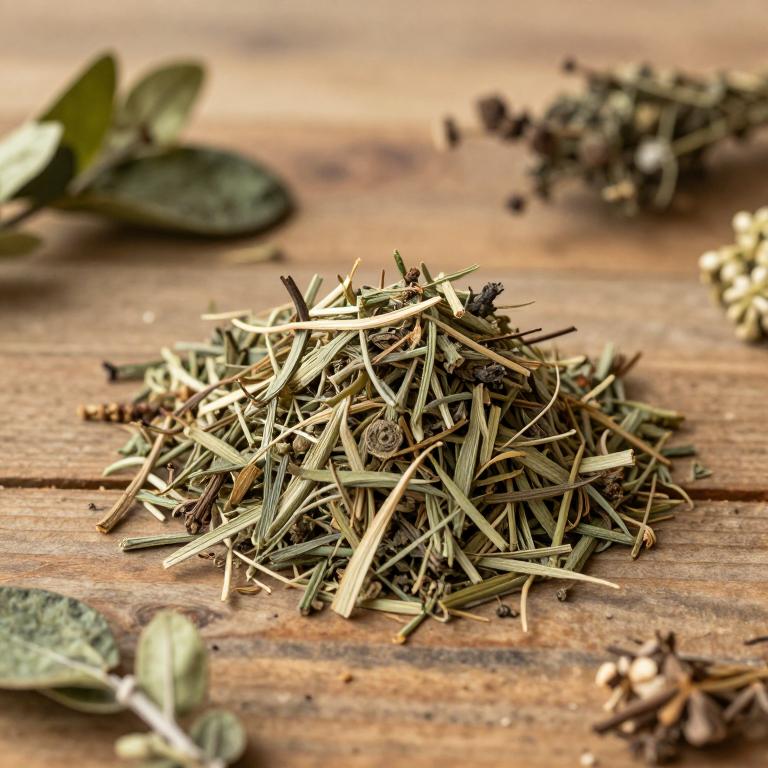
Cat's claw creeper, scientifically known as Dolichandra unguis-cati, is a versatile medicinal plant celebrated in traditional healing. Characterized by its distinctive hooked tendrils, this climbing shrub offers potent bioactive compounds. It is widely utilized for its anti-inflammatory and antimicrobial properties, serving as a natural remedy for various ailments.
Names and Synonyms
Common Names
- Cat Claw
- cat's-claw
- catclaw-creeper
- catclaw-trumpet
- funnel-creeper
- macfadyena
- Catclaw vine
Scientific Names
Accepted name
Dolichandra unguis-catiSynonyms
- Spathodea kohautiana
- Doxantha radicans
- Bignonia unguis var. gracilis
- Doxantha unguis-cati var. microphylla
- Doxantha exoleta
- Bignonia exoleta
- Bignonia unguis-cati var. radicans
- Batocydia unguis-cati
- Macfadyena unguis-cati
- Macfadyena undulata
- Microbignonia auristellae
- Doxantha unguis var. microphylla
- Doxantha unguis-cati var. dasyonyx
- Doxantha unguis-cati var. exoleta
- Bignonia unguis-cati
- Bignonia unguis-cati var. exoleta
- Bignonia unguis-cati var. guatemalensis
- Bignonia unguis-cati var. serrata
- Bignonia tweedieana
- Bignonia triantha
- Bignonia pseudounguis
- Bignonia rodigasiana
- Bignonia lanuginosa
- Bignonia inflata
- Bignonia gracilis
- Bignonia dasyonyx
- Bignonia catharinensis
- Bignonia acutistipula
- Bignonia californica
- Doxantha dasyonyx
- Doxantha unguis-cati
- Doxantha acutistipula
- Doxantha adunca
- Doxantha tweedieana
- Dolichandra kohautiana
- Bignonia vespertilia
Regional and Traditional Names
Spanish:
- Macfadyena unguis-cati
- Bignonia acutistipula
- Macfadyena unguis cati
- Doxantha unguis var microphylla
- Doxantha unguis-cati var. exoleta
- Bignonia dasyonyx
- Microbignonia auristellae
- Doxantha unguis
- Doxantha dasyonyx
- Doxantha mexicana
- Doxantha tenuicula
- Doxantha unguis cati
- Bignonia rodigasiana
- Bignonia tweediana
- Bignonia unguis-cati var. serrata
- Bignonia unguis-cati var guatemalensis
- Doxantha acutistipula
- Bejuco de murciélago
- Uña de gato
- bejuco de cachorra
German:
- Krallentrompete
French:
- Liane patate
- Macfadyena unguis-cati
- Dolichandra griffe-à-chat
Sources: Wikidata, Catalogue of Life
Taxonomical Classification
This plant belongs to the kingdom Plantae and the phylum Streptophyta, falling under the class Equisetopsida and subclass Magnoliidae. Within the order Lamiales, it is classified under the family Bignoniaceae and is specifically identified by the genus Dolichaandras.
| Rank | Classification |
|---|---|
| Kingdom | Plantae |
| Phylum | Streptophyta |
| Class | Equisetopsida |
| Subclass | Magnoliidae |
| Order | Lamiales |
| Family | Bignoniaceae |
| Genus | Dolichandra |
Sources: The World Checklist of Vascular Plants (WCVP)
Distribution
This plant exhibits a broad geographical distribution that spans across several distinct oceanic and continental regions. Within the Western Indian Ocean, it can be found growing in the Comoros islands. Its range extends to the Indian Subcontinent, where it is documented in Bangladesh. In the Australian region, the species is present in both New South Wales and Queensland. Finally, its presence is noted in the Southwestern Pacific, specifically within New Caledonia.
| Region | Area |
|---|---|
| Western Indian Ocean | Comoros |
| Indian Subcontinent | Bangladesh |
| Australia | New South Wales |
| Australia | Queensland |
| Southwestern Pacific | New Caledonia |
| North-Central Pacific | Hawaii |
| Mexico | Mexico Central |
| Mexico | Mexico Northeast |
| Mexico | Mexico Gulf |
| Mexico | Mexico Northwest |
Sources: The World Checklist of Vascular Plants (WCVP)
Botanical Identification
Ecology
The ecology of Dolichaandra unguis-cati is characterized by a broad vertical distribution, spanning an elevational range from 0 m to a maximum of 2100 m AMSL. This significant altitudinal breadth allows the species to inhabit diverse environmental gradients, ranging from lowland tropical settings to higher montane zones. While specific details regarding its primary habitat remain categorized as unknown or undetermined (?), its ability to thrive across such a vast elevational spectrum suggests a high degree of ecological plasticity and adaptability to varying climatic conditions and moisture regimes within its native range.
- Elevational range max:
- 2100 m AMSL
- Elevational range min:
- 0 m AMSL
- Habitat :
- (?)
Genetics
The genetics of Dolichaandra unguis-cati are characterized by a complex chromosomal constitution that reflects significant evolutionary divergence within its lineage. Specifically, the species exhibits varying ploidy levels, as evidenced by its documented chromosome numbers of 40 and 80. This variation suggests a history of polyploidization events, where genome doubling has played a crucial role in its genetic architecture and potential adaptation to diverse ecological niches. Such chromosomal plasticity, moving between these specific counts, highlights a sophisticated genomic structure that likely influences the plant's phenotypic stability and its capacity for genetic diversification.
- Chromosome number :
- 40, 80
Life history
The life history of Dolichaandra unguis-cati is characterized by its status as a perennial plant, allowing it to persist in its environment over multiple growing seasons. As a woody climber or liana, its development involves a prolonged growth phase where it establishes a robust structural framework to ascend through forest canopies. Throughout its lifespan, the plant undergoes various stages of vegetative expansion and reproductive cycles, contributing to its long-term presence within its native ecosystem. This perennial nature ensures that the plant can withstand seasonal fluctuations and maintain its biological functions across several years of continuous growth.
- Lifecycle :
- perennial
Morphology
The morphology of Dolichandra unguis-cati is characterized by its growth habit as a woody liana, functioning as an obligatory climber that utilizes specialized structures to ascend. While it exists within terrestrial habitats, its climbing mechanism allows it to navigate complex environments, though it remains an independent organism rather than a parasite. It does not exhibit epiphytic tendencies, such as being a hemi-epiphyte or holoepiphyte, and instead maintains a strictly terrestrial life cycle. The plant's structural integrity is defined by its woody nature, providing the necessary strength for its expansive, vine-like growth pattern.
- Aquatic :
- terrestrial
- Climber :
- liana
- Climber :
- obligatory
- Epiphyte :
- terrestrial
- Parasite :
- independent
- Woodiness :
- woody
Physiology
The physiology of Dolichandra unguis-cati is characterized by a C3 photosynthetic pathway, which dictates its metabolic processes and carbon fixation efficiency. The vegetative morphology, particularly regarding its foliage, exhibits specific dimensional ranges that facilitate gas exchange and light interception. The leaves are characterized by a length that varies between a minimum of 1 cm and a maximum of 2 cm. Complementing these longitudinal dimensions, the leaf width fluctuates between a minimum of 0.4 cm and a maximum of 3 cm, providing a structural profile that supports its physiological requirements within its ecological niche.
- Leaf length max:
- 2 cm
- Leaf length min:
- 1 cm
- Leaf width max:
- 3 cm
- Leaf width min:
- 0.4 cm
- Photosynthetic pathway :
- C3
Reproduction
The reproduction of Dolichaandra unguis-cati is characterized by the development of a capsule-type fruit, which can reach significant dimensions with a length ranging from a minimum of 26 cm to a maximum of 95 cm. This fruit is dehiscent, meaning it splits open at maturity to facilitate the release of its seeds. The seeds exhibit notable morphological variation, with lengths ranging from a minimum of 10 mm to a maximum of 18 mm, and widths spanning from 42 mm to 58 mm. In terms of mass, the seeds are relatively lightweight, with a minimum mass of 0.0035 g, a mean mass of 0.067365 g, and a maximum mass of 0.13123 g. Once released, the dispersal of the seeds follows an anemochorous syndrome, relying on wind currents to transport them away from the parent plant.
- Dehiscence :
- dehiscent
- Dispersal syndrome :
- anemochorous
- Fruit length max:
- 95 cm
- Fruit length min:
- 26 cm
- Fruit type :
- capsule
- Seed length max:
- 18 mm
- Seed length min:
- 10 mm
- Seed mass max:
- 0.13123 g
- Seed mass mean:
- 0.067365 g
- Seed mass min:
- 0.0035 g
- Seed width max:
- 58 mm
- Seed width min:
- 42 mm
Sources: Global Inventory of Floras and Traits (GIFT)
Chemicals
Dolichandra unguis-cati has 9 reported phytochemicals identified across 0 scientific publications and several other databases. The most consistently reported chemicals include BETA-SITOSTEROL, CHLOROGENIC ACID, Corymboside, Isochlorogenic acid, Lupeol.
| Chemical | Supporting sources | Consensus |
|---|---|---|
| BETA-SITOSTEROL | 1 supporting sources | ★☆☆☆☆ |
| CHLOROGENIC ACID | 1 supporting sources | ★☆☆☆☆ |
| Corymboside | 1 supporting sources | ★☆☆☆☆ |
| Isochlorogenic acid | 1 supporting sources | ★☆☆☆☆ |
| Lupeol | 1 supporting sources | ★☆☆☆☆ |
| Vicenin 2 | 1 supporting sources | ★☆☆☆☆ |
| allantoin | 1 supporting sources | ★☆☆☆☆ |
| lapachol | 1 supporting sources | ★☆☆☆☆ |
| quercitrin | 1 supporting sources | ★☆☆☆☆ |
BETA-SITOSTEROL
- The Journal of pharmacy and pharmacology
CHLOROGENIC ACID
- The Journal of pharmacy and pharmacology
Corymboside
- The Journal of pharmacy and pharmacology
Isochlorogenic acid
- The Journal of pharmacy and pharmacology
Lupeol
- The Journal of pharmacy and pharmacology
Vicenin 2
- The Journal of pharmacy and pharmacology
allantoin
- The Journal of pharmacy and pharmacology
lapachol
- The Journal of pharmacy and pharmacology
quercitrin
- The Journal of pharmacy and pharmacology
Activities
Dolichandra unguis-cati has 1 reported activities identified across 0 scientific publications and several other databases. The most consistently reported activities include Antimalarial.
| Activity | Supporting sources | Consensus |
|---|---|---|
| Antimalarial | 1 supporting sources | ★☆☆☆☆ |
Antimalarial
- The Journal of pharmacy and pharmacology
Preparations
Dolichandra unguis-cati has 1 reported preparations identified across 0 scientific publications and several other databases. The most consistently reported preparations include hydroethanolic extracts.
| Preparation | Supporting sources | Consensus |
|---|---|---|
| Hydroethanolic extracts | 1 supporting sources | ★☆☆☆☆ |
Hydroethanolic extracts
- Plants (Basel, Switzerland)