hop bush
Dodonaea lanceolata · Accepted scientific name
Scientific literature: Very Sparse (8 studies) · ★☆☆☆☆
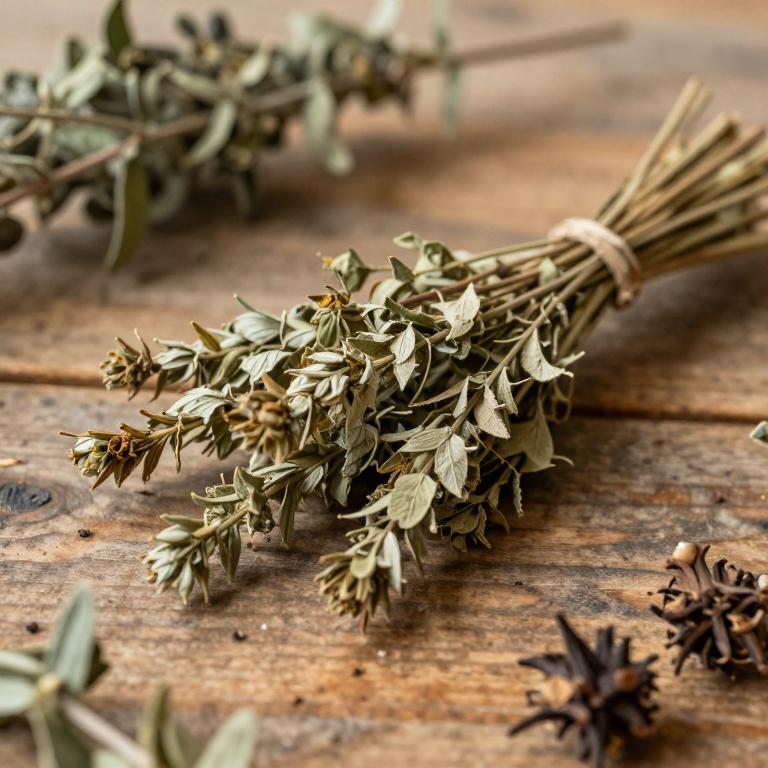
Hop bush, scientifically known as Dodonaea lanceolata, is a resilient evergreen shrub native to various subtropical regions. Renowned for its medicinal properties, this plant is traditionally utilized in folk medicine to treat skin ailments, inflammation, and digestive issues, offering a natural remedy rooted in rich botanical heritage and biodiversity.
- Family
- Sapindaceae
- Native range
- Australasia
- Parts used
- Not available
- Common names
- Hop Bush
- Scientific synonyms
- Not available
Names and Synonyms
Common Names
- hop bush
Scientific Names
Accepted name
Dodonaea lanceolataSources: Wikidata, Catalogue of Life
Taxonomical Classification
This plant belongs to the kingdom Plantae and is classified under the phylum Streptophyta within the class Equisetopsida. Following the subclass Magnoliidae, it is ordered under Sapindales and falls into the family Sapindaceae. Finally, it is identified by the genus Dodonaea, specifically as the species Dodonaea lanceolata.
| Rank | Classification |
|---|---|
| Kingdom | Plantae |
| Phylum | Streptophyta |
| Class | Equisetopsida |
| Subclass | Magnoliidae |
| Order | Sapindales |
| Family | Sapindaceae |
| Genus | Dodonaea |
Sources: The World Checklist of Vascular Plants (WCVP)
Distribution
This plant, known as Dodonaea lanceolata, exhibits a specific geographical range across the Australian continent. It is found within the tropical landscapes of the Northern Territory. Additionally, the species extends its presence into the diverse ecosystems of Queensland. Its distribution also reaches across to the western side of the country in Western Australia. These three regions represent the primary areas where this medicinal plant occurs naturally.
| Region | Area |
|---|---|
| Australia | Northern Territory |
| Australia | Queensland |
| Australia | Western Australia |
Sources: The World Checklist of Vascular Plants (WCVP)
Botanical Identification
Life history
The life history of Dodonaea lanceolata is characterized by its status as a perennial species, allowing it to establish a long-term presence within its natural habitat. As a perennial, the plant does not complete its life cycle in a single growing season but instead persists through multiple years, developing robust woody structures that support its ongoing growth and reproductive efforts. This extended lifecycle enables the plant to adapt to seasonal fluctuations and endure environmental stressors that might terminate annual or biennial species. Throughout its continuous lifespan, it undergoes regular vegetative development and periodic reproductive phases, contributing to the stability and persistence of its population within its ecosystem.
- Lifecycle :
- perennial
Morphology
The morphology of Dodonaea lanceolata is characterized by its growth form as a woody shrub, functioning as a self-supporting plant rather than a climber or liana. It is an independent species, neither acting as a parasite nor an epiphyte, and is strictly terrestrial in its ecological habit. The plant typically reaches a height ranging from a minimum of 1 meter to a maximum of 5 meters.
- Aquatic :
- terrestrial
- Climber :
- self-supporting
- Epiphyte :
- terrestrial
- Growth form :
- shrub
- Parasite :
- independent
- Plant height max:
- 5 m
- Plant height min:
- 1 m
- Woodiness :
- woody
Sources: Global Inventory of Floras and Traits (GIFT)
Chemicals
Dodonaea lanceolata has 2 reported phytochemicals identified across 0 scientific publications and several other databases. The most consistently reported chemicals include Flavonoids, Saponins.
| Chemical | Supporting sources | Consensus |
|---|---|---|
| Flavonoids | 1 supporting sources | ★☆☆☆☆ |
| Saponins | 1 supporting sources | ★☆☆☆☆ |
Flavonoids
- BMC complementary medicine and therapies
Saponins
- BMC complementary medicine and therapies
Activities
Dodonaea lanceolata has 1 reported activities identified across 0 scientific publications and several other databases. The most consistently reported activities include Antioxidant.
| Activity | Supporting sources | Consensus |
|---|---|---|
| Antioxidant | 1 supporting sources | ★☆☆☆☆ |
Antioxidant
- BMC complementary medicine and therapies
Conditions
Dodonaea lanceolata has 1 reported investigations on conditions identified across 0 scientific publications and several other databases. The most consistently reported conditions include wounds.
| Condition | Supporting sources | Consensus |
|---|---|---|
| Wounds | 1 supporting sources | ★☆☆☆☆ |
Wounds
- BMC complementary medicine and therapies
Preparations
Dodonaea lanceolata has 1 reported preparations identified across 0 scientific publications and several other databases. The most consistently reported preparations include crude extracts.
| Preparation | Supporting sources | Consensus |
|---|---|---|
| Crude extracts | 1 supporting sources | ★☆☆☆☆ |
Crude extracts
- BMC complementary medicine and therapies