Dodecadenia grandiflora
Dodecadenia grandiflora · Accepted scientific name
Scientific literature: Very Sparse (4 studies) · ★☆☆☆☆
, scientifically known as Dodecadenia grandiflora, is a remarkable medicinal plant prized for its unique therapeutic properties. Often found in diverse ecosystems, it contains potent bioactive compounds used in traditional healing practices. Understanding its botanical characteristics and pharmacological potential offers exciting possibilities for modern natural medicine and holistic wellness.
- Family
- Lauraceae
- Native range
- Asia-Temperate
- Parts used
- Leaf
- Common names
- Not available
- Scientific synonyms
- Litsea Grandiflora · Actinodaphne Monantha · 4 more
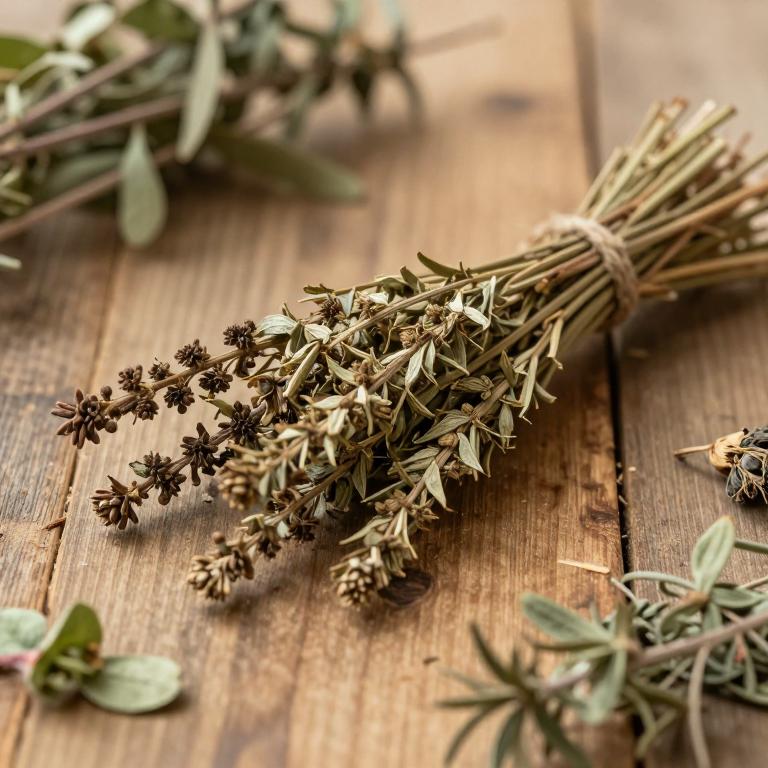
Names and Synonyms
Scientific Names
Accepted name
Dodecadenia grandifloraSynonyms
- Litsea grandiflora
- Actinodaphne monantha
- Litsea monantha
- Laurus pallens
- Dodecadenia grandiflora var. griffithii
- Dodecadenia griffithii
Sources: Wikidata, Catalogue of Life
Taxonomical Classification
This plant, Dodecadenia grandiflora, belongs to the kingdom Plantae and the phylum Streptophyta. It is classified within the class Equisetopsida and the subclass Magnoliidae, falling under the order Laurales. Finally, it is a member of the family Lauraceae within the genus Dodecadenia.
| Rank | Classification |
|---|---|
| Kingdom | Plantae |
| Phylum | Streptophyta |
| Class | Equisetopsida |
| Subclass | Magnoliidae |
| Order | Laurales |
| Family | Lauraceae |
| Genus | Dodecadenia |
Sources: The World Checklist of Vascular Plants (WCVP)
Distribution
This plant exhibits a widespread distribution across several key regions in Asia. In China, its presence is noted specifically within the South-Central areas and the high-altitude terrains of Tibet. Moving toward the Indian Subcontinent, the species can be found growing in the lush landscapes of Assam. It also inhabits parts of Bangladesh, contributing to its regional diversity. Finally, the plant is well-established within the unique ecological zone of the East Himalaya.
| Region | Area |
|---|---|
| China | China South-Central |
| China | Tibet |
| Indian Subcontinent | Assam |
| Indian Subcontinent | Bangladesh |
| Indian Subcontinent | East Himalaya |
| Indian Subcontinent | Nepal |
| Indian Subcontinent | West Himalaya |
| Indo-China | Myanmar |
Sources: The World Checklist of Vascular Plants (WCVP)
Botanical Identification
Ecology
The ecology of Dodecaadenia grandiflora is strictly defined by its preference for high-altitude montane environments, where it occupies a specific vertical niche within the landscape. This species is specialized to thrive within a distinct elevational range, occurring primarily in cloud forests or high-altitude shrublands between 2000 m AMSL and a maximum of 2680 m AMSL. This specialized altitudinal distribution suggests an adaptation to the unique climatic conditions found in these upper montane zones, including frequent mist, lower ambient temperatures, and high levels of solar radiation characteristic of such elevations. Its presence within this narrow 680-meter altitudinal band indicates a high degree of environmental sensitivity, likely tied to specific moisture regimes and soil compositions found only within these high-elevation tropical or subtropical mountain ecosystems.
- Elevational range max:
- 2680 m AMSL
- Elevational range min:
- 2000 m AMSL
Life history
The life history of Dodecaedenia grandiflora is characterized by its status as a perennial plant, allowing it to persist through multiple growing seasons and establish a stable presence within its ecosystem. Throughout its development, it maintains an evergreen habit, ensuring that its foliage remains functional and photosynthetic year-round without the need for seasonal shedding.
- Deciduousness :
- evergreen
- Lifecycle :
- perennial
Morphology
The morphology of Dodecadenia grandiflora is characterized by its stature as a woody tree that reaches an average plant height of approximately 12 meters. As an independent organism, it functions without a parasitic relationship, maintaining a terrestrial lifestyle rather than acting as an epiphyte. Although it exhibits the structural characteristics of a tree, its growth habit is described as self-supporting, allowing it to maintain its upright posture within its ecosystem.
- Climber :
- self-supporting
- Epiphyte :
- terrestrial
- Growth form :
- tree
- Parasite :
- independent
- Plant height mean:
- 12 m
- Woodiness :
- woody
Physiology
The physiology of Dodecaedenia grandiflora is characterized by a complex metabolic framework optimized for survival in its specific ecological niche, though it lacks the specialized symbiotic mechanisms required for atmospheric nitrogen assimilation. Unlike certain members of the Fabaceae family, this species is not a nitrogen fixer, meaning it does not possess the physiological capacity to host diazotrophic bacteria within root nodules to convert atmospheric nitrogen into usable forms. Consequently, its nutritional physiology is entirely dependent on the uptake of dissolved nitrates and ammonium ions from the soil through its root system. The plant's metabolic processes involve efficient carbon fixation via photosynthesis to drive cellular respiration and biomass production, while its water regulation and mineral transport systems are finely tuned to maintain osmotic balance and nutrient distribution throughout its tissues.
- Nitrogen fixer :
- no
Sources: Global Inventory of Floras and Traits (GIFT)
Plant Parts
Dodecadenia grandiflora has 1 reported plant parts identified across 2 scientific publications and several other databases that are studied for medicinal purposes. The most consistently reported plant part include leaf.
| Plant part | Supporting sources | Consensus |
|---|---|---|
| Leaf | 2 supporting sources | ★☆☆☆☆ |
Leaf
- Fitoterapia
- Phytochemistry
Activities
Dodecadenia grandiflora has 1 reported activities identified across 2 scientific publications and several other databases. The most consistently reported activities include Antihyperglycemic.
| Activity | Supporting sources | Consensus |
|---|---|---|
| Antihyperglycemic | 1 supporting sources | ★☆☆☆☆ |
Antihyperglycemic
- Phytochemistry
Conditions
Dodecadenia grandiflora has 1 reported investigations on conditions identified across 2 scientific publications and several other databases. The most consistently reported conditions include antihyperglycemic.
| Condition | Supporting sources | Consensus |
|---|---|---|
| Antihyperglycemic | 1 supporting sources | ★☆☆☆☆ |
Antihyperglycemic
- Phytochemistry
Preparations
Dodecadenia grandiflora has 1 reported preparations identified across 2 scientific publications and several other databases. The most consistently reported preparations include antihyperglycemic extract from the leaves.
| Preparation | Supporting sources | Consensus |
|---|---|---|
| Antihyperglycemic extract from the leaves | 1 supporting sources | ★☆☆☆☆ |
Antihyperglycemic extract from the leaves
- Phytochemistry