Woody Fleabane
Dittrichia viscosa · Accepted scientific name
Scientific literature: Sparse (96 studies) · ★★☆☆☆
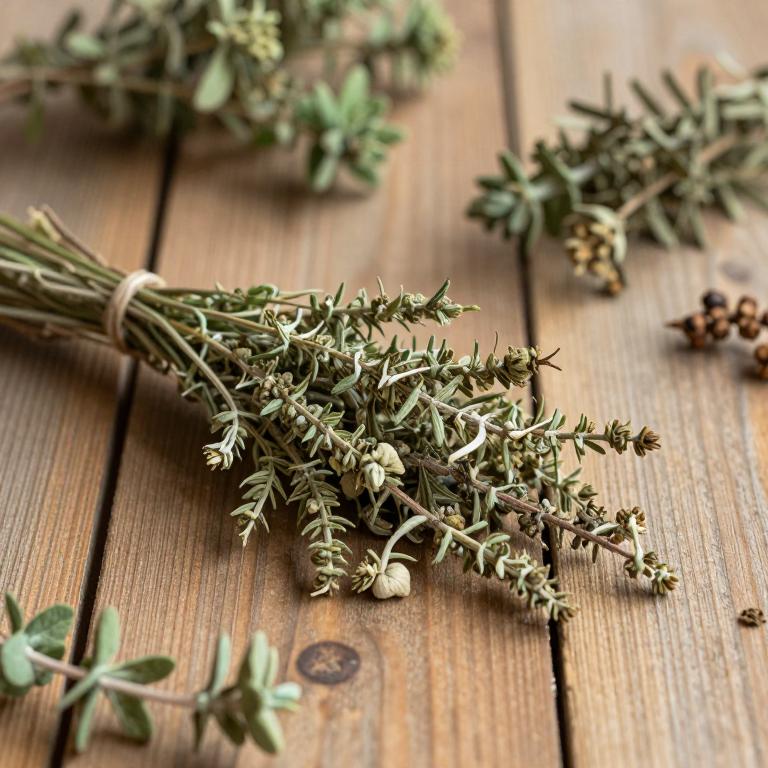
Woody Fleabane, scientifically known as Dittrichia viscosa, is a hardy, perennial shrub native to the Mediterranean region. Often found in disturbed soils, this resinous plant is valued in traditional medicine for its potent antimicrobial, anti-inflammatory, and antioxidant properties, making it a significant subject for modern pharmacological research and development.
Names and Synonyms
Common Names
- Woody Fleabane
- false yellowhead
- woody-fleabane
Scientific Names
Accepted name
Dittrichia viscosaSynonyms
- Cupularia viscosa
- Erigeron viscosus
- Helenium viscosum
- Solidago viscosa
- Pulicaria viscosa
- Paniopsis viscosa
- Inula viscosa
Regional and Traditional Names
Spanish:
- Olivarda
German:
- Inula viscosa
- Erigeron viscosus
- Breitblaettrige Klebalant
- Klebriger Alant
- Großer Klebalant
French:
- Inule visqueuse
- Inula viscosa
- Inule visqueuse
- Dittrichie visqueuse
Sources: Wikidata, Catalogue of Life
Taxonomical Classification
This plant belongs to the kingdom Plantae and the phylum Streptophyta, falling under the class Equisetopsida and subclass Magnoliidae. It is categorized within the order Asterales and the family Asteraceae. Finally, its specific taxonomic placement is within the genus Dittrichia.
| Rank | Classification |
|---|---|
| Kingdom | Plantae |
| Phylum | Streptophyta |
| Class | Equisetopsida |
| Subclass | Magnoliidae |
| Order | Asterales |
| Family | Asteraceae |
| Genus | Dittrichia |
Sources: The World Checklist of Vascular Plants (WCVP)
Distribution
This plant exhibits a varied presence across several distinct regions of the European continent. In Northern Europe, its range extends to include both Great Britain and Ireland. Moving toward Middle Europe, the species can be found growing in Belgium and Germany. Its distribution further reaches the Mediterranean as part of Southwestern Europe. Specifically, it is known to inhabit the Baleares islands within that southern region.
| Region | Area |
|---|---|
| Northern Europe | Great Britain |
| Northern Europe | Ireland |
| Middle Europe | Belgium |
| Middle Europe | Germany |
| Southwestern Europe | Baleares |
| Southwestern Europe | Corse |
| Southwestern Europe | France |
| Southwestern Europe | Portugal |
| Southwestern Europe | Sardegna |
| Southwestern Europe | Spain |
Sources: The World Checklist of Vascular Plants (WCVP)
Botanical Identification
Ecology
The ecology of Dittrichia viscosa is characterized by its high adaptability to diverse and often disturbed environments, thriving across a broad altitudinal spectrum. It occupies a vertical range starting from sea level at 0 m AMSL and extending up to a maximum elevation of 1500 m AMSL. This species typically colonizes ruderal habitats, coastal areas, and rocky slopes, where it demonstrates significant resilience to varying degrees of drought and nutrient-poor soils. As a pioneer species, it often establishes itself in disturbed ground, playing a crucial role in stabilizing soil and contributing to the early stages of ecological succession in Mediterranean-type ecosystems.
- Elevational range max:
- 1500 m AMSL
- Elevational range min:
- 0 m AMSL
Life history
The life history of Dittrichia viscosa is characterized by its classification as a perennial plant, though it exhibits a variable lifecycle that can fluctuate between annual, biennial, and perennial stages depending on environmental conditions. Morphologically, the species is categorized as a hemicryptophyte, a life form where the perennating buds are located at the soil surface, protected by leaf litter or other organic debris during unfavorable seasons. This growth habit allows the plant to persist through various climatic stresses, ensuring its ability to re-emerge and dominate disturbed habitats through its robust reproductive and survival strategies.
- Life form :
- hemicryptophyte
- Lifecycle :
- perennial
Morphology
The morphology of Dittrichia viscosa is characterized by its growth form as a woody, self-supporting herb and forb that thrives in terrestrial environments. As an independent organism, it does not function as a parasite or an epiphyte, maintaining a terrestrial life habit. The plant typically reaches a height ranging from a minimum of 0.3 m to a maximum of 1.5 m. Its structure is defined by its self-supporting nature, rather than exhibiting any climber or vine-like tendencies.
- Aquatic :
- terrestrial
- Climber :
- self-supporting
- Epiphyte :
- terrestrial
- Growth form :
- herb
- Growth form :
- forb
- Parasite :
- independent
- Plant height max:
- 1.5 m
- Plant height min:
- 0.3 m
- Woodiness :
- woody
Physiology
The physiology of Dittrichia viscosa is characterized by a C3 photosynthetic pathway, a metabolic strategy common to many temperate and Mediterranean species that allows for efficient carbon fixation under moderate light and temperature conditions. Its morphological adaptations support its physiological processes, most notably through its leaf form, which is elliptic in shape. This leaf structure, often accompanied by a viscous, resinous coating of glandular trichomes, plays a crucial role in regulating transpiration and protecting the plant's physiological functions from excessive water loss and intense solar radiation.
- Leaf form :
- elliptic
- Photosynthetic pathway :
- C3
Reproduction
The reproduction of Dittrichia viscosa is characterized by a sexual process involving bisexual flowers, which ensures genetic diversity through biotic pollination. The flowering period typically commences in August and extends through November, featuring vibrant orange flowers that range in length from 0.65 cm to 1.2 cm and in width up to 1.5 cm. These flowers rely on an insect-driven pollination syndrome to facilitate fertilization, as self-fertilization is noted to be absent. Following successful pollination, the plant produces dry, indehiscent fruits categorized as achenes. These fruits are relatively small, measuring between 0.2 cm and 0.25 cm in length. Each fruit is highly prolific, containing more than 1,000 seeds. The seeds themselves are minute, with a mean mass of approximately 0.0003417 g, ranging from a minimum of 0.0003 g to a maximum of 0.00042 g. Dispersal is achieved via an anemochorous syndrome, meaning the seeds are primarily dispersed by the wind, allowing the species to spread effectively across its habitat.
- Dehiscence :
- indehiscent
- Dispersal syndrome :
- anemochorous
- Flower colour :
- orange
- Flower length max:
- 1.2 cm
- Flower length min:
- 0.65 cm
- Flower width max:
- 1.5 cm
- Flowering time :
- Aug
- Flowering time :
- Nov
- Fruit dryness :
- dry
- Fruit length max:
- 0.25 cm
- Fruit length min:
- 0.2 cm
- Fruit type :
- achene
- Pollination syndrome :
- insect
- Pollination syndrome :
- biotic
- Reproduction sexual :
- bisexual
- Seed mass max:
- 0.00042 g
- Seed mass mean:
- 0.000341666666666667 g
- Seed mass min:
- 3e-04 g
- Seeds_per_fruit :
- >1000
- Self fertilization :
- absent
Sources: Global Inventory of Floras and Traits (GIFT)
Plant Parts
Dittrichia viscosa has 2 reported plant parts identified across 5 scientific publications and several other databases that are studied for medicinal purposes. The most consistently reported plant part include leaf, flower.
| Plant part | Supporting sources | Consensus |
|---|---|---|
| Leaf | 3 supporting sources | ★★☆☆☆ |
| Flower | 2 supporting sources | ★☆☆☆☆ |
Leaf
- Natural product research
- Journal of food and drug analysis
- Bollettino della Societa italiana di biologia sperimentale
Flower
- Molecules (Basel, Switzerland)
- Scientia pharmaceutica
Chemicals
Dittrichia viscosa has 34 reported phytochemicals identified across 5 scientific publications and several other databases. The most consistently reported chemicals include CHLOROGENIC ACID, Flavonoids, Inuviscolide, quercetin, Caryophyllene oxide.
| Chemical | Supporting sources | Consensus |
|---|---|---|
| CHLOROGENIC ACID | 3 supporting sources | ★★☆☆☆ |
| Flavonoids | 3 supporting sources | ★★☆☆☆ |
| Inuviscolide | 3 supporting sources | ★★☆☆☆ |
| quercetin | 3 supporting sources | ★★☆☆☆ |
| Caryophyllene oxide | 2 supporting sources | ★☆☆☆☆ |
| Gallic acid | 2 supporting sources | ★☆☆☆☆ |
| 1,4-Dimethyl-azulene | 1 supporting sources | ★☆☆☆☆ |
| 2-Camphanol acetate | 1 supporting sources | ★☆☆☆☆ |
| 3-O-Methylquercetin | 1 supporting sources | ★☆☆☆☆ |
| 3-O-acetylpadmatin | 1 supporting sources | ★☆☆☆☆ |
CHLOROGENIC ACID
- Biomedicine & pharmacotherapy = Biomedecine & pharmacotherapie
- International journal of pharmaceutics
- International journal of environmental health research
Flavonoids
- Planta medica
- Scientia pharmaceutica
- Journal of traditional and complementary medicine
Inuviscolide
- Journal of traditional and complementary medicine
- Journal of natural products
- Biomedicines
quercetin
- Molecules (Basel, Switzerland)
- Ultrasonics sonochemistry
- International journal of environmental health research
Caryophyllene oxide
- Food science & nutrition
- Molecules (Basel, Switzerland)
Gallic acid
- Ultrasonics sonochemistry
- Molecules (Basel, Switzerland)
1,4-Dimethyl-azulene
- Bollettino della Societa italiana di biologia sperimentale
2-Camphanol acetate
- Frontiers in pharmacology
3-O-Methylquercetin
- Journal of ethnopharmacology
3-O-acetylpadmatin
- Journal of natural products
Activities
Dittrichia viscosa has 18 reported activities identified across 5 scientific publications and several other databases. The most consistently reported activities include Antioxidant, Anticancer, Cytotoxic, Antibacterial, Antimicrobial.
| Activity | Supporting sources | Consensus |
|---|---|---|
| Antioxidant | 9 supporting sources | ★★★★☆ |
| Anticancer | 4 supporting sources | ★★☆☆☆ |
| Cytotoxic | 3 supporting sources | ★★☆☆☆ |
| Antibacterial | 2 supporting sources | ★☆☆☆☆ |
| Antimicrobial | 2 supporting sources | ★☆☆☆☆ |
| Antiphlogistic | 2 supporting sources | ★☆☆☆☆ |
| Antiseptic | 2 supporting sources | ★☆☆☆☆ |
| Analgesic | 1 supporting sources | ★☆☆☆☆ |
| Anticholinesterase | 1 supporting sources | ★☆☆☆☆ |
| Antidiabetic | 1 supporting sources | ★☆☆☆☆ |
Antioxidant
- Food science & nutrition
- Scientific reports
- Zeitschrift fur Naturforschung. C, Journal of biosciences
- Journal of traditional and complementary medicine
- Food research international (Ottawa, Ont.)
View 4 additional sources
- Journal of ethnopharmacology
- Ultrasonics sonochemistry
- Journal of food and drug analysis
- Molecules (Basel, Switzerland)
Anticancer
- Scientific reports
- Journal of traditional and complementary medicine
- Journal of ethnopharmacology
- International journal of pharmaceutics
Cytotoxic
- Journal of traditional and complementary medicine
- Journal of ethnopharmacology
- Journal of food and drug analysis
Antibacterial
- Journal of traditional and complementary medicine
- Chemistry & biodiversity
Antimicrobial
- Journal of infection in developing countries
- Molecules (Basel, Switzerland)
Antiphlogistic
- Frontiers in oncology
- Bollettino della Societa italiana di biologia sperimentale
Antiseptic
- Frontiers in oncology
- Bollettino della Societa italiana di biologia sperimentale
Analgesic
- Journal of traditional and complementary medicine
Anticholinesterase
- Chemistry & biodiversity
Antidiabetic
- Food science & nutrition
Conditions
Dittrichia viscosa has 7 reported investigations on conditions identified across 5 scientific publications and several other databases. The most consistently reported conditions include cancer, Gastric ulcers, breast cancer, hypertension, poliovirus type 1.
| Condition | Supporting sources | Consensus |
|---|---|---|
| Cancer | 2 supporting sources | ★☆☆☆☆ |
| Gastric ulcers | 1 supporting sources | ★☆☆☆☆ |
| Breast cancer | 1 supporting sources | ★☆☆☆☆ |
| Hypertension | 1 supporting sources | ★☆☆☆☆ |
| Poliovirus type 1 | 1 supporting sources | ★☆☆☆☆ |
| Prostate cancer | 1 supporting sources | ★☆☆☆☆ |
| Wound healing | 1 supporting sources | ★☆☆☆☆ |
Cancer
- Journal of traditional and complementary medicine
- Journal of ethnopharmacology
Gastric ulcers
- Planta medica
Breast cancer
- Journal of ethnopharmacology
Hypertension
- Journal of traditional and complementary medicine
Poliovirus type 1
- Phytotherapy research : PTR
Prostate cancer
- Journal of ethnopharmacology
Wound healing
- Journal of traditional and complementary medicine
Preparations
Dittrichia viscosa has 21 reported preparations identified across 5 scientific publications and several other databases. The most consistently reported preparations include aqueous extracts, extracts, Aqueous extracts, CH2Cl2 extract, Essential Oils.
| Preparation | Supporting sources | Consensus |
|---|---|---|
| Aqueous extracts | 3 supporting sources | ★★☆☆☆ |
| Extracts | 2 supporting sources | ★☆☆☆☆ |
| Aqueous extracts | 1 supporting sources | ★☆☆☆☆ |
| Ch2cl2 extract | 1 supporting sources | ★☆☆☆☆ |
| Essential oils | 1 supporting sources | ★☆☆☆☆ |
| Extracts | 1 supporting sources | ★☆☆☆☆ |
| Ive-g | 1 supporting sources | ★☆☆☆☆ |
| Inula viscosa extract | 1 supporting sources | ★☆☆☆☆ |
| Methanol fractions | 1 supporting sources | ★☆☆☆☆ |
| Methanolic extracts | 1 supporting sources | ★☆☆☆☆ |
Aqueous extracts
- Molecules (Basel, Switzerland)
- Journal of ethnopharmacology
- Mycoses
Extracts
- Journal of traditional and complementary medicine
- Journal of ethnopharmacology
Aqueous extracts
- Phytotherapy research : PTR
Ch2cl2 extract
- Journal of natural products
Essential oils
- Food science & nutrition
Extracts
- Life sciences
Ive-g
- International journal of pharmaceutics
Inula viscosa extract
- International journal of pharmaceutics
Methanol fractions
- Scientia pharmaceutica
Methanolic extracts
- Journal of infection in developing countries