Inula graveolens
Dittrichia graveolens · Accepted scientific name
Scientific literature: Very Sparse (26 studies) · ★☆☆☆☆
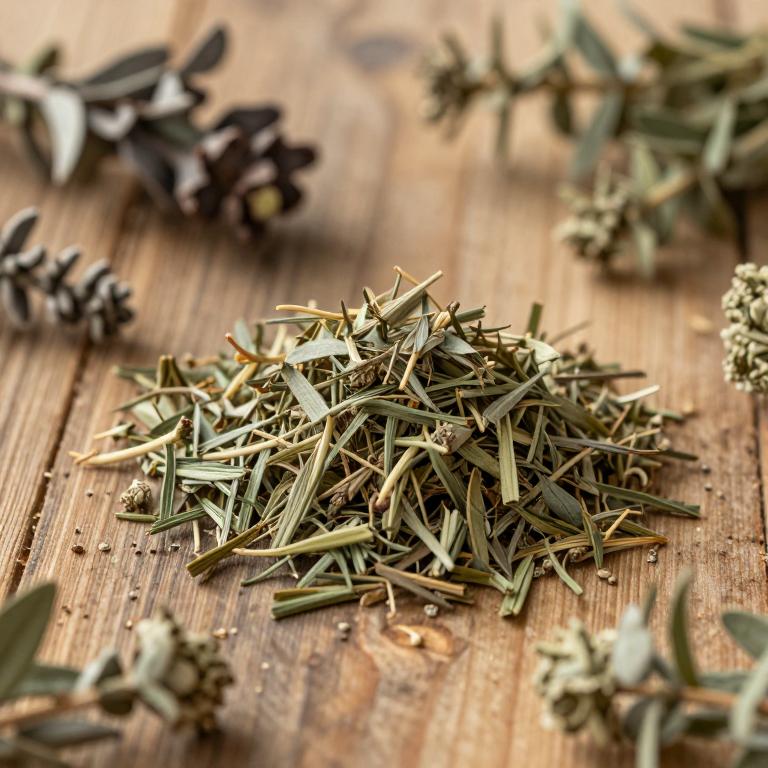
Inula graveolens, scientifically known as Dittrichia graveolens, is a resilient perennial shrub native to the Mediterranean. Renowned for its vibrant yellow blooms, this plant holds significant ethnobotanical value. It is frequently utilized in traditional medicine for its potent anti-inflammatory, antimicrobial, and antioxidant properties, offering diverse therapeutic potential.
Names and Synonyms
Common Names
- stinking fleabane
- stinkweed
- stinkwort
- Cape khakiweed
- camphor inula
- stinking-fleabane
Scientific Names
Accepted name
Dittrichia graveolensSynonyms
- Conyza minor
- Erigeron graveolens
- Helenium graveolens
- Inula brahuica
- Inula graveolens
- Pulicaria graveolens
- Alunia graveolens
- Inula quadridentata
- Solidago graveolens
- Paniopsis graveolens
- Cupularia graveolens
Regional and Traditional Names
Spanish:
- Olivarda fina
- erigeron de olor pesado
German:
- Schmalblättriger Klebalant
- Klebriger Alant
- Klebalant
- drüsiger Alant
- klebriger Alant
- Duftender Klebalant
- Starkduftender Alant
- Schmalblättriger Klebalant
- Kleiner Klebalant
French:
- inule fétide
- inule fétide
- Inule fetide
- Inule odorante
Sources: Wikidata, Catalogue of Life
Taxonomical Classification
This plant belongs to the kingdom Plantae and is classified within the phylum Streptophyta and the class Equisetopsida. Following the subclass Magnoliidae, it is organized under the order Asterales and falls into the family Asteraceae. Ultimately, its taxonomic identity is defined by the genus Dittrichia, specifically as the species Dittrichia graveolens.
| Rank | Classification |
|---|---|
| Kingdom | Plantae |
| Phylum | Streptophyta |
| Class | Equisetopsida |
| Subclass | Magnoliidae |
| Order | Asterales |
| Family | Asteraceae |
| Genus | Dittrichia |
Sources: The World Checklist of Vascular Plants (WCVP)
Distribution
This plant exhibits a broad geographical distribution across various regions of the European continent. In Northern Europe, its presence can be specifically noted within Great Britain. Moving into Middle Europe, it is commonly found throughout the landscapes of Germany and the Netherlands. The species also inhabits the central territories of Austria. Furthermore, its range extends into the regions of Czechia and Slovakia.
| Region | Area |
|---|---|
| Northern Europe | Great Britain |
| Middle Europe | Austria |
| Middle Europe | Czechia-Slovakia |
| Middle Europe | Germany |
| Middle Europe | Netherlands |
| Middle Europe | Poland |
| Middle Europe | Switzerland |
| Southwestern Europe | Baleares |
| Southwestern Europe | Corse |
| Southwestern Europe | France |
Sources: The World Checklist of Vascular Plants (WCVP)
Botanical Identification
Ecology
The ecology of Dittrichia graveolens is characterized by its preference for lowland environments, where it thrives in diverse open landscapes. It occupies a specific altitudinal niche, with its distribution spanning an elevational range from a minimum of 15 m AMSL to a maximum of 800 m AMSL. This range indicates its capacity to adapt to various low-altitude terrains, typically favoring disturbed sites, ruderal habitats, or sunny, open areas within these elevations.
- Elevational range max:
- 800 m AMSL
- Elevational range min:
- 15 m AMSL
- Habitat :
- Lowland
Life history
The life history of Dittrichia graveolens is characterized by its classification as a therophyte, meaning it completes its entire life cycle within a single growing season. As an annual species, it follows a rapid developmental trajectory from germination to seed production before the onset of unfavorable conditions. The plant exhibits a deciduous nature, shedding its foliage as it concludes its seasonal cycle. This life strategy allows it to thrive in disturbed or open habitats by utilizing a transient existence, relying on a prolific seed bank to ensure survival and colonization in subsequent seasons.
- Deciduousness :
- deciduous
- Life form :
- therophyte
- Lifecycle :
- annual
Morphology
The morphology of Dittrichia graveolens is characterized by a growth form classified as both a herb and a forb, functioning as a self-supporting plant rather than a climber or liana. It is an independent species, lacking any parasitic or epiphytic lifestyle, and maintains a terrestrial existence, being neither aquatic nor semiaquatic. The plant's structure is non-woody in nature, typically reaching a height ranging from a minimum of 0.1 m to a maximum of 1 m.
- Aquatic :
- terrestrial
- Climber :
- self-supporting
- Epiphyte :
- terrestrial
- Growth form :
- herb
- Growth form :
- forb
- Parasite :
- independent
- Plant height max:
- 1 m
- Plant height min:
- 0.1 m
- Woodiness :
- non-woody
Physiology
The physiology of Dittrichia graveolens is characterized by a C3 photosynthetic pathway, which dictates its carbon fixation processes and metabolic efficiency. Morphologically, the plant exhibits specific leaf dimensions that influence its surface area for gas exchange and light absorption; the leaf length typically ranges from a minimum of 2 cm to a maximum of 7 cm, while the leaf width varies between a minimum of 0.1 cm and a maximum of 0.8 cm, with a mean leaf width of approximately 0.6 cm. Furthermore, the species does not function as a nitrogen fixer, meaning it relies on the uptake of available nitrogen from the soil rather than through symbiotic biological nitrogen fixation.
- Leaf length max:
- 7 cm
- Leaf length min:
- 2 cm
- Leaf width max:
- 0.8 cm
- Leaf width mean:
- 0.6 cm
- Leaf width min:
- 0.1 cm
- Nitrogen fixer :
- no
- Photosynthetic pathway :
- C3
Reproduction
The reproduction of Dittrichia graveolens is characterized by a specific seasonal flowering period that begins in July and concludes in September. The plant produces fruits classified as achenes, which are indehiscent in nature. These fruits have an average length of 0.2 cm. The seeds contained within the fruit are highly uniform in size, with a consistent length of 2 mm (ranging from a minimum of 2 mm to a maximum of 2 mm). The seed mass is quite small, with a mean weight of 0.0003675 g, though individual seeds may weigh as little as 0.00021 g or as much as 0.00046 g. For the spread of its progeny, the plant utilizes an anemochorous dispersal syndrome, relying on wind to transport its seeds across the landscape.
- Dehiscence :
- indehiscent
- Dispersal syndrome :
- anemochorous
- Flowering time :
- Jul
- Flowering time :
- Sep
- Fruit length mean:
- 0.2 cm
- Fruit type :
- achene
- Seed length mean:
- 2 mm
- Seed mass max:
- 0.00046 g
- Seed mass mean:
- 0.0003675 g
- Seed mass min:
- 0.00021 g
Sources: Global Inventory of Floras and Traits (GIFT)
Plant Parts
Dittrichia graveolens has 1 reported plant parts identified across 1 scientific publications and several other databases that are studied for medicinal purposes. The most consistently reported plant part include root.
| Plant part | Supporting sources | Consensus |
|---|---|---|
| Root | 1 supporting sources | ★☆☆☆☆ |
Root
- Chemistry & biodiversity
Chemicals
Dittrichia graveolens has 11 reported phytochemicals identified across 1 scientific publications and several other databases. The most consistently reported chemicals include Borneol, 4-epi-isoinuviscolide, 8-epi-Helenalin, BORNYL ACETATE, Bigelovin.
| Chemical | Supporting sources | Consensus |
|---|---|---|
| Borneol | 2 supporting sources | ★☆☆☆☆ |
| 4-epi-isoinuviscolide | 1 supporting sources | ★☆☆☆☆ |
| 8-epi-Helenalin | 1 supporting sources | ★☆☆☆☆ |
| BORNYL ACETATE | 1 supporting sources | ★☆☆☆☆ |
| Bigelovin | 1 supporting sources | ★☆☆☆☆ |
| Caryophyllene oxide | 1 supporting sources | ★☆☆☆☆ |
| Inuviscolide | 1 supporting sources | ★☆☆☆☆ |
| Neryl isovalerate | 1 supporting sources | ★☆☆☆☆ |
| Thymol isobutyrate | 1 supporting sources | ★☆☆☆☆ |
| Tomentosin | 1 supporting sources | ★☆☆☆☆ |
Borneol
- Chemistry & biodiversity
- Molecules (Basel, Switzerland)
4-epi-isoinuviscolide
- Chemical & pharmaceutical bulletin
8-epi-Helenalin
- Chemical & pharmaceutical bulletin
BORNYL ACETATE
- Chemistry & biodiversity
Bigelovin
- Chemical & pharmaceutical bulletin
Caryophyllene oxide
- Chemistry & biodiversity
Inuviscolide
- Molecules (Basel, Switzerland)
Neryl isovalerate
- Chemistry & biodiversity
Thymol isobutyrate
- Chemistry & biodiversity
Tomentosin
- Molecules (Basel, Switzerland)
Activities
Dittrichia graveolens has 7 reported activities identified across 1 scientific publications and several other databases. The most consistently reported activities include Antimicrobial, Anticholinesterase, Antifungal, Antiinflammatory, Antioxidant.
| Activity | Supporting sources | Consensus |
|---|---|---|
| Antimicrobial | 2 supporting sources | ★☆☆☆☆ |
| Anticholinesterase | 1 supporting sources | ★☆☆☆☆ |
| Antifungal | 1 supporting sources | ★☆☆☆☆ |
| Antiinflammatory | 1 supporting sources | ★☆☆☆☆ |
| Antioxidant | 1 supporting sources | ★☆☆☆☆ |
| Antipyretic | 1 supporting sources | ★☆☆☆☆ |
| Antitumor | 1 supporting sources | ★☆☆☆☆ |
Antimicrobial
- Molecules (Basel, Switzerland)
- Chemical & pharmaceutical bulletin
Anticholinesterase
- Molecules (Basel, Switzerland)
Antifungal
- Molecules (Basel, Switzerland)
Antiinflammatory
- Chemical & pharmaceutical bulletin
Antioxidant
- Molecules (Basel, Switzerland)
Antipyretic
- Chemical & pharmaceutical bulletin
Antitumor
- Molecules (Basel, Switzerland)
Conditions
Dittrichia graveolens has 3 reported investigations on conditions identified across 1 scientific publications and several other databases. The most consistently reported conditions include anticholinesterase, antioxidant, antipyretic.
| Condition | Supporting sources | Consensus |
|---|---|---|
| Anticholinesterase | 1 supporting sources | ★☆☆☆☆ |
| Antioxidant | 1 supporting sources | ★☆☆☆☆ |
| Antipyretic | 1 supporting sources | ★☆☆☆☆ |
Anticholinesterase
- Molecules (Basel, Switzerland)
Antioxidant
- Molecules (Basel, Switzerland)
Antipyretic
- Chemical & pharmaceutical bulletin
Preparations
Dittrichia graveolens has 4 reported preparations identified across 1 scientific publications and several other databases. The most consistently reported preparations include aerial parts oil, essential oil from aerial parts, essential oils extracted from roots, roots essential oil.
| Preparation | Supporting sources | Consensus |
|---|---|---|
| Aerial parts oil | 1 supporting sources | ★☆☆☆☆ |
| Essential oil from aerial parts | 1 supporting sources | ★☆☆☆☆ |
| Essential oils extracted from roots | 1 supporting sources | ★☆☆☆☆ |
| Roots essential oil | 1 supporting sources | ★☆☆☆☆ |
Aerial parts oil
- Chemistry & biodiversity
Essential oil from aerial parts
- Chemistry & biodiversity
Essential oils extracted from roots
- Chemistry & biodiversity
Roots essential oil
- Chemistry & biodiversity