noon-flower
Distimake dissectus · Accepted scientific name
Scientific literature: Very Sparse (3 studies) · ★☆☆☆☆
Noon-flower, scientifically known as Distimake dissectus, is a remarkable medicinal herb prized in traditional healing. Characterized by its unique floral structure, this plant offers potent bioactive compounds. It is widely utilized for its anti-inflammatory and antimicrobial properties, serving as a vital natural remedy for various skin and digestive ailments.
- Family
- Convolvulaceae
- Native range
- Africa
- Parts used
- Root
- Common names
- Noon-Flower · Alamo Vine
- Scientific synonyms
- Ipomoea Dissecta Var. Maximiliani · Merremia Sinuata · 18 more
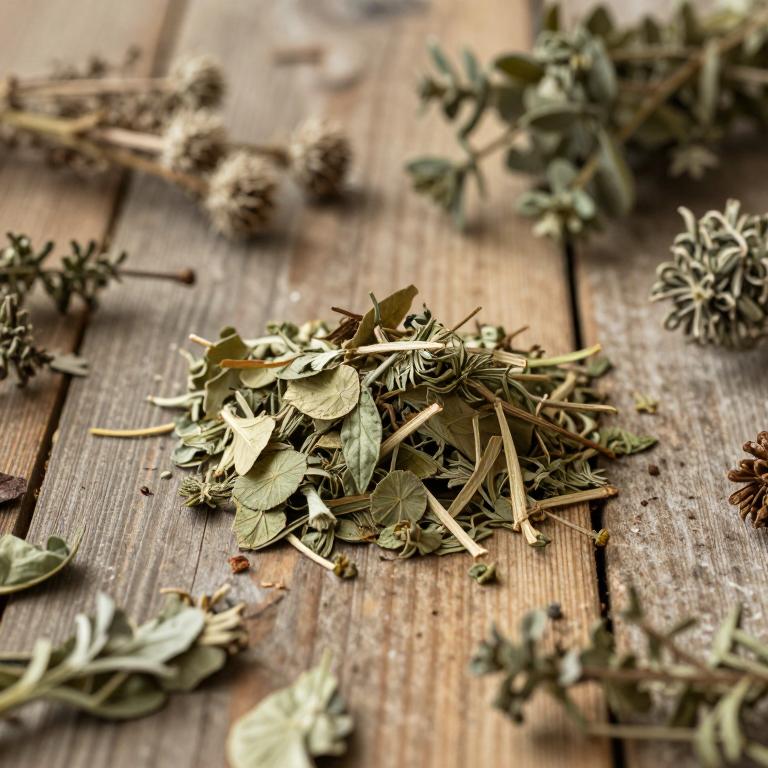
Names and Synonyms
Common Names
- noon-flower
- Alamo vine
Scientific Names
Accepted name
Distimake dissectusSynonyms
- Ipomoea dissecta var. maximiliani
- Merremia sinuata
- Merremia dissecta var. maximiliani
- Merremia dissecta
- Operculina dissecta
- Merremia sinuata var. edentata
- Ipomoea arnottiana
- Ipomoea nigricans
- Latrienda palmata
- Ipomoea sinuata var. subintegra
- Ipomoea maximiliani
- Convolvulus dissectus
- Ipomoea sinuata var. edentata
- Ipomoea subpedata
- Convolvulus palmatus
- Distimake dissectus var. edentatus
- Merremia maximiliani
- Distimake dissectus var. chacoensis
- Merremia dissecta var. edentata
- Merremia dissecta var. chacoensis
Regional and Traditional Names
Spanish:
- Noyó
- aguinaldo de almendra
- almendrillo
- ojo de tecolote
Sources: Wikidata, Catalogue of Life
Taxonomical Classification
This plant, Distimake dissectus, belongs to the kingdom Plantae and is classified under the phylum Streptophyta and class Equisetopsida. Within the subclass Magnoliidae, it is organized under the order Solanales and the family Convolvulaceae. Ultimately, its taxonomic placement is finalized within the genus Distimake.
| Rank | Classification |
|---|---|
| Kingdom | Plantae |
| Phylum | Streptophyta |
| Class | Equisetopsida |
| Subclass | Magnoliidae |
| Order | Solanales |
| Family | Convolvulaceae |
| Genus | Distimake |
Sources: The World Checklist of Vascular Plants (WCVP)
Distribution
This plant, Distimake dissectus, exhibits a specific distribution pattern across the West Tropical Africa region. Its presence is documented in the country of Benin, where it grows within local ecosystems. Furthermore, the species can be found spanning across Burkina and Ghana. The plant's range also extends southward into the territories of Guinea. Finally, its geographical footprint includes the coastal landscapes of Ivory Coast.
| Region | Area |
|---|---|
| West Tropical Africa | Benin |
| West Tropical Africa | Burkina |
| West Tropical Africa | Ghana |
| West Tropical Africa | Guinea |
| West Tropical Africa | Ivory Coast |
| West Tropical Africa | Nigeria |
| West Tropical Africa | Senegal |
| West Tropical Africa | Sierra Leone |
| West Tropical Africa | Togo |
| West-Central Tropical Africa | Congo |
Sources: The World Checklist of Vascular Plants (WCVP)
Botanical Identification
Ecology
The ecology of Distimake dissectus is characterized by its specific vertical distribution within its native landscape, occupying a broad altitudinal gradient. This species is found at elevations ranging from sea level up to a maximum of 1000 m AMSL, demonstrating an ability to adapt to both lowland and mid-elevation environments. On average, the plant thrives at a mean elevation of 600 m AMSL, a positioning that likely dictates the specific climatic conditions, such as temperature ranges and moisture availability, to which the species is most optimally adapted.
- Elevational range max:
- 1000 m AMSL
- Elevational range mean:
- 600 m AMSL
- Elevational range min:
- 0 m AMSL
Life history
The life history of Distimake dissectus is characterized by its perennial lifecycle, allowing the plant to persist through multiple growing seasons. In terms of its structural growth strategy and positioning relative to the ground, it is classified as a chamaephyte, maintaining its buds close to the soil surface to withstand environmental fluctuations. Additionally, the species exhibits a phanerophyte life form, which reflects its specific developmental patterns and physiological adaptations within its habitat.
- Life form :
- phanerophyte
- Life form :
- chamaephyte
- Lifecycle :
- perennial
Morphology
The morphology of Distimake dissectus is characterized by its growth form as a non-woody herb and forb, functioning as an independent organism without parasitic tendencies. It exhibits an obligatory climbing habit, specifically manifesting as a vine or liana that requires external support to ascend. The plant can reach a significant height, ranging from a minimum of 1 m to a maximum of 20 m. While its habitat encompasses aquatic and semiaquatic environments, it is primarily classified as terrestrial in its epiphytic and general ecological positioning.
- Aquatic :
- terrestrial
- Climber :
- vine
- Climber :
- obligatory
- Epiphyte :
- terrestrial
- Growth form :
- herb
- Growth form :
- forb
- Parasite :
- independent
- Plant height max:
- 20 m
- Plant height min:
- 1 m
- Woodiness :
- non-woody
Physiology
The physiology of Distimake dissectus is characterized by specific morphological dimensions and a non-succulent leaf structure that dictates its resource management and surface area dynamics. The foliage exhibits significant variability in size, with leaf lengths ranging from a minimum of 2.5 cm to a maximum of 10 cm, maintaining an average length of 6.25 cm. This longitudinal variation is paired with a diverse width profile, where leaves measure between a minimum of 0.5 cm and a maximum of 3 cm, resulting in a mean width of 1.75 cm. Unlike many desert-adapted species, the plant lacks succulence, indicating that its physiological strategy does not rely on specialized thickened tissues for water storage, but rather on its specific leaf geometry to manage transpiration and light interception.
- Leaf length max:
- 10 cm
- Leaf length mean:
- 6.25 cm
- Leaf length min:
- 2.5 cm
- Leaf width max:
- 3 cm
- Leaf width mean:
- 1.75 cm
- Leaf width min:
- 0.5 cm
- Succulence :
- no
Reproduction
The reproduction of Distimake dissectus is characterized by specific seed morphological traits and a specialized method of movement. The seeds produced by this species exhibit a relatively consistent mass, with a measured minimum of 0.12569 g, a maximum of 0.1404 g, and an average seed mass of approximately 0.13139 g. In terms of its dispersal strategy, the plant utilizes a hydrochorous syndrome, meaning its seeds are primarily dispersed by water, which plays a critical role in the expansion of its population across suitable habitats.
- Dispersal syndrome :
- hydrochorous
- Seed mass max:
- 0.1404 g
- Seed mass mean:
- 0.13139 g
- Seed mass min:
- 0.12569 g
Sources: Global Inventory of Floras and Traits (GIFT)
Plant Parts
Distimake dissectus has 1 reported plant parts identified across 1 scientific publications and several other databases that are studied for medicinal purposes. The most consistently reported plant part include root.
| Plant part | Supporting sources | Consensus |
|---|---|---|
| Root | 1 supporting sources | ★☆☆☆☆ |
Root
- Tropical medicine and health
Chemicals
Distimake dissectus has 1 reported phytochemicals identified across 1 scientific publications and several other databases. The most consistently reported chemicals include (+)-Spathulenol.
| Chemical | Supporting sources | Consensus |
|---|---|---|
| (+)-Spathulenol | 1 supporting sources | ★☆☆☆☆ |
(+)-Spathulenol
- Evidence-based complementary and alternative medicine : eCAM
Conditions
Distimake dissectus has 1 reported investigations on conditions identified across 1 scientific publications and several other databases. The most consistently reported conditions include candidiasis.
| Condition | Supporting sources | Consensus |
|---|---|---|
| Candidiasis | 1 supporting sources | ★☆☆☆☆ |
Candidiasis
- Tropical medicine and health
Preparations
Distimake dissectus has 1 reported preparations identified across 1 scientific publications and several other databases. The most consistently reported preparations include Powdered roots.
| Preparation | Supporting sources | Consensus |
|---|---|---|
| Powdered roots | 1 supporting sources | ★☆☆☆☆ |
Powdered roots
- Tropical medicine and health