Trailing Bitter-tea
Distephanus angulifolius · Accepted scientific name
Scientific literature: Very Sparse (6 studies) · ★☆☆☆☆
Trailing Bitter-tea, scientifically known as Distephanus anguifolius, is a medicinal herb native to Southeast Asia. Renowned for its intense bitterness, it is traditionally used to treat inflammation, skin ailments, and digestive issues. This potent plant offers significant therapeutic potential, making it a vital component in various herbal remedies.
- Family
- Asteraceae
- Native range
- Africa
- Parts used
- Leaf
- Common names
- Trailing Bitter-Tea
- Scientific synonyms
- Vernonia Angulifolia · Cacalia Angulifolia
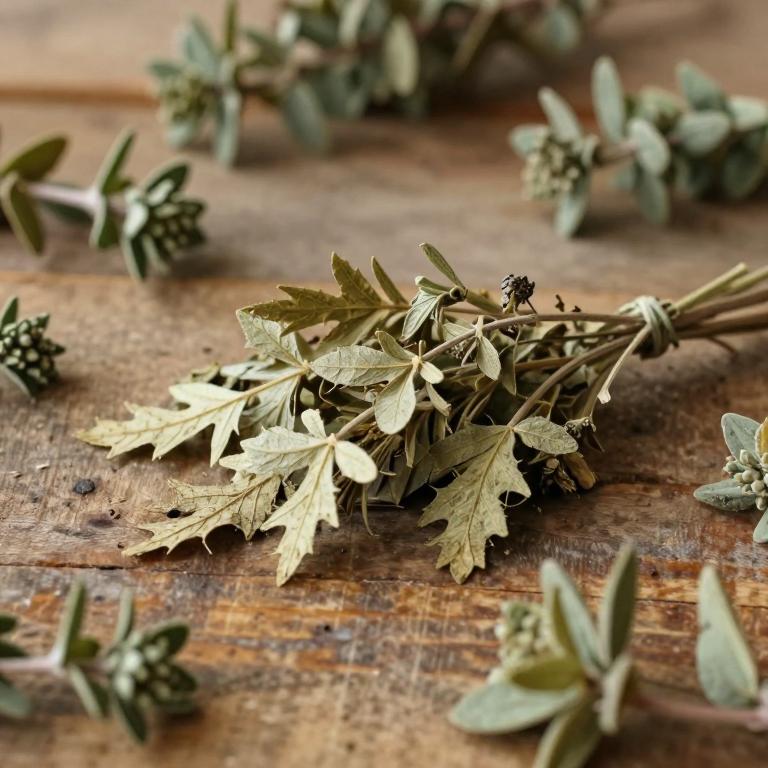
Names and Synonyms
Common Names
- Trailing Bitter-tea
Scientific Names
Accepted name
Distephanus angulifoliusSynonyms
- Vernonia angulifolia
- Cacalia angulifolia
Sources: Wikidata, Catalogue of Life
Taxonomical Classification
This plant belongs to the kingdom Plantae and is classified within the phylum Streptophyta and class Equisetopsida. As a member of the subclass Magnoliidae and order Asterales, it falls under the family Asteraceae. Finally, it is identified by the genus Distephanus, specifically as the species Distephanus anguifolius.
| Rank | Classification |
|---|---|
| Kingdom | Plantae |
| Phylum | Streptophyta |
| Class | Equisetopsida |
| Subclass | Magnoliidae |
| Order | Asterales |
| Family | Asteraceae |
| Genus | Distephanus |
Sources: The World Checklist of Vascular Plants (WCVP)
Distribution
This plant exhibits a specific geographical distribution across several regions in Africa. It can be found within the tropical landscapes of Mozambique in South Tropical Africa. Additionally, its range extends into the southern parts of the continent. Specifically, it inhabits the Cape Provinces of Southern Africa. Finally, the species is also documented growing in the KwaZulu-Natal region of Southern Africa.
| Region | Area |
|---|---|
| South Tropical Africa | Mozambique |
| Southern Africa | Cape Provinces |
| Southern Africa | KwaZulu-Natal |
Sources: The World Checklist of Vascular Plants (WCVP)
Botanical Identification
Ecology
The ecology of Distephanus anguifolius is characterized by its distribution across a diverse altitudinal gradient, allowing it to inhabit various lowland and mid-elevation landscapes. It thrives within an elevational range that begins at a minimum of 10 m AMSL and extends up to a maximum of 500 m AMSL. This specific vertical distribution suggests an adaptation to tropical or subtropical environments where humidity and temperature patterns are relatively stable, typically favoring the sheltered conditions of forest understories or moist margins found within these low-to-mid altitude zones.
- Elevational range max:
- 500 m AMSL
- Elevational range min:
- 10 m AMSL
Life history
The life history of Distephanus anguifolius is characterized by its status as a perennial plant, allowing it to persist through multiple growing seasons rather than completing its cycle in a single year. As a perennial species, it establishes a stable presence within its ecological niche, often developing robust root systems or rhizomes that facilitate long-term survival and regrowth after periods of dormancy or environmental stress. This life cycle enables the plant to invest resources into structural longevity, supporting sustained vegetative growth and the ability to produce reproductive structures over several years. Depending on environmental conditions and resource availability, its growth patterns may exhibit variations, but its fundamental biological strategy remains rooted in a multi-year existence.
- Lifecycle :
- perennial
Morphology
The morphology of Disstaphana anguifolia is characterized by its woody structure and its classification as a shrub, though it exhibits the growth habits of a liana or vine. It functions as an obligatory climber, requiring support to ascend, and maintains an independent existence as it is not a parasite. The plant is primarily terrestrial in its ecological niche, rather than aquatic or epiphytic. In terms of stature, it displays significant vertical growth, with a plant height ranging from a minimum of 1 meter to a maximum of 6 meters.
- Aquatic :
- terrestrial
- Climber :
- liana
- Climber :
- obligatory
- Epiphyte :
- terrestrial
- Growth form :
- shrub
- Parasite :
- independent
- Plant height max:
- 6 m
- Plant height min:
- 1 m
- Woodiness :
- woody
Sources: Global Inventory of Floras and Traits (GIFT)
Plant Parts
Distephanus angulifolius has 1 reported plant parts identified across 1 scientific publications and several other databases that are studied for medicinal purposes. The most consistently reported plant part include leaf.
| Plant part | Supporting sources | Consensus |
|---|---|---|
| Leaf | 1 supporting sources | ★☆☆☆☆ |
Leaf
- Journal of ethnopharmacology
Activities
Distephanus angulifolius has 5 reported activities identified across 1 scientific publications and several other databases. The most consistently reported activities include Antibacterial, Antimicrobial, Antimutagenic, Antioxidant, Mutagenic.
| Activity | Supporting sources | Consensus |
|---|---|---|
| Antibacterial | 1 supporting sources | ★☆☆☆☆ |
| Antimicrobial | 1 supporting sources | ★☆☆☆☆ |
| Antimutagenic | 1 supporting sources | ★☆☆☆☆ |
| Antioxidant | 1 supporting sources | ★☆☆☆☆ |
| Mutagenic | 1 supporting sources | ★☆☆☆☆ |
Antibacterial
- Journal of ethnopharmacology
Antimicrobial
- Journal of ethnopharmacology
Antimutagenic
- Journal of ethnopharmacology
Antioxidant
- Journal of ethnopharmacology
Mutagenic
- Journal of ethnopharmacology
Preparations
Distephanus angulifolius has 2 reported preparations identified across 1 scientific publications and several other databases. The most consistently reported preparations include Dichloromethane fractions, extracts obtained from the leaves.
| Preparation | Supporting sources | Consensus |
|---|---|---|
| Dichloromethane fractions | 1 supporting sources | ★☆☆☆☆ |
| Extracts obtained from the leaves | 1 supporting sources | ★☆☆☆☆ |
Dichloromethane fractions
- Journal of ethnopharmacology
Extracts obtained from the leaves
- Journal of ethnopharmacology