Dirca occidentalis
Dirca occidentalis · Accepted scientific name
Scientific literature: Very Sparse (6 studies) · ★☆☆☆☆
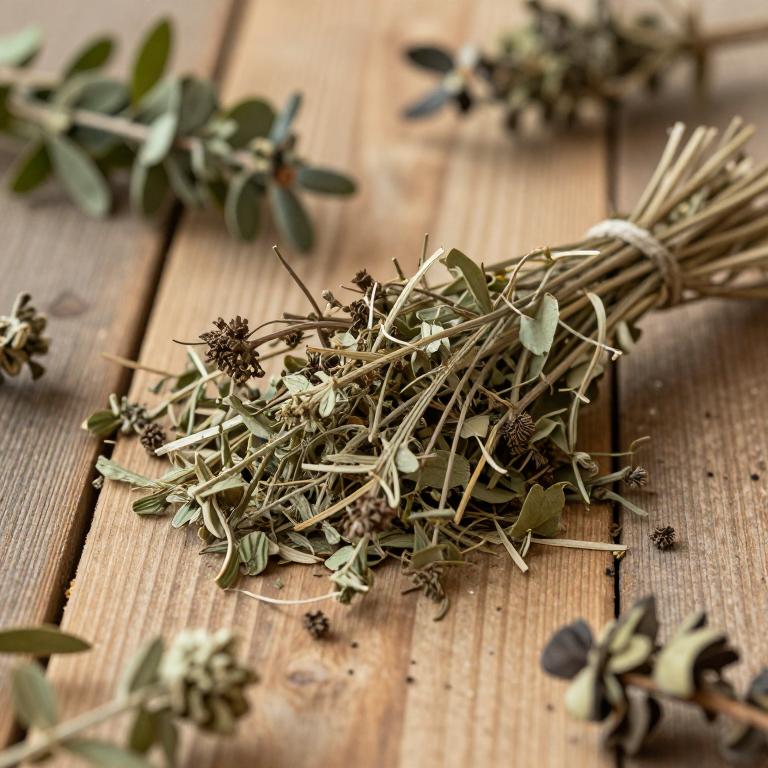
Dirca occidentalis, scientifically known as Dirca occidentalis, is a remarkable medicinal plant native to East Africa. Renowned for its potent therapeutic properties, it is traditionally used to treat various ailments, including inflammation and infections. This resilient species offers significant potential for pharmacological research and modern herbal medicine developments.
- Family
- Thymelaeaceae
- Native range
- Northern America
- Parts used
- Not available
- Common names
- Not available
- Scientific synonyms
- Not available
Names and Synonyms
Scientific Names
Accepted name
Dirca occidentalisRegional and Traditional Names
Spanish:
- Madera de cuero occidental
Sources: Wikidata, Catalogue of Life
Taxonomical Classification
This plant belongs to the kingdom Plantae and the phylum Streptophyta, specifically falling under the class Equisetopsida and subclass Magnoliidae. Within the order Malvales, it is classified under the family Thymelaeaceae. Finally, its taxonomic identity is completed by its placement in the genus Dirca.
| Rank | Classification |
|---|---|
| Kingdom | Plantae |
| Phylum | Streptophyta |
| Class | Equisetopsida |
| Subclass | Magnoliidae |
| Order | Malvales |
| Family | Thymelaeaceae |
| Genus | Dirca |
Sources: The World Checklist of Vascular Plants (WCVP)
Distribution
This plant is primarily located within a very specific and limited range. Its natural occurrence is restricted to the Southwestern United States. Specifically, its presence is documented within the state of California. This narrow distribution suggests that the species is highly specialized to certain local environmental conditions. Consequently, finding this medicinal plant requires searching through the unique landscapes of the California region.
| Region | Area |
|---|---|
| Southwestern U.S.A. | California |
Sources: The World Checklist of Vascular Plants (WCVP)
Botanical Identification
Life history
The life history of Dica occidentalis is characterized by its status as a perennial plant, allowing it to persist in its environment over many years. As a long-lived species, its developmental cycle involves establishing a robust structural foundation that supports sustained growth and repeated reproductive efforts across multiple seasons. This perennial nature enables the plant to navigate varying environmental conditions by maintaining a stable presence in its habitat, rather than completing its life cycle in a single growing season. Through its extended lifespan, the plant can invest significant energy into complex physiological processes and long-term survival strategies typical of perennial woody or semi-woody vegetation.
- Lifecycle :
- perennial
Morphology
The morphology of Dirca occidentalis is characterized by a woody growth form, primarily manifesting as a shrub. As a terrestrial plant, it does not exhibit aquatic or semiaquatic tendencies, nor does it function as an epiphyte. The species is an independent organism, lacking any parasitic relationship with other plants. In terms of its structural support, it is categorized as a self-supporting plant, meaning it does not function as a liana, vine, or any other type of climber, maintaining its upright stature through its own woody architecture.
- Aquatic :
- terrestrial
- Climber :
- self-supporting
- Epiphyte :
- terrestrial
- Growth form :
- shrub
- Parasite :
- independent
- Woodiness :
- woody
Physiology
The physiology of Olax dirca (formerly Dirca occidentalis) is characterized by a metabolic framework centered on the C3 photosynthetic pathway, which dictates its carbon fixation processes and water-use efficiency. In this pathway, the enzyme Ribulose-1,5-bisphosphate carboxylase/oxygenase (RuBisCO) facilitates the initial fixation of atmospheric carbon dioxide into a three-carbon compound, specifically 3-phosphoglycerate. This biochemical mechanism implies that the plant relies on relatively high stomatal conductance to maintain CO2 uptake, which inherently influences its transpiration rates and resource allocation strategies within its specific ecological niche. Consequently, its physiological performance and growth patterns are closely tied to the availability of moisture and ambient light intensities, as the C3 metabolism is subject to photorespiration when environmental conditions lead to increased oxygen concentrations relative to carbon dioxide within the leaf tissues.
- Photosynthetic pathway :
- C3
Reproduction
Reproduction in Dirca occidentalis is characterized by the production of specific seed units that exhibit high levels of uniformity in their physical properties. Based on morphological data, the seeds produced by this species are remarkably consistent in size and weight, showing no variance between the minimum and maximum recorded values. The seed mass is precisely measured at a mean of 0.011378 g, with both the minimum and maximum seed mass values also standing at 0.011378 g. This lack of deviation suggests a highly stabilized reproductive output regarding individual seed mass, ensuring that each propagule carries a standardized amount of resources for potential germination.
- Seed mass mean:
- 0.011378 g
Sources: Global Inventory of Floras and Traits (GIFT)
Chemicals
Dirca occidentalis has 3 reported phytochemicals identified across 0 scientific publications and several other databases. The most consistently reported chemicals include (+/-)-lariciresinol, Genkwanin, Sitoindoside II.
| Chemical | Supporting sources | Consensus |
|---|---|---|
| (+/-)-lariciresinol | 1 supporting sources | ★☆☆☆☆ |
| Genkwanin | 1 supporting sources | ★☆☆☆☆ |
| Sitoindoside II | 1 supporting sources | ★☆☆☆☆ |
(+/-)-lariciresinol
- Anticancer research
Genkwanin
- Anticancer research
Sitoindoside II
- Anticancer research
Conditions
Dirca occidentalis has 3 reported investigations on conditions identified across 0 scientific publications and several other databases. The most consistently reported conditions include cancer, leukemia, neoplasms.
| Condition | Supporting sources | Consensus |
|---|---|---|
| Cancer | 1 supporting sources | ★☆☆☆☆ |
| Leukemia | 1 supporting sources | ★☆☆☆☆ |
| Neoplasms | 1 supporting sources | ★☆☆☆☆ |
Cancer
- Anticancer research
Leukemia
- Anticancer research
Neoplasms
- Anticancer research