Baru tree
Dipteryx alata · Accepted scientific name
Scientific literature: Very Sparse (28 studies) · ★☆☆☆☆
Baru tree, scientifically known as Dipteryx alata, is a majestic legume native to the Brazilian Cerrado. Renowned for its nutrient-dense seeds, it offers significant medicinal potential, particularly for treating skin ailments and inflammation. This resilient species plays a vital role in ecological conservation and local traditional healing practices.
- Family
- Fabaceae
- Native range
- Southern America
- Parts used
- Leaf
- Common names
- Tonka Bean Tree · Baru Tree
- Scientific synonyms
- Coumarouna Alata · Dipteryx Pterota
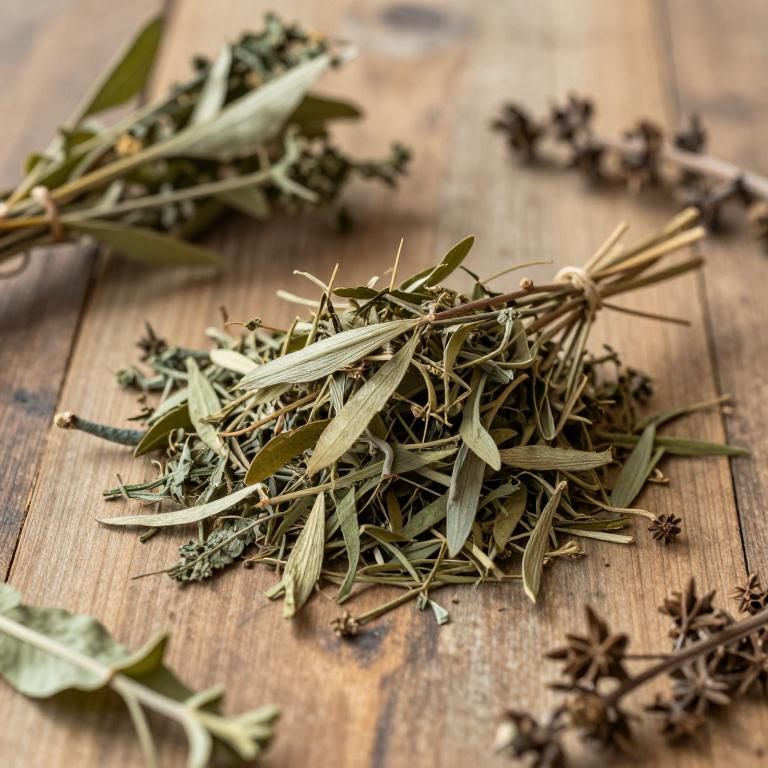
Names and Synonyms
Common Names
- Tonka Bean Tree
- Baru tree
Scientific Names
Accepted name
Dipteryx alataSynonyms
- Coumarouna alata
- Dipteryx pterota
Regional and Traditional Names
Spanish:
- Almendro
Sources: Wikidata, Catalogue of Life
Taxonomical Classification
This plant belongs to the kingdom Plantae within the phylum Streptophyta and is classified under the class Equisetopsida. It is further organized into the subclass Magnoliidae, the order Fabales, and the family Fabaceae. Finally, its taxonomic placement concludes within the genus Dipteryx.
| Rank | Classification |
|---|---|
| Kingdom | Plantae |
| Phylum | Streptophyta |
| Class | Equisetopsida |
| Subclass | Magnoliidae |
| Order | Fabales |
| Family | Fabaceae |
| Genus | Dipteryx |
Sources: The World Checklist of Vascular Plants (WCVP)
Distribution
This plant is native to several key regions across Western South America and Brazil. Its presence is notably recorded within the borders of Bolivia. In Brazil, the species exhibits a wide-ranging distribution that covers the North and Northeast territories. Furthermore, it can be found throughout the West-Central and Southeast regions of the country. This broad coverage highlights the plant's significant ecological footprint across the South American continent.
| Region | Area |
|---|---|
| Western South America | Bolivia |
| Brazil | Brazil West-Central |
| Brazil | Brazil Northeast |
| Brazil | Brazil Southeast |
| Brazil | Brazil North |
| Southern South America | Paraguay |
Sources: The World Checklist of Vascular Plants (WCVP)
Botanical Identification
Ecology
The ecology of Dipteryx alata is characterized by its adaptability to diverse tropical landscapes, primarily thriving within the Cerrado (latu sensu), Ciliar Forests or Gallery Forests, Seasonal Semi-deciduous Forests, and the Amazonian Savanna. This species occupies a broad altitudinal gradient, ranging from sea level up to a maximum elevation of 500 m AMSL. Its presence across these varied biomes indicates a high tolerance for different soil compositions and hydrological regimes, allowing it to integrate into both open savanna structures and more densely forested seasonal environments.
- Elevational range max:
- 500 m AMSL
- Elevational range min:
- 0 m AMSL
- Habitat :
- Cerrado (lato sensu), Floresta Ciliar ou Galeria, Floresta Estacional Semidecidual, Savana Amazônica
Life history
The life history of Dipteryx alata is characterized by its nature as a perennial species, allowing it to maintain a stable presence within its ecosystem over many years. Throughout its long lifespan, the plant exhibits an evergreen habit, retaining its foliage continuously rather than shedding it seasonally. This combination of a perennial lifecycle and evergreen status enables the plant to sustain metabolic processes and provide structural stability within its habitat across successive growing seasons.
- Deciduousness :
- evergreen
- Lifecycle :
- perennial
Morphology
The morphology of Dipteryx alata is characterized by a woody growth form, primarily manifesting as a tree, though it can also exhibit shrub-like qualities. As a terrestrial species, it does not inhabit aquatic or semiaquatic environments and functions as an independent organism rather than a parasite. It is a self-supporting plant, lacking any climber or liana characteristics, and it does not exhibit epiphytic behavior, remaining strictly terrestrial. In terms of stature, the plant reaches significant dimensions, with a typical mean height of approximately 20 m, though recorded heights can reach a maximum of 18 m.
- Aquatic :
- terrestrial
- Climber :
- self-supporting
- Epiphyte :
- terrestrial
- Growth form :
- tree
- Growth form :
- shrub
- Parasite :
- independent
- Plant height max:
- 18 m
- Plant height mean:
- 20 m
- Woodiness :
- woody
Physiology
The physiology of Dipteryx alata is characterized by a C3 photosynthetic pathway, utilizing the standard Calvin cycle to fix atmospheric carbon dioxide into organic compounds. Regarding its nutritional processes, the species is not a nitrogen fixer, meaning it lacks the symbiotic relationship with rhizobia necessary to convert atmospheric nitrogen into a usable form for the plant.
- Nitrogen fixer :
- no
- Photosynthetic pathway :
- C3
Reproduction
The reproduction of Dipteryx alatas is characterized by the production of specific seed traits that facilitate its propagation. The seeds exhibit a highly consistent physical profile, with a recorded seed mass that remains constant at a mean, minimum, and maximum value of 0.948 g. In terms of spatial dimensions, the seeds possess a uniform volume, with the minimum, maximum, and mean seed volume all measured at 30,000 mm³. This uniformity in seed mass and volume suggests a specialized reproductive strategy geared towards consistent seed dispersal and establishment within its natural habitat.
- Seed mass mean:
- 0.948 g
- Seed volume max:
- 30000 mm³
Sources: Global Inventory of Floras and Traits (GIFT)
Plant Parts
Dipteryx alata has 1 reported plant parts identified across 1 scientific publications and several other databases that are studied for medicinal purposes. The most consistently reported plant part include leaf.
| Plant part | Supporting sources | Consensus |
|---|---|---|
| Leaf | 1 supporting sources | ★☆☆☆☆ |
Leaf
- International journal of environmental research and public health
Chemicals
Dipteryx alata has 14 reported phytochemicals identified across 1 scientific publications and several other databases. The most consistently reported chemicals include Al, As, CD, CR, CU.
| Chemical | Supporting sources | Consensus |
|---|---|---|
| Al | 1 supporting sources | ★☆☆☆☆ |
| As | 1 supporting sources | ★☆☆☆☆ |
| CD | 1 supporting sources | ★☆☆☆☆ |
| CR | 1 supporting sources | ★☆☆☆☆ |
| CU | 1 supporting sources | ★☆☆☆☆ |
| FE | 1 supporting sources | ★☆☆☆☆ |
| Flavonoids | 1 supporting sources | ★☆☆☆☆ |
| MG | 1 supporting sources | ★☆☆☆☆ |
| MN | 1 supporting sources | ★☆☆☆☆ |
| SE | 1 supporting sources | ★☆☆☆☆ |
Al
- International journal of environmental research and public health
As
- International journal of environmental research and public health
CD
- International journal of environmental research and public health
CR
- International journal of environmental research and public health
CU
- International journal of environmental research and public health
FE
- International journal of environmental research and public health
Flavonoids
- Molecules (Basel, Switzerland)
MG
- International journal of environmental research and public health
MN
- International journal of environmental research and public health
SE
- International journal of environmental research and public health
Activities
Dipteryx alata has 2 reported activities identified across 1 scientific publications and several other databases. The most consistently reported activities include Cytotoxic, Genotoxic.
| Activity | Supporting sources | Consensus |
|---|---|---|
| Cytotoxic | 1 supporting sources | ★☆☆☆☆ |
| Genotoxic | 1 supporting sources | ★☆☆☆☆ |
Cytotoxic
- Alternatives to laboratory animals : ATLA
Genotoxic
- Alternatives to laboratory animals : ATLA
Conditions
Dipteryx alata has 2 reported investigations on conditions identified across 1 scientific publications and several other databases. The most consistently reported conditions include Leishmaniasis, scar.
| Condition | Supporting sources | Consensus |
|---|---|---|
| Leishmaniasis | 1 supporting sources | ★☆☆☆☆ |
| Scar | 1 supporting sources | ★☆☆☆☆ |
Leishmaniasis
- Experimental parasitology
Scar
- International journal of pharmaceutical compounding
Preparations
Dipteryx alata has 1 reported preparations identified across 1 scientific publications and several other databases. The most consistently reported preparations include hexanic extract.
| Preparation | Supporting sources | Consensus |
|---|---|---|
| Hexanic extract | 1 supporting sources | ★☆☆☆☆ |
Hexanic extract
- Experimental parasitology