Diplotaxis harra
Diplotaxis harra · Accepted scientific name
Scientific literature: Very Sparse (11 studies) · ★☆☆☆☆
, scientifically known as Diplotaxis harra, is a specialized medicinal plant valued for its unique therapeutic properties. Found in specific ecological niches, this species offers significant potential in traditional medicine. Researchers are increasingly exploring its bioactive compounds to uncover new applications for treating various ailments and enhancing holistic wellness.
- Family
- Brassicaceae
- Native range
- Europe
- Parts used
- Flower
- Common names
- Not available
- Scientific synonyms
- Sinapis Harra
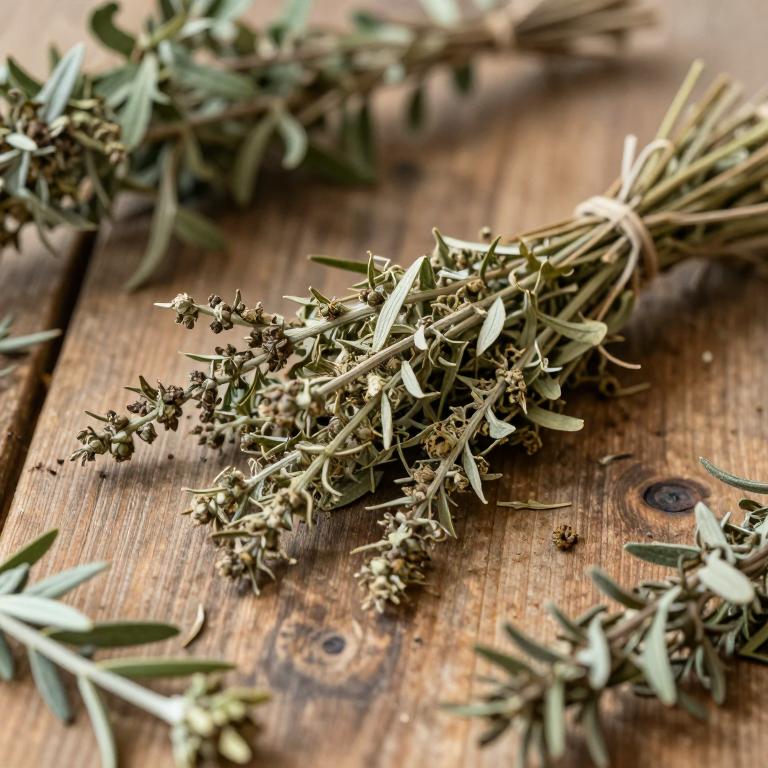
Names and Synonyms
Scientific Names
Accepted name
Diplotaxis harraSynonyms
- Sinapis harra
Sources: Wikidata, Catalogue of Life
Taxonomical Classification
This plant belongs to the kingdom Plantae within the phylum Streptophyta and is classified under the class Equisetopsida and subclass Magnoliidae. It is further categorized into the order Brassicales and the family Brassicaceae. Finally, it is identified by its specific genus, Diplotaxis.
| Rank | Classification |
|---|---|
| Kingdom | Plantae |
| Phylum | Streptophyta |
| Class | Equisetopsida |
| Subclass | Magnoliidae |
| Order | Brassicales |
| Family | Brassicaceae |
| Genus | Diplotaxis |
Sources: The World Checklist of Vascular Plants (WCVP)
Distribution
This plant exhibits a diverse geographical distribution spanning across several Mediterranean regions. In Southwestern Europe, it can be found growing within the territory of Spain. Its presence extends into Southeastern Europe, specifically occurring on the island of Sicilia. The species also inhabits parts of Northern Africa, including the countries of Algeria and Libya. Furthermore, its range reaches as far east as Egypt in the Northern African region.
| Region | Area |
|---|---|
| Southwestern Europe | Spain |
| Southeastern Europe | Sicilia |
| Northern Africa | Algeria |
| Northern Africa | Egypt |
| Northern Africa | Libya |
| Northern Africa | Morocco |
| Northern Africa | Tunisia |
| Northeast Tropical Africa | Djibouti |
| Northeast Tropical Africa | Somalia |
| Western Asia | Afghanistan |
Sources: The World Checklist of Vascular Plants (WCVP)
Botanical Identification
Ecology
The ecology of Diplotaxis harra is characterized by its specific altitudinal preferences within its native habitat. This species thrives within a defined elevational range, typically occurring at altitudes between 600 m and 800 m above mean sea level (AMSL). This relatively narrow vertical distribution suggests that the plant is adapted to the specific climatic conditions, temperature gradients, and atmospheric pressures found within these mid-altitude zones.
- Elevational range max:
- 800 m AMSL
- Elevational range min:
- 600 m AMSL
Life history
The life history of Diplotaxis harra is characterized by an annual lifecycle, meaning the plant completes its entire developmental process—from seed germination to flowering and subsequent seed production—within a single growing season. As an annual species, it avoids the complexities of perenniality by focusing its metabolic energy on rapid growth and immediate reproductive success. Following the onset of favorable environmental conditions, the plant germinates and undergoes a period of vegetative development, eventually transitioning into a reproductive phase where it produces flowers and seeds. Once the seed set is complete, the individual plant dies, leaving the next generation to rely on the seeds dispersed into the soil to await the following season's emergence.
- Lifecycle :
- annual
Morphology
The morphology of Diplotaxis harra is characterized by its growth form as a non-woody subshrub and herb. It functions as an independent organism, neither acting as a parasite nor an epiphyte, and maintains a terrestrial existence rather than being aquatic or semiaquatic. In terms of its structural habit, the plant is self-supporting, lacking the characteristics of a liana, vine, or obligatory climber.
- Aquatic :
- terrestrial
- Climber :
- self-supporting
- Epiphyte :
- terrestrial
- Growth form :
- herb
- Growth form :
- subshrub
- Parasite :
- independent
- Woodiness :
- non-woody
Physiology
The physiology of Diplotaxis harra is characterized by a specialized metabolic framework governed by a C3 photosynthetic pathway. As a member of the Asteraceae family, its physiological processes rely on the direct fixation of atmospheric carbon dioxide through the enzyme RuBisCO during the Calvin cycle, occurring primarily within the mesophyll cells. This C3 mechanism dictates its water-use efficiency and gas exchange patterns, as the plant lacks the specialized Kranz anatomy associated with C4 metabolism or the nocturnal acid accumulation seen in CAM plants. Consequently, its physiological performance, including carbon assimilation rates and transpiration dynamics, is highly sensitive to ambient temperature and light intensity, requiring careful regulation of stomatal conductance to balance photosynthetic gain against potential photorespiration and water loss.
- Photosynthetic pathway :
- C3
Reproduction
The reproduction of Diplotaxis harra is characterized by the production of dry fruits that facilitate its propagation within its habitat. The seeds produced by this species are notably minute, exhibiting a mean seed mass of 0.0001 g, with individual seed weights ranging from a minimum of 0.00009 g to a maximum of 0.00011 g. In terms of movement, the plant utilizes an anemochorous dispersal syndrome, relying on wind currents to transport its lightweight seeds to new locations.
- Dispersal syndrome :
- anemochorous
- Fruit dryness :
- dry
- Seed mass max:
- 0.00011 g
- Seed mass mean:
- 1e-04 g
- Seed mass min:
- 9e-05 g
Sources: Global Inventory of Floras and Traits (GIFT)
Plant Parts
Diplotaxis harra has 1 reported plant parts identified across 1 scientific publications and several other databases that are studied for medicinal purposes. The most consistently reported plant part include flower.
| Plant part | Supporting sources | Consensus |
|---|---|---|
| Flower | 1 supporting sources | ★☆☆☆☆ |
Flower
- Pharmaceutical biology
Chemicals
Diplotaxis harra has 3 reported phytochemicals identified across 1 scientific publications and several other databases. The most consistently reported chemicals include Flavonoids, Isorhamnetin, Isorhamnetin 3,7-di-O-glucoside.
| Chemical | Supporting sources | Consensus |
|---|---|---|
| Flavonoids | 1 supporting sources | ★☆☆☆☆ |
| Isorhamnetin | 1 supporting sources | ★☆☆☆☆ |
| Isorhamnetin 3,7-di-O-glucoside | 1 supporting sources | ★☆☆☆☆ |
Flavonoids
- Pharmaceutical biology
Isorhamnetin
- Plants (Basel, Switzerland)
Isorhamnetin 3,7-di-O-glucoside
- Pharmaceutical biology
Activities
Diplotaxis harra has 3 reported activities identified across 1 scientific publications and several other databases. The most consistently reported activities include Anticancer, Antidiabetic, Antioxidant.
| Activity | Supporting sources | Consensus |
|---|---|---|
| Anticancer | 1 supporting sources | ★☆☆☆☆ |
| Antidiabetic | 1 supporting sources | ★☆☆☆☆ |
| Antioxidant | 1 supporting sources | ★☆☆☆☆ |
Anticancer
- Pharmaceutical biology
Antidiabetic
- Pharmaceutical biology
Antioxidant
- Plants (Basel, Switzerland)
Conditions
Diplotaxis harra has 4 reported investigations on conditions identified across 1 scientific publications and several other databases. The most consistently reported conditions include antidiabetic, arthritis, neurodegenerative diseases, rheumatoid arthritis.
| Condition | Supporting sources | Consensus |
|---|---|---|
| Antidiabetic | 1 supporting sources | ★☆☆☆☆ |
| Arthritis | 1 supporting sources | ★☆☆☆☆ |
| Neurodegenerative diseases | 1 supporting sources | ★☆☆☆☆ |
| Rheumatoid arthritis | 1 supporting sources | ★☆☆☆☆ |
Antidiabetic
- Pharmaceutical biology
Arthritis
- Plants (Basel, Switzerland)
Neurodegenerative diseases
- Plants (Basel, Switzerland)
Rheumatoid arthritis
- Plants (Basel, Switzerland)
Preparations
Diplotaxis harra has 1 reported preparations identified across 1 scientific publications and several other databases. The most consistently reported preparations include flavonoid-rich extract of Diplotaxis harra (DHE).
| Preparation | Supporting sources | Consensus |
|---|---|---|
| Flavonoid-rich extract of diplotaxis harra (dhe) | 1 supporting sources | ★☆☆☆☆ |
Flavonoid-rich extract of diplotaxis harra (dhe)
- Plants (Basel, Switzerland)