garden wall-rocket
Diplotaxis erucoides · Accepted scientific name
Scientific literature: Very Sparse (5 studies) · ★☆☆☆☆
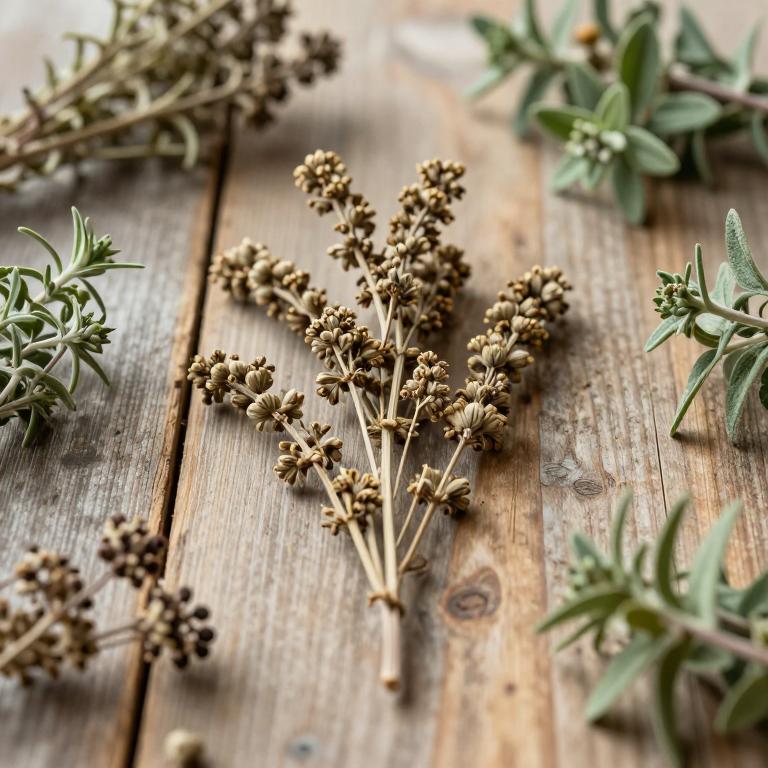
garden wall-rocket, scientifically known as Diplotaxis erucoides, is a resilient, leafy herb prized for its pungent, peppery flavor. Often found in rocky terrains, this medicinal plant is traditionally used to stimulate digestion, reduce inflammation, and support respiratory health, offering a potent blend of nutrition and ancient healing properties.
Names and Synonyms
Common Names
- garden wall-rocket
- white rocket
- white wall-rocket
Scientific Names
Accepted name
Diplotaxis erucoidesSynonyms
- Raphanus erucoides
- Sisymbrium erucoides
- Brassica apula
- Crucifera erucoides
- Euzomum erucoides
- Sinapis alba var. apula
- Diplotaxis erucoides var. valentina
- Diplotaxis erucoides proles apula
- Diplotaxis erucoides subvar. valentina
- Diplotaxis virgata subvar. platystylos
- Diplotaxis virgata var. platystylos
- Diplotaxis longisiliqua
- Sinapis apula
- Sinapis erucoides
- Malcolmia arabica
- Diplotaxis erucoides var. dasycarpa
- Diplotaxis apula
- Diplotaxis hispidula
- Diplotaxis erucoides f. valentina
- Diplotaxis versicolor
- Diplotaxis valentina
- Diplotaxis ruscinonensis
- Diplotaxis erucoides subvar. hispidula
- Diplotaxis sagotii
- Diplotaxis erucoides var. hispidula
- Diplotaxis platystylos
- Diplotaxis erucoides subsp. murcica
- Diplotaxis leiocarpa
- Erucastrum erucoides
Regional and Traditional Names
Spanish:
- Oruga silvestre
- Rabaniza citrons
- Brassica hispida
- Diplotaxis erucoides f. valentina
- Diplotaxis erucoides subsp. erucoides
- Diplotaxis erucoides subsp. murcica
- Diplotaxis erucoides subvar. hispida
- Diplotaxis erucoides subvar. valentina
- Diplotaxis erucoides var. hispidula
- Diplotaxis erucoides var. valentina
- Diplotaxis hispidula
- Diplotaxis leiocarpa
- Diplotaxis longisiliqua
- Diplotaxis platystylos
- Diplotaxis ruscinonensis
- Diplotaxis sagoti
- Diplotaxis valentina
- Diplotaxis virgata f. platystylos
- Diplotaxis virgata subvar. platystylos
- Diplotaxis virgata var. platystylos
- Eruca hispida
- Sinapis erucoides
- Sisymbrium erucoides
- Diplotaxis erucoides f valentina
- Diplotaxis erucoides subsp erucoides
- Diplotaxis erucoides subsp murcica
- Diplotaxis erucoides subvar hispida
- Diplotaxis erucoides subvar valentina
- Diplotaxis erucoides var hispidula
- Diplotaxis erucoides var valentina
- Diplotaxis virgata f platystylos
- Diplotaxis virgata subvar platystylos
- Diplotaxis virgata var platystylos
- Rabaniza
German:
- Raukenähnlicher Doppelsame
- Rauken-Doppelsame
- Ruken-Doppelsame
- Raukenähnlicher Doppelsame
French:
- Diplotaxis fausse roquette
- Diplotaxis Fausse Roquette
- diplotaxe fausse-roquette
- diplotaxis fausse-roquette
- Diplotaxis roquette
- Diplotaxis fausse roquette
- Fausse roquette
- Roquette blanche
- Roquette des vignes
Sources: Wikidata, Catalogue of Life
Taxonomical Classification
This plant belongs to the kingdom Plantae within the phylum Streptophyta and is classified under the class Equisetopsida and subclass Magnoliidae. It is further categorized under the order Brassicales and the family Brassicaceae. Finally, it is identified by its genus, Diplotaxis, specifically as the species Diplotaxis erucoides.
| Rank | Classification |
|---|---|
| Kingdom | Plantae |
| Phylum | Streptophyta |
| Class | Equisetopsida |
| Subclass | Magnoliidae |
| Order | Brassicales |
| Family | Brassicaceae |
| Genus | Diplotaxis |
Sources: The World Checklist of Vascular Plants (WCVP)
Distribution
This plant exhibits a diverse geographical distribution across several key regions of Europe. In Northern Europe, its presence can be documented within Great Britain. Moving into Middle Europe, it is found inhabiting parts of both Austria and Germany. The species also extends into Southwestern Europe, where it grows in the Baleares. Finally, its range includes the island of Corse within the same southwestern territory.
| Region | Area |
|---|---|
| Northern Europe | Great Britain |
| Middle Europe | Austria |
| Middle Europe | Germany |
| Southwestern Europe | Baleares |
| Southwestern Europe | Corse |
| Southwestern Europe | France |
| Southwestern Europe | Portugal |
| Southwestern Europe | Sardegna |
| Southwestern Europe | Spain |
| Southeastern Europe | Greece |
Sources: The World Checklist of Vascular Plants (WCVP)
Botanical Identification
Life history
The life history of Diplotaxis erucoides is characterized by an annual lifecycle, meaning the plant completes its entire biological progression from germination to seed production within a single growing season. Functionally, it is classified as a therophyte, a life form defined by its strategy of surviving unfavorable environmental periods as ephemeral seeds rather than through persistent vegetative structures. This developmental pattern allows the species to rapidly exploit seasonal moisture and nutrient availability before completing its reproductive cycle.
- Life form :
- therophyte
- Lifecycle :
- annual
Morphology
The morphology of Diplotaxis erucoides is characterized by its growth form as a non-woody herb, specifically classified as a forb. This plant is primarily terrestrial in its habitat, though it may exhibit semiaquatic or aquatic tendencies depending on environmental conditions. As a self-supporting species, it does not function as a liana or vine, nor does it act as an obligatory or facultative climber. The plant maintains a relatively low stature, with a height ranging from a minimum of 0.1 m to a maximum of 0.5 m. Furthermore, it is an independent organism, lacking any parasitic or epiphytic behavior, and grows strictly as a terrestrial entity.
- Aquatic :
- terrestrial
- Climber :
- self-supporting
- Epiphyte :
- terrestrial
- Growth form :
- herb
- Growth form :
- forb
- Parasite :
- independent
- Plant height max:
- 0.5 m
- Plant height min:
- 0.1 m
- Woodiness :
- non-woody
Physiology
The physiology of Diplotaxis erucoides is characterized by a C3 photosynthetic pathway, a metabolic strategy typical of many temperate and Mediterranean plant species that optimizes carbon fixation under moderate environmental conditions. This carbon assimilation process is closely linked to its morphological adaptations for resource acquisition, specifically reflected in its leaf architecture. The plant exhibits a mean Specific Leaf Area (SLA) of 263.69 cm²/g, an indicator of its leaf mass per area that suggests a balance between photosynthetic efficiency and structural investment, allowing for effective light interception and gas exchange within its ecological niche.
- Photosynthetic pathway :
- C3
- Specific Leaf Area (SLA) mean:
- 263.69 cm²/g
Reproduction
The reproduction of Diplotaxis erucoides is characterized by the production of seeds that exhibit a specific range of mass and fruit characteristics. The seeds are remarkably small, with a measured mean mass of 0.000192 g. Within the population, individual seed masses vary slightly, ranging from a minimum of 0.00015 g to a maximum of 0.00024 g. Furthermore, the fruit associated with the reproductive cycle is classified as being dry in nature, rather than fleshy, which influences the dispersal and preservation of the seeds.
- Fruit dryness :
- dry
- Seed mass max:
- 0.00024 g
- Seed mass mean:
- 0.000192 g
- Seed mass min:
- 0.00015 g
Sources: Global Inventory of Floras and Traits (GIFT)
Chemicals
Diplotaxis erucoides has 5 reported phytochemicals identified across 0 scientific publications and several other databases. The most consistently reported chemicals include Antioxidants, Chlorophylls, IRON, POTASSIUM, Pyrazines.
| Chemical | Supporting sources | Consensus |
|---|---|---|
| Antioxidants | 1 supporting sources | ★☆☆☆☆ |
| Chlorophylls | 1 supporting sources | ★☆☆☆☆ |
| IRON | 1 supporting sources | ★☆☆☆☆ |
| POTASSIUM | 1 supporting sources | ★☆☆☆☆ |
| Pyrazines | 1 supporting sources | ★☆☆☆☆ |
Antioxidants
- PeerJ
Chlorophylls
- PeerJ
IRON
- PeerJ
POTASSIUM
- PeerJ
Pyrazines
- PeerJ