Diphysa americana
Diphysa americana · Accepted scientific name
Scientific literature: Very Sparse (1 studies) · ★☆☆☆☆
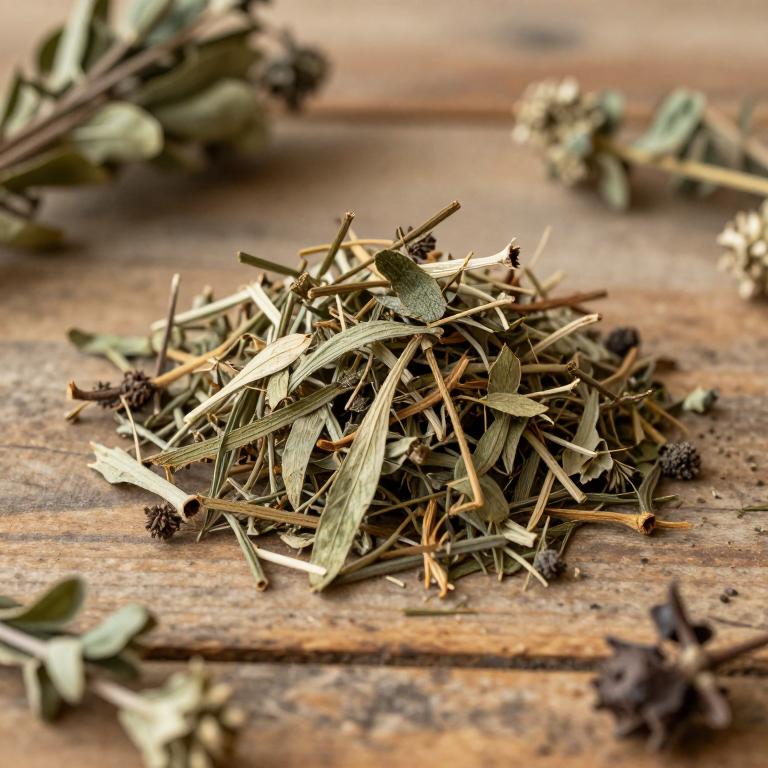
Diphysa americana, scientifically known as Diphysa americana, is a resilient medicinal herb valued in traditional healing practices. Renowned for its bioactive compounds, this plant is frequently utilized to treat various ailments, ranging from skin inflammations to digestive issues, offering significant therapeutic potential within the realm of natural pharmacology.
- Family
- Not available
- Native range
- Northern America
- Parts used
- Leaf
- Common names
- Not available
- Scientific synonyms
- Not available
Names and Synonyms
Scientific Names
Accepted name
Diphysa americanaDistribution
This plant exhibits a widespread presence across several distinct regions of Mexico. It can be found growing throughout the central part of the country, specifically in Mexico Central. Its range extends into the northeastern territories, covering the area known as Mexico Northeast. Additionally, the species is distributed along the coastal regions of Mexico Gulf. Finally, its geographical footprint includes both the Mexico Southwest and Mexico Southeast regions.
| Region | Area |
|---|---|
| Mexico | Mexico Central |
| Mexico | Mexico Northeast |
| Mexico | Mexico Gulf |
| Mexico | Mexico Southwest |
| Mexico | Mexico Southeast |
| Central America | Belize |
| Central America | Costa Rica |
| Central America | El Salvador |
| Central America | Guatemala |
| Central America | Honduras |
Sources: The World Checklist of Vascular Plants (WCVP)
Botanical Identification
Ecology
The ecology of Diphysa americana is characterized by a broad altitudinal distribution, allowing it to inhabit a diverse array of montane and lowland environments. This species demonstrates significant ecological plasticity, thriving across an elevational range that begins at sea level (0 m AMSL) and extends up to a maximum altitude of 2000 m AMSL. This wide vertical gradient suggests that the plant is capable of adapting to varying temperature regimes, atmospheric pressures, and moisture availability found throughout different topographical zones. Such a vast range indicates that its survival is not strictly limited to specific climatic niches, enabling it to colonize various ecosystems ranging from coastal lowlands to higher-altitude montane habitats.
- Elevational range max:
- 2000 m AMSL
- Elevational range min:
- 0 m AMSL
Life history
The life history of Diphylla americana is characterized by its status as a perennial species, allowing it to persist in its habitat over multiple growing seasons. Throughout its life cycle, the plant exhibits a deciduous nature, shedding its foliage seasonally as part of its natural rhythm.
- Deciduousness :
- deciduous
- Lifecycle :
- perennial
Morphology
The morphology of Diphysa americana is characterized by a diverse structural profile, primarily manifesting as a woody plant that can exhibit growth forms ranging from a shrub to a tree. This species is notably robust, with a mean plant height reaching approximately 10 m. It functions as a self-supporting climber, rather than being an obligatory or facultative vine, and maintains an independent status as it is not a parasite. In terms of its ecological habitat and positioning, the plant is strictly terrestrial, meaning it does not function as an epiphyte (whether holoepiphyte, hemiepiphyte, or otherwise) nor does it possess aquatic or semiaquatic adaptations.
- Aquatic :
- terrestrial
- Climber :
- self-supporting
- Epiphyte :
- terrestrial
- Growth form :
- tree
- Growth form :
- shrub
- Parasite :
- independent
- Plant height mean:
- 10 m
- Woodiness :
- woody
Physiology
The physiology of Diphylla americana is characterized by a C3 photosynthetic pathway, which dictates its metabolic processes and carbon fixation strategies. The plant exhibits a consistent leaf dry matter content (LDMC) with a mean, minimum, and maximum value of 352.6 mg/g, reflecting a specific structural investment in leaf tissue density and resource allocation. Additionally, it does not function as a nitrogen fixer, relying instead on available soil nitrogen rather than symbiotic nitrogen-fixing mechanisms.
- Leaf dry matter content (LDMC) mean:
- 352.6 mg/g
- Nitrogen fixer :
- no
- Photosynthetic pathway :
- C3
Reproduction
The reproduction of Diphysa americana is characterized by the production of seeds that exhibit specific morphological and mass dimensions. The seeds produced by this species are relatively uniform in weight, with a recorded seed mass mean, minimum, and maximum all measured at 0.0214 g. In terms of physical dimensions, the seeds display a degree of variability in their longitudinal growth, with seed length ranging from a minimum of 6 mm to a maximum of 15 mm.
- Seed length max:
- 15 mm
- Seed length min:
- 6 mm
- Seed mass mean:
- 0.0214 g
Sources: Global Inventory of Floras and Traits (GIFT)
Plant Parts
Diphysa americana has 1 reported plant parts identified across 1 scientific publications and several other databases that are studied for medicinal purposes. The most consistently reported plant part include leaf.
| Plant part | Supporting sources | Consensus |
|---|---|---|
| Leaf | 1 supporting sources | ★☆☆☆☆ |
Leaf
- Journal of ethnopharmacology
Preparations
Diphysa americana has 2 reported preparations identified across 1 scientific publications and several other databases. The most consistently reported preparations include ethanolic extracts, leaf.
| Preparation | Supporting sources | Consensus |
|---|---|---|
| Ethanolic extracts | 1 supporting sources | ★☆☆☆☆ |
| Leaf | 1 supporting sources | ★☆☆☆☆ |
Ethanolic extracts
- Journal of ethnopharmacology
Leaf
- Journal of ethnopharmacology