Diospyros quaesita
Diospyros quaesita · Accepted scientific name
Scientific literature: Very Sparse (44 studies) · ★☆☆☆☆
, scientifically known as Diospyros quaesita, is a rare medicinal plant revered for its profound therapeutic properties. Found in dense tropical ecosystems, its unique bioactive compounds offer significant potential in traditional healing practices. This botanical treasure is increasingly studied for its ability to support holistic wellness and restorative health.
- Family
- Ebenaceae
- Native range
- Asia-Tropical
- Parts used
- Not available
- Common names
- Not available
- Scientific synonyms
- Not available
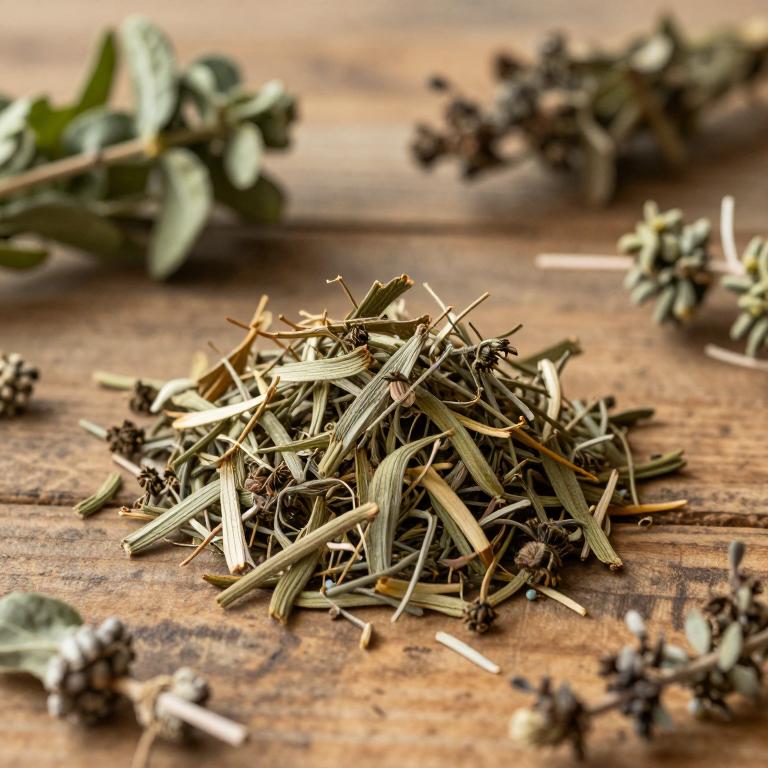
Names and Synonyms
Scientific Names
Accepted name
Diospyros quaesitaSources: Wikidata
Taxonomical Classification
This plant belongs to the kingdom Plantae and falls under the phylum Streptophyta within the class Equisetopsida. It is further classified under the subclass Magnoliidae and the order Ericales. Finally, it is a member of the Ebenaceae family, specifically within the genus Diospyros.
| Rank | Classification |
|---|---|
| Kingdom | Plantae |
| Phylum | Streptophyta |
| Class | Equisetopsida |
| Subclass | Magnoliidae |
| Order | Ericales |
| Family | Ebenaceae |
| Genus | Diospyros |
Sources: The World Checklist of Vascular Plants (WCVP)
Distribution
This plant possesses a very specific and limited geographical range. Its natural habitat is primarily confined to the Indian Subcontinent. Within this vast region, the species is specifically found in Sri Lanka. This localized distribution suggests that the plant may be endemic to certain ecological zones of the island. Consequently, its presence is a unique characteristic of the Sri Lankan landscape.
| Region | Area |
|---|---|
| Indian Subcontinent | Sri Lanka |
Sources: The World Checklist of Vascular Plants (WCVP)
Botanical Identification
Life history
The life history of Diospyros quaesita is characterized by its long-lived nature as a perennial organism, allowing it to maintain a stable presence within its ecological niche over many years. As a phanerophyte, its regenerative buds are located high above the ground on woody stems, a structural strategy that facilitates survival and growth in various environmental conditions. This phanerophyte life form ensures that the plant maintains a significant vertical stature, contributing to the structural complexity of its habitat throughout its extended life cycle.
- Life form :
- phanerophyte
- Lifecycle :
- perennial
Morphology
The morphology of Diospyros quaesita is characterized by a woody growth form that manifests primarily as a tree. While the species exhibits characteristics associated with climbing habits, it functions as a self-supporting liana or vine, possessing the structural integrity to maintain its own posture without being an obligatory climber. As an independent organism, it does not function as a parasite, relying instead on its own metabolic processes for sustenance. Furthermore, it is a terrestrial plant, establishing its root system within the soil rather than adopting an epiphytic lifestyle.
- Climber :
- self-supporting
- Epiphyte :
- terrestrial
- Growth form :
- tree
- Parasite :
- independent
- Woodiness :
- woody
Physiology
The physiology of Diospyros quaesita is characterized by a complex metabolic framework primarily focused on efficient nutrient uptake and carbon sequestration through specialized photosynthetic pathways. Its metabolic processes are highly adapted to its specific ecological niche, ensuring optimal energy production and cellular maintenance. Regarding its relationship with soil chemistry and nutrient cycling, the plant does not engage in symbiotic associations with nitrogen-fixing bacteria, such as Rhizobium, within its root systems; therefore, it is not a nitrogen fixer (nitrogen_fix_1: no). Instead, it relies on the direct absorption of nitrates and ammonium from the soil through its extensive root architecture to satisfy its nitrogen requirements for protein synthesis and enzymatic functions. This reliance on exogenous nitrogen sources shapes its growth patterns and competitive strategies within its natural habitat.
- Nitrogen fixer :
- no
Sources: Global Inventory of Floras and Traits (GIFT)
Chemicals
Diospyros quaesita has 7 reported phytochemicals identified across 0 scientific publications and several other databases. The most consistently reported chemicals include Betulin, Diospyrosin, Lariciresinol, N-Benzoyl-L-phenylalaninol, Pinoresinol.
| Chemical | Supporting sources | Consensus |
|---|---|---|
| Betulin | 1 supporting sources | ★☆☆☆☆ |
| Diospyrosin | 1 supporting sources | ★☆☆☆☆ |
| Lariciresinol | 1 supporting sources | ★☆☆☆☆ |
| N-Benzoyl-L-phenylalaninol | 1 supporting sources | ★☆☆☆☆ |
| Pinoresinol | 1 supporting sources | ★☆☆☆☆ |
| betulinic acid | 1 supporting sources | ★☆☆☆☆ |
| scopoletin | 1 supporting sources | ★☆☆☆☆ |
Betulin
- Dr. Duke
Diospyrosin
- Chemistry & biodiversity
Lariciresinol
- Chemistry & biodiversity
N-Benzoyl-L-phenylalaninol
- Chemistry & biodiversity
Pinoresinol
- Chemistry & biodiversity
betulinic acid
- Dr. Duke
scopoletin
- Chemistry & biodiversity
Activities
Diospyros quaesita has 23 reported activities identified across 0 scientific publications and several other databases. The most consistently reported activities include Antitumor, Anthelmintic, AntiHIV, Antibacterial, Anticancer.
| Activity | Supporting sources | Consensus |
|---|---|---|
| Antitumor | 2 supporting sources | ★☆☆☆☆ |
| Anthelmintic | 1 supporting sources | ★☆☆☆☆ |
| AntiHIV | 1 supporting sources | ★☆☆☆☆ |
| Antibacterial | 1 supporting sources | ★☆☆☆☆ |
| Anticancer | 1 supporting sources | ★☆☆☆☆ |
| Anticarcinomic | 1 supporting sources | ★☆☆☆☆ |
| Antiedemic | 1 supporting sources | ★☆☆☆☆ |
| Antifeedant | 1 supporting sources | ★☆☆☆☆ |
| Antiflu | 1 supporting sources | ★☆☆☆☆ |
| Antiinflammatory | 1 supporting sources | ★☆☆☆☆ |
Antitumor
- Dr. Duke
- Journal of medicinal plant research
Anthelmintic
- Dr. Duke
AntiHIV
- Dr. Duke
Antibacterial
- Dr. Duke
Anticancer
- Dr. Duke
Anticarcinomic
- Dr. Duke
Antiedemic
- Dr. Duke
Antifeedant
- Dr. Duke
Antiflu
- Dr. Duke
Antiinflammatory
- Dr. Duke
Conditions
Diospyros quaesita has 1 reported investigations on conditions identified across 0 scientific publications and several other databases. The most consistently reported conditions include Plasmodium falciparum.
| Condition | Supporting sources | Consensus |
|---|---|---|
| Plasmodium falciparum | 1 supporting sources | ★☆☆☆☆ |
Plasmodium falciparum
- Chemistry & biodiversity