Diospyros natalensis
Diospyros natalensis · Accepted scientific name
Scientific literature: Very Sparse (19 studies) · ★☆☆☆☆
, scientifically known as Diospyros natalensis, is a versatile medicinal plant native to tropical Africa. Renowned for its diverse pharmacological properties, various parts of this species are used in traditional medicine to treat ailments ranging from skin infections to digestive issues, offering significant potential for modern therapeutic drug development.
- Family
- Not available
- Native range
- Africa
- Parts used
- Not available
- Common names
- Not available
- Scientific synonyms
- Not available
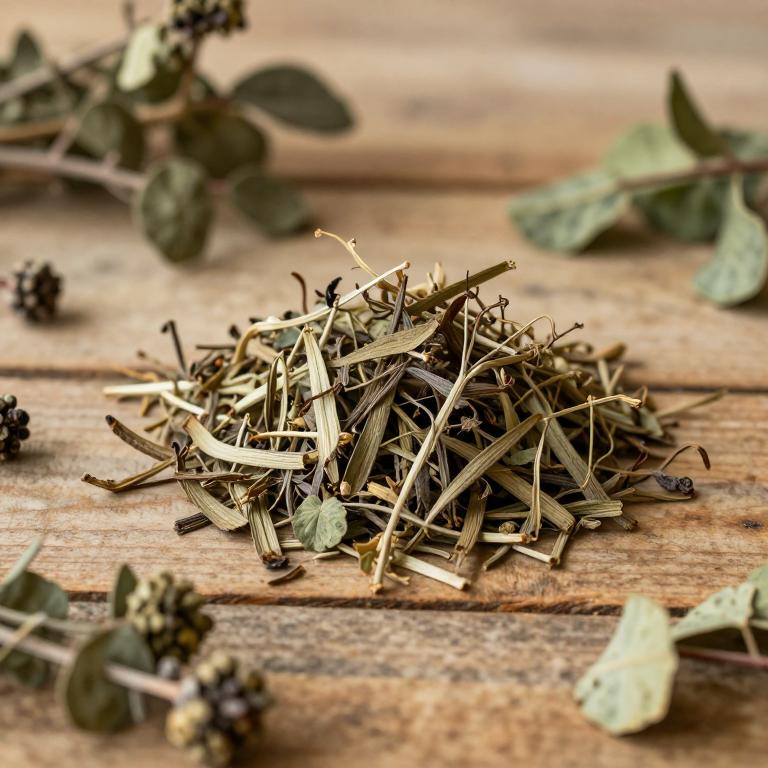
Names and Synonyms
Scientific Names
Accepted name
Diospyros natalensisDistribution
This plant exhibits a broad distribution across several key regions of the African continent. In West-Central Tropical Africa, its presence is noted within the Democratic Republic of the Congo. Moving toward the eastern side of the continent, it can be found across East Tropical Africa in Kenya, Tanzania, and Uganda. Additionally, the species extends its reach into South Tropical Africa, specifically within Malawi. Together, these locations highlight the diverse ecological range inhabited by Diospyros natalensis.
| Region | Area |
|---|---|
| West-Central Tropical Africa | DR Congo |
| East Tropical Africa | Kenya |
| East Tropical Africa | Tanzania |
| East Tropical Africa | Uganda |
| South Tropical Africa | Malawi |
| South Tropical Africa | Mozambique |
| South Tropical Africa | Zambia |
| South Tropical Africa | Zimbabwe |
| Southern Africa | Cape Provinces |
| Southern Africa | KwaZulu-Natal |
Sources: The World Checklist of Vascular Plants (WCVP)
Botanical Identification
Ecology
The ecology of Diospyros natalensis is characterized by its specific preference for forest environments or Brachystegia woodland ecosystems. This species thrives within a defined altitudinal gradient, occupying a vertical range that begins at a minimum elevation of 5 m AMSL and extends up to a maximum elevation of 300 m AMSL.
- Elevational range max:
- 300 m AMSL
- Elevational range min:
- 5 m AMSL
- Habitat :
- forest or Brachystegia woodland
Life history
The life history of Diospyros natalensis is characterized by its status as a perennial organism, ensuring its long-term presence within its ecological niche. In terms of its structural development and growth habit, the plant is classified as a phanerophyte, signifying that its perennial buds are elevated well above the ground on woody stems. Additionally, its growth architecture can be described as a nanophanerophyte, reflecting a specific scale of its woody stature within the canopy or understory layers.
- Life form :
- nanophanerophyte
- Life form :
- phanerophyte
- Lifecycle :
- perennial
Morphology
The morphology of Diospyros natalensis is characterized by its growth form as a woody tree, functioning as an independent organism that does not rely on parasitic or epiphytic lifestyles. As a terrestrial plant, it exhibits a self-supporting structure rather than acting as a climber, liana, or vine. The stature of the plant is substantial, with height measurements ranging from a minimum of 1 meter to a maximum of 25 meters, maintaining an average height of approximately 8 meters.
- Aquatic :
- terrestrial
- Climber :
- self-supporting
- Epiphyte :
- terrestrial
- Growth form :
- tree
- Parasite :
- independent
- Plant height max:
- 25 m
- Plant height mean:
- 8 m
- Plant height min:
- 1 m
- Woodiness :
- woody
Physiology
The physiology of Diospyros natalensis is characterized by a specialized metabolic framework optimized for its specific environmental niche, most notably through its utilization of the C3 photosynthetic pathway. As a C3 plant, its carbon fixation process relies on the direct carboxylation of ribulose-1,5-bisphosphate (RuBP) by the enzyme RuBisCO, resulting in the immediate formation of a three-carbon compound, 3-phosphoglycerate. This metabolic route dictates the plant's water-use efficiency and gas exchange dynamics, as it lacks the specialized anatomical adaptations found in C4 or CAM species to minimize photorespiration. Consequently, its physiological performance, including stomatal conductance and photosynthetic rate, is highly sensitive to ambient temperature and moisture availability, influencing how the plant manages its internal carbon balance and energy production during different stages of its growth cycle.
- Photosynthetic pathway :
- C3
Reproduction
The reproduction of Diospyros natalensis is characterized by the production of fleshy, indehiscent fruit classified as a berry. These fruits exhibit specific morphological dimensions, with an average length of 0.99 cm and an average width of 0.54 cm. Within these fruits, the seeds are relatively consistent in size, possessing a uniform seed mass of 0.08931 g, as indicated by the minimum, maximum, and mean values. The dispersal of the species follows a zoochorous syndrome, meaning the seeds are distributed via animals, which facilitates the spread of the plant within its ecosystem.
- Dehiscence :
- indehiscent
- Dispersal syndrome :
- zoochorous
- Fruit length mean:
- 0.99 cm
- Fruit type :
- berry
- Fruit width mean:
- 0.54 cm
- Seed mass mean:
- 0.08931 g
Sources: Global Inventory of Floras and Traits (GIFT)
Chemicals
Diospyros natalensis has 1 reported phytochemicals identified across 0 scientific publications and several other databases. The most consistently reported chemicals include betulinic acid.
| Chemical | Supporting sources | Consensus |
|---|---|---|
| betulinic acid | 1 supporting sources | ★☆☆☆☆ |
betulinic acid
- Dr. Duke
Activities
Diospyros natalensis has 18 reported activities identified across 0 scientific publications and several other databases. The most consistently reported activities include Anthelmintic, AntiHIV, Antibacterial, Anticancer, Anticarcinomic.
| Activity | Supporting sources | Consensus |
|---|---|---|
| Anthelmintic | 1 supporting sources | ★☆☆☆☆ |
| AntiHIV | 1 supporting sources | ★☆☆☆☆ |
| Antibacterial | 1 supporting sources | ★☆☆☆☆ |
| Anticancer | 1 supporting sources | ★☆☆☆☆ |
| Anticarcinomic | 1 supporting sources | ★☆☆☆☆ |
| Antiedemic | 1 supporting sources | ★☆☆☆☆ |
| Antiinflammatory | 1 supporting sources | ★☆☆☆☆ |
| Antileukemic | 1 supporting sources | ★☆☆☆☆ |
| Antimalarial | 1 supporting sources | ★☆☆☆☆ |
| Antimelanomic | 1 supporting sources | ★☆☆☆☆ |
Anthelmintic
- Dr. Duke
AntiHIV
- Dr. Duke
Antibacterial
- Dr. Duke
Anticancer
- Dr. Duke
Anticarcinomic
- Dr. Duke
Antiedemic
- Dr. Duke
Antiinflammatory
- Dr. Duke
Antileukemic
- Dr. Duke
Antimalarial
- Dr. Duke
Antimelanomic
- Dr. Duke