Diospyros boiviniana
Diospyros boiviniana · Accepted scientific name
Scientific literature: Very Sparse (2 studies) · ★☆☆☆☆
Diospyros boiviniana, scientifically known as Diospyros boiviniana, is a remarkable medicinal plant native to specific tropical regions. Valued for its unique phytochemical properties, this species offers significant therapeutic potential. Research explores its bioactive compounds, which may provide various health benefits, making it a vital subject in ethnobotanical studies.
- Family
- Ebenaceae
- Native range
- Africa
- Parts used
- Leaf
- Common names
- Not available
- Scientific synonyms
- Diospyros Seychellarum · Ebenus Seychellarum · 2 more
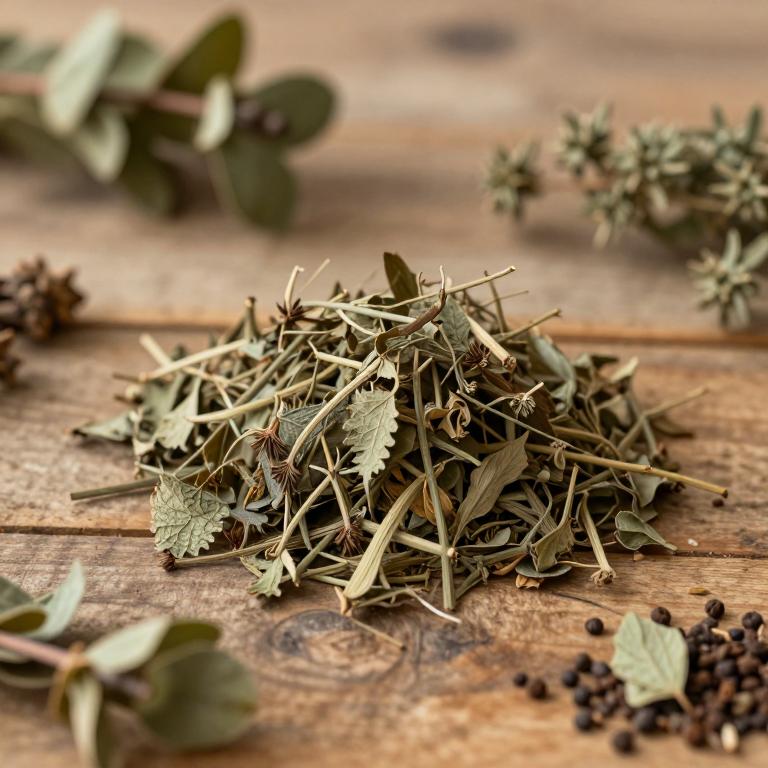
Names and Synonyms
Scientific Names
Accepted name
Diospyros boivinianaSynonyms
- Diospyros seychellarum
- Ebenus seychellarum
- Olax boiviniana
- Maba seychellarum
Sources: Wikidata
Taxonomical Classification
This plant belongs to the kingdom Plantae within the phylum Streptophyta and the class Equisetopsida. It is further classified under the subclass Magnoliidae and the order Ericales, falling into the family Ebenaceae. Finally, it is situated within the genus Diospyros.
| Rank | Classification |
|---|---|
| Kingdom | Plantae |
| Phylum | Streptophyta |
| Class | Equisetopsida |
| Subclass | Magnoliidae |
| Order | Ericales |
| Family | Ebenaceae |
| Genus | Diospyros |
Sources: The World Checklist of Vascular Plants (WCVP)
Distribution
This plant is characterized by a highly restricted geographical range within the Western Indian Ocean. It is an endemic species found exclusively in the Seychelles archipelago. Within this specific island nation, its presence is limited to certain localized habitats. Because it is confined to such a small area, its survival is closely tied to the island's unique ecosystem. Consequently, the entire global population of Diospyros boiviniana is concentrated in this single oceanic region.
| Region | Area |
|---|---|
| Western Indian Ocean | Seychelles |
Sources: The World Checklist of Vascular Plants (WCVP)
Botanical Identification
Life history
The life history of Diospyros boiviniana is characterized by its long-term survival strategy as a perennial organism. In terms of its structural development and growth habit, the species exhibits a dual classification of life forms depending on its developmental stage or ecological niche, functioning as both a phanerophyte and a nanophanerophyte. As a phanerophyte, it maintains its buds well above the ground, typically forming woody, tree-like structures that allow it to persist through various seasonal changes. Concurrently, its nanophanerophytic traits indicate the capacity for shorter, woody growth forms that stay close to the soil surface, providing versatility in its architectural expression within its habitat.
- Life form :
- nanophanerophyte
- Life form :
- phanerophyte
- Lifecycle :
- perennial
Morphology
The morphology of Diospyros boiviniana is characterized by its growth form as a woody tree, typically reaching an average height of approximately 7.5 m. This species functions as an independent organism, meaning it is not a parasite, and it maintains a terrestrial existence rather than being an epiphyte. While it possesses a self-supporting structure, it exhibits a growth habit that can be classified within the spectrum of self-supporting climbing or upright woody forms.
- Climber :
- self-supporting
- Epiphyte :
- terrestrial
- Growth form :
- tree
- Parasite :
- independent
- Plant height mean:
- 7.5 m
- Woodiness :
- woody
Physiology
The physiology of Diospyros boiviniana is characterized by metabolic processes typical of the Ebenaceae family, primarily focusing on efficient photosynthetic pathways and specialized nutrient uptake mechanisms suited to its specific ecological niche. As a woody perennial, its physiological activity is driven by carbon fixation through the C3 photosynthetic pathway, involving the enzyme RuBisCO to convert atmospheric carbon dioxide into organic compounds. Regarding its nutrient cycling capabilities, the plant does not function as a nitrogen fixer; it lacks the symbiotic relationship with diazotrophic bacteria, such as Rhizobium or Frankia, required to convert atmospheric nitrogen into bioavailable forms, meaning it relies entirely on the uptake of nitrates and ammonium from the soil substrate. Its water relations and transpiration rates are regulated by stomatal conductance, which responds to environmental cues like humidity and light intensity to maintain turgor pressure and optimize gas exchange. Furthermore, its secondary metabolism involves the synthesis of specific phytochemicals and tannins, which play a physiological role in herbivory defense and cellular protection against oxidative stress.
- Nitrogen fixer :
- no
Sources: Global Inventory of Floras and Traits (GIFT)
Plant Parts
Diospyros boiviniana has 1 reported plant parts identified across 1 scientific publications and several other databases that are studied for medicinal purposes. The most consistently reported plant part include leaf.
| Plant part | Supporting sources | Consensus |
|---|---|---|
| Leaf | 1 supporting sources | ★☆☆☆☆ |
Leaf
- The Journal of toxicological sciences
Activities
Diospyros boiviniana has 1 reported activities identified across 1 scientific publications and several other databases. The most consistently reported activities include Tonic.
| Activity | Supporting sources | Consensus |
|---|---|---|
| Tonic | 1 supporting sources | ★☆☆☆☆ |
Tonic
- The Journal of toxicological sciences
Preparations
Diospyros boiviniana has 2 reported preparations identified across 1 scientific publications and several other databases. The most consistently reported preparations include leaf extract, tonic.
| Preparation | Supporting sources | Consensus |
|---|---|---|
| Leaf extract | 1 supporting sources | ★☆☆☆☆ |
| Tonic | 1 supporting sources | ★☆☆☆☆ |
Leaf extract
- The Journal of toxicological sciences
Tonic
- The Journal of toxicological sciences