Diospyros discolor nom. illeg.
Diospyros blancoi · Accepted scientific name
Scientific literature: Very Sparse (6 studies) · ★☆☆☆☆
Diospyros discolor nom. illeg., scientifically known as Diospyros blancoi, is a significant medicinal plant native to tropical regions. Renowned for its diverse therapeutic properties, it is traditionally utilized to treat various ailments. Exploring its phytochemical composition offers promising insights into its potential applications within modern pharmacological research and herbal medicine.
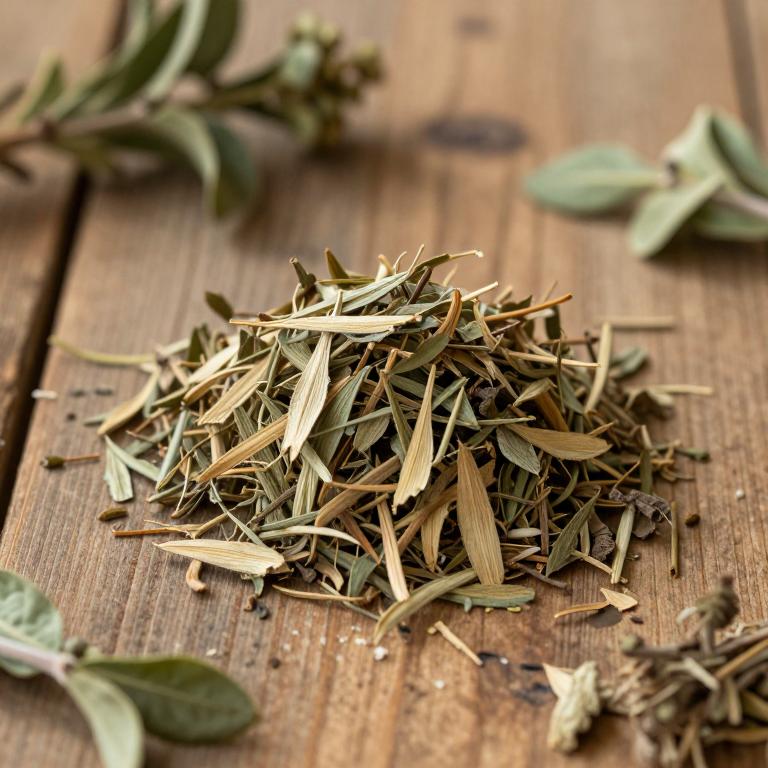
Names and Synonyms
Common Names
- mabola-tree
- velvet persimmon
- velvet-apple
- Butter Fruit
- Kamagong
Scientific Names
Accepted name
Diospyros blancoiSynonyms
- Cavanillea mabolo
- Diospyros utilis
- Diospyros merrillii
- Diospyros malacapai
- Diospyros durionoides
- Embryopteris discolor
- Mabola edulis
- Cavanillea philippensis
Regional and Traditional Names
Spanish:
- camagón
French:
- pommier velours
- Diospyre des Philippines
Sources: Wikidata, Catalogue of Life
Taxonomical Classification
This plant belongs to the kingdom Plantae and the phylum Streptophyta, falling under the class Equisetopsida and subclass Magnoliidae. Within the order Ericales, it is classified in the family Ebenaceae. Specifically, its taxonomic identity is defined by the genus Diospyros.
| Rank | Classification |
|---|---|
| Kingdom | Plantae |
| Phylum | Streptophyta |
| Class | Equisetopsida |
| Subclass | Magnoliidae |
| Order | Ericales |
| Family | Ebenaceae |
| Genus | Diospyros |
Sources: The World Checklist of Vascular Plants (WCVP)
Distribution
This plant exhibits a diverse geographical distribution across several key regions in Asia. In Eastern Asia, its presence is noted within the territory of Taiwan. Moving toward the Indian Subcontinent, it can be found growing in both India and Bangladesh. The species also extends into the Indo-China region, specifically occupying the Andaman Islands. Finally, its range reaches the Nicobar Islands, completing its spread across these maritime areas.
| Region | Area |
|---|---|
| Eastern Asia | Taiwan |
| Indian Subcontinent | Bangladesh |
| Indian Subcontinent | India |
| Indo-China | Andaman Is. |
| Indo-China | Nicobar Is. |
| Malesia | Borneo |
| Malesia | Jawa |
| Malesia | Malaya |
| Malesia | Philippines |
| Southwestern Pacific | New Caledonia |
Sources: The World Checklist of Vascular Plants (WCVP)
Botanical Identification
Ecology
The ecology of Diospyros blancoi is characterized by its ability to inhabit a broad vertical gradient within its native habitat, ranging from sea level up to a maximum elevation of 1500 m AMSL. This wide elevational range suggests a high degree of ecological plasticity, allowing the species to colonize diverse environmental niches from lowland coastal regions to higher montane zones. By occupying this span of 0 to 1500 m AMSL, the plant encounters varying microclimates, including fluctuations in temperature, humidity, and atmospheric pressure, which influences its distribution patterns across different forest strata and topographical settings.
- Elevational range max:
- 1500 m AMSL
- Elevational range min:
- 0 m AMSL
Life history
The life history of Diospyros blancoi is characterized by its status as a perennial organism, allowing it to persist in its environment through multiple growing seasons. As a phanerophyte, the plant maintains its photosynthetic organs on elevated branches, a structural strategy that ensures its survival and growth over a long temporal scale. Its physiological nature is defined by its evergreen deciduousness, meaning it retains its foliage throughout the year rather than shedding it seasonally, which provides a continuous capacity for energy production. This combination of a long-lived lifecycle, an elevated growth form, and a constant presence of leaves defines its ecological presence and developmental strategy.
- Deciduousness :
- evergreen
- Life form :
- phanerophyte
- Lifecycle :
- perennial
Morphology
The morphology of Diospyros blancoi is characterized by a woody growth form, specifically developing as a self-supporting tree. It reaches a typical mean plant height of approximately 10 m. As a terrestrial species, it does not exhibit aquatic or semiaquatic tendencies, nor does it function as an epiphyte, maintaining a strictly terrestrial existence. The plant is an independent organism, lacking any parasitic behavior, and is characterized by its sturdy, self-supporting structure rather than a climbing or liana-like habit.
- Aquatic :
- terrestrial
- Climber :
- self-supporting
- Epiphyte :
- terrestrial
- Growth form :
- tree
- Parasite :
- independent
- Plant height mean:
- 10 m
- Woodiness :
- woody
Physiology
The physiology of Diospyros blancoi is characterized by a standard C3 photosynthetic pathway, utilizing the Calvin cycle to fix atmospheric carbon dioxide through the enzyme Rubisco, which is typical for most woody dicotyledonous species. In terms of nutrient cycling and symbiotic relationships, the plant is not a nitrogen fixer, meaning it lacks the specialized root nodules containing diazotrophic bacteria necessary to convert atmospheric nitrogen into bioavailable forms, and instead relies on the uptake of nitrates and ammonium from the soil substrate.
- Nitrogen fixer :
- no
- Photosynthetic pathway :
- C3
Reproduction
Reproduction in Diospyros blancoi is characterized by a specialized flowering process that facilitates genetic diversity through the exclusion of certain reproductive mechanisms. In this species, self-fertilization is notably absent, meaning the plant does not rely on its own pollen to produce viable seeds. Instead, the reproductive cycle depends on cross-pollination, which necessitates the movement of pollen between different individual plants to achieve fertilization. This absence of self-fertilization ensures a higher degree of heterozygosity within the population, contributing to the evolutionary resilience and genetic variability of the species.
- Self fertilization :
- absent
Sources: Global Inventory of Floras and Traits (GIFT)
Plant Parts
Diospyros blancoi has 1 reported plant parts identified across 1 scientific publications and several other databases that are studied for medicinal purposes. The most consistently reported plant part include leaf.
| Plant part | Supporting sources | Consensus |
|---|---|---|
| Leaf | 1 supporting sources | ★☆☆☆☆ |
Leaf
- Fitoterapia
Chemicals
Diospyros blancoi has 3 reported phytochemicals identified across 1 scientific publications and several other databases. The most consistently reported chemicals include Flavonoids, Saponins, Tannins.
| Chemical | Supporting sources | Consensus |
|---|---|---|
| Flavonoids | 1 supporting sources | ★☆☆☆☆ |
| Saponins | 1 supporting sources | ★☆☆☆☆ |
| Tannins | 1 supporting sources | ★☆☆☆☆ |
Flavonoids
- Pakistan journal of pharmaceutical sciences
Saponins
- Pakistan journal of pharmaceutical sciences
Tannins
- Pakistan journal of pharmaceutical sciences
Activities
Diospyros blancoi has 1 reported activities identified across 1 scientific publications and several other databases. The most consistently reported activities include Antibacterial.
| Activity | Supporting sources | Consensus |
|---|---|---|
| Antibacterial | 1 supporting sources | ★☆☆☆☆ |
Antibacterial
- Pakistan journal of pharmaceutical sciences
Conditions
Diospyros blancoi has 1 reported investigations on conditions identified across 1 scientific publications and several other databases. The most consistently reported conditions include dental caries.
| Condition | Supporting sources | Consensus |
|---|---|---|
| Dental caries | 1 supporting sources | ★☆☆☆☆ |
Dental caries
- Pakistan journal of pharmaceutical sciences
Preparations
Diospyros blancoi has 2 reported preparations identified across 1 scientific publications and several other databases. The most consistently reported preparations include ethanol extracts of leaves, extracts.
| Preparation | Supporting sources | Consensus |
|---|---|---|
| Ethanol extracts of leaves | 1 supporting sources | ★☆☆☆☆ |
| Extracts | 1 supporting sources | ★☆☆☆☆ |
Ethanol extracts of leaves
- Fitoterapia
Extracts
- Molecules (Basel, Switzerland)