Dioscorea salicifolia
Dioscorea salicifolia · Accepted scientific name
Scientific literature: Very Sparse (1 studies) · ★☆☆☆☆
, scientifically known as Dioscorea salicifolia, is a climbing medicinal vine valued for its diverse therapeutic properties. Found in tropical regions, this plant contains bioactive compounds used in traditional medicine to treat various ailments. Its unique botanical characteristics and healing potential make it a subject of significant ethnobotanical interest.
- Family
- Not available
- Native range
- Asia-Tropical
- Parts used
- Rhizome
- Common names
- Not available
- Scientific synonyms
- Not available
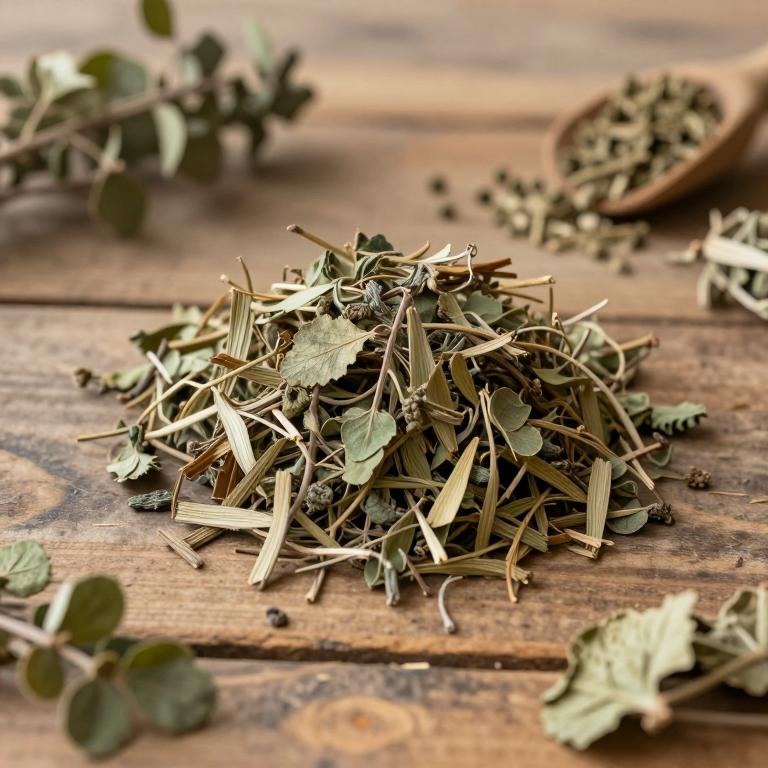
Names and Synonyms
Scientific Names
Accepted name
Dioscorea salicifoliaDistribution
This plant is widely distributed across several key regions within the Malesia botanical zone. Specifically, it can be found growing naturally on the island of Borneo. Its presence is also well-documented throughout the territory of Jawa. Furthermore, the species extends its range to include the island of Sumatera. These locations highlight its significance within the diverse ecosystems of Southeast Asia.
| Region | Area |
|---|---|
| Malesia | Borneo |
| Malesia | Jawa |
| Malesia | Sumatera |
Sources: The World Checklist of Vascular Plants (WCVP)
Botanical Identification
Life history
The life history of Dioscorea salicifolia is characterized by its specialized survival strategy as a perennial herb that utilizes underground storage organs to endure unfavorable environmental conditions. Functioning as a geophyte, the plant maintains its biological continuity through a tuberous rhizome or rootstock located beneath the soil surface, which serves as a nutrient reservoir for regrowth. Within the broader classification of life forms, it is identified as a cryptophyte, meaning its vital regenerative buds are protected underground during periods of dormancy or extreme seasonality. This life cycle allows the plant to emerge seasonally, producing climbing or sprawling stems that exploit available light and space, before retreating into its subterranean state to survive environmental stress.
- Life form :
- geophyte
- Life form :
- cryptophyte
Morphology
The morphology of Dioscorea salicifolia is characterized by its growth form as a non-woody herb that functions as an obligatory climber, utilizing specialized structures to ascend toward light sources. Although it exhibits a growth habit similar to a shrub in its structural complexity, it remains fundamentally herbaceous and lacks woody tissue. The plant is an independent organism, meaning it does not rely on a host for nutrients, and it maintains a terrestrial lifestyle, growing in soil rather than as an epiphyte.
- Climber :
- obligatory
- Epiphyte :
- terrestrial
- Growth form :
- shrub
- Parasite :
- independent
- Woodiness :
- non-woody
Sources: Global Inventory of Floras and Traits (GIFT)
Plant Parts
Dioscorea salicifolia has 1 reported plant parts identified across 1 scientific publications and several other databases that are studied for medicinal purposes. The most consistently reported plant part include rhizome.
| Plant part | Supporting sources | Consensus |
|---|---|---|
| Rhizome | 1 supporting sources | ★☆☆☆☆ |
Rhizome
- Zhong yao cai = Zhongyaocai = Journal of Chinese medicinal materials