Dioscorea preussii
Dioscorea preussii · Accepted scientific name
Scientific literature: Very Sparse (2 studies) · ★☆☆☆☆
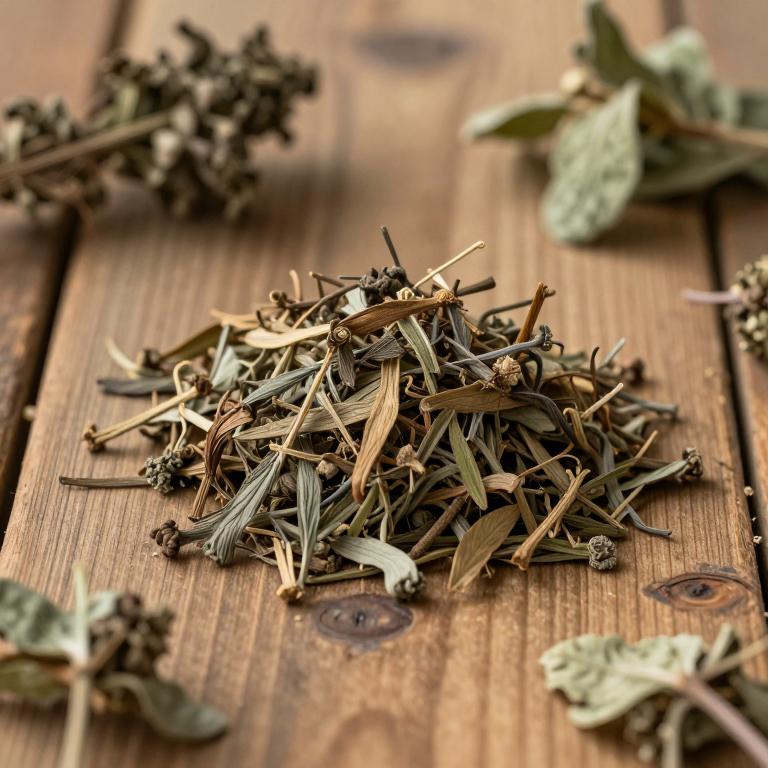
, scientifically known as Dioscorea preussii, is a medicinal climbing vine native to specific tropical regions. Renowned for its diverse pharmacological properties, this plant is utilized in traditional medicine to treat various ailments. Ongoing research explores its bioactive compounds, highlighting its significant potential in developing future therapeutic treatments.
- Family
- Dioscoreaceae
- Native range
- Africa
- Parts used
- Leaf
- Common names
- Not available
- Scientific synonyms
- Not available
Names and Synonyms
Scientific Names
Accepted name
Dioscorea preussiiSources: Wikidata
Taxonomical Classification
This plant belongs to the kingdom Plantae and is classified within the phylum Streptophyta and the class Equisetopsida. Following its placement in the subclass Magnoliidae and the order Dioscoreales, it is a member of the family Dioscoreaceae. Finally, its specific taxonomic identification is completed within the genus Dioscorea.
| Rank | Classification |
|---|---|
| Kingdom | Plantae |
| Phylum | Streptophyta |
| Class | Equisetopsida |
| Subclass | Magnoliidae |
| Order | Dioscoreales |
| Family | Dioscoreaceae |
| Genus | Dioscorea |
Sources: The World Checklist of Vascular Plants (WCVP)
Distribution
This plant is primarily distributed across the West Tropical Africa region. Within this area, its presence is documented in the nation of Benin. It also grows throughout various parts of Ghana and Guinea-Bissau. Furthermore, the species can be found inhabiting the landscapes of Guinea. Finally, its geographical range extends into the Ivory Coast.
| Region | Area |
|---|---|
| West Tropical Africa | Benin |
| West Tropical Africa | Ghana |
| West Tropical Africa | Guinea-Bissau |
| West Tropical Africa | Guinea |
| West Tropical Africa | Ivory Coast |
| West Tropical Africa | Liberia |
| West Tropical Africa | Nigeria |
| West Tropical Africa | Senegal |
| West Tropical Africa | Sierra Leone |
| West Tropical Africa | Togo |
Sources: The World Checklist of Vascular Plants (WCVP)
Botanical Identification
Life history
The life history of Dioscorea preussii is characterized by its perennial lifecycle, allowing the plant to persist through multiple growing seasons. It functions as a cryptophyte, a classification that indicates its regenerative organs are located underground to survive unfavorable environmental conditions. Specifically, its life form is that of a geophyte, meaning it relies on specialized underground storage organs, such as tubers, to sustain its long-term existence and facilitate regrowth.
- Life form :
- geophyte
- Life form :
- cryptophyte
- Lifecycle :
- perennial
Morphology
The morphology of Dioscorea preussii is characterized by its growth form as a non-woody herb that functions as an obligatory liana. As an independent plant that does not rely on a host, it maintains a terrestrial habit rather than being aquatic, semiaquatic, or epiphytic. The plant exhibits significant climbing capabilities, extending from a minimum height of approximately 6.10 meters to a maximum of 9.14 meters, with a recorded mean plant height of 15 meters. Despite its herbaceous nature, its structural development allows it to reach substantial vertical dimensions within its ecosystem.
- Aquatic :
- terrestrial
- Climber :
- liana
- Climber :
- obligatory
- Epiphyte :
- terrestrial
- Growth form :
- herb
- Parasite :
- independent
- Plant height max:
- 9.144111192 m
- Plant height mean:
- 15 m
- Plant height min:
- 6.096074128 m
- Woodiness :
- non-woody
Physiology
The physiology of Dioscorea preussii is characterized by its specialized metabolic pathways adapted to its specific ecological niche, focusing on efficient resource acquisition and storage within its tuberous structures. As a member of the Dioscoreaceae family, its primary physiological processes involve complex carbohydrate synthesis and the translocation of starch to underground storage organs to support perennial growth cycles. Regarding its nutrient cycling capabilities, the plant does not exhibit the physiological mechanisms required for symbiotic nitrogen fixation; specifically, it is not a nitrogen fixer, as it lacks the specialized root nodules or symbiotic associations with diazotrophic bacteria necessary to convert atmospheric nitrogen into bioavailable forms. Instead, the plant relies on the uptake of dissolved nitrates and ammonium from the soil through its root system to satisfy its nitrogen requirements for protein synthesis and enzymatic functions.
- Nitrogen fixer :
- no
Reproduction
The reproductive cycle of Dioscorea preussii is characterized by a distinct seasonal progression of flowering and fruiting stages. The flowering period begins in September and continues through October, though the timing can be variable depending on environmental conditions. Following the flowering phase, the plant transitions into its fruiting stage, which is also concentrated within the month of October. Because both the flowering and fruiting processes are closely aligned and conclude by the end of October, the plant exhibits a relatively condensed reproductive window within the annual cycle.
- Flowering time :
- Sep
- Flowering time :
- Oct
- Fruiting time :
- Oct
Sources: Global Inventory of Floras and Traits (GIFT)
Plant Parts
Dioscorea preussii has 1 reported plant parts identified across 1 scientific publications and several other databases that are studied for medicinal purposes. The most consistently reported plant part include leaf.
| Plant part | Supporting sources | Consensus |
|---|---|---|
| Leaf | 1 supporting sources | ★☆☆☆☆ |
Leaf
- Journal of ethnopharmacology
Activities
Dioscorea preussii has 1 reported activities identified across 1 scientific publications and several other databases. The most consistently reported activities include Cytotoxic.
| Activity | Supporting sources | Consensus |
|---|---|---|
| Cytotoxic | 1 supporting sources | ★☆☆☆☆ |
Cytotoxic
- Journal of ethnopharmacology
Preparations
Dioscorea preussii has 1 reported preparations identified across 1 scientific publications and several other databases. The most consistently reported preparations include methanolic extracts.
| Preparation | Supporting sources | Consensus |
|---|---|---|
| Methanolic extracts | 1 supporting sources | ★☆☆☆☆ |
Methanolic extracts
- Journal of ethnopharmacology