Mountain yam
Dioscorea hamiltonii · Accepted scientific name
Scientific literature: Very Sparse (2 studies) · ★☆☆☆☆
Mountain yam, scientifically known as Dioscorea hamiltonii, is a medicinal climber native to the Indian subcontinent. Renowned for its bioactive compounds, this plant is traditionally used in Ayurvedic medicine to treat various ailments. Its tubers are particularly valued for their therapeutic potential in managing inflammation and enhancing overall vitality.
- Family
- Dioscoreaceae
- Native range
- Asia-Temperate
- Parts used
- Not available
- Common names
- Mountain Yam
- Scientific synonyms
- Dioscorea Persimilis · Dioscorea Persimilis Var. Pubescens · 2 more
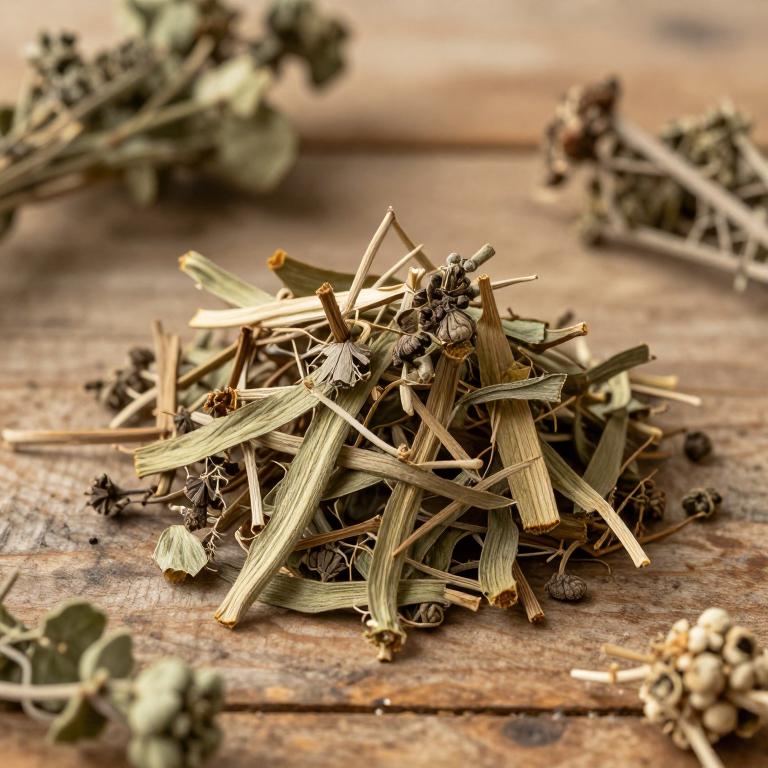
Names and Synonyms
Common Names
- Mountain yam
Scientific Names
Accepted name
Dioscorea hamiltoniiSynonyms
- Dioscorea persimilis
- Dioscorea persimilis var. pubescens
- Dioscorea raishaensis
- Dioscorea persimilis var. wukangensis
Sources: Wikidata, Catalogue of Life
Taxonomical Classification
This plant belongs to the kingdom Plantae and is classified within the phylum Streptophyta and the class Equisetopsida. Under the subclass Magnoliidae, it falls into the order Dioscoreales and the family Dioscoreaceae. Ultimately, it is identified by the genus Dioscorea as the species Dioscorea hamiltonii.
| Rank | Classification |
|---|---|
| Kingdom | Plantae |
| Phylum | Streptophyta |
| Class | Equisetopsida |
| Subclass | Magnoliidae |
| Order | Dioscoreales |
| Family | Dioscoreaceae |
| Genus | Dioscorea |
Sources: The World Checklist of Vascular Plants (WCVP)
Distribution
This plant exhibits a wide geographical distribution across several key regions in Asia. In China, its presence is noted in the South-Central, Southeast, and Hainan areas. It is also found within Eastern Asia, specifically on the island of Taiwan. Furthermore, the species extends into the Indian Subcontinent, where it can be located in Assam. These diverse locations highlight the plant's ability to thrive in various subtropical environments.
| Region | Area |
|---|---|
| China | China South-Central |
| China | Hainan |
| China | China Southeast |
| Eastern Asia | Taiwan |
| Indian Subcontinent | Assam |
| Indian Subcontinent | Bangladesh |
| Indian Subcontinent | East Himalaya |
| Indian Subcontinent | India |
| Indian Subcontinent | Nepal |
| Indo-China | Myanmar |
Sources: The World Checklist of Vascular Plants (WCVP)
Botanical Identification
Ecology
The ecology of Dioscorea hamiltonii is characterized by a broad altitudinal distribution that spans diverse topographical gradients. This species is found across a significant vertical range, beginning at low elevations of approximately 100 m AMSL and ascending to a maximum height of 1950 m AMSL. Throughout its habitat, it maintains a mean elevation of approximately 1025 m AMSL, suggesting a preference for mid-elevation ecological zones while remaining adaptable to both lowland and montane environmental conditions.
- Elevational range max:
- 1950 m AMSL
- Elevational range mean:
- 1025 m AMSL
- Elevational range min:
- 100 m AMSL
Life history
The life history of Dioscorea hamiltonii is characterized by its status as a perennial plant, allowing it to persist through multiple growing seasons. It functions as a geophyte, a specialized life form where the majority of the plant's biomass is stored underground in a tuberous structure to survive unfavorable environmental conditions. This biological strategy classifies it more broadly as a cryptophyte, as its vital organs remain concealed beneath the soil surface during periods of dormancy, ensuring its long-term survival and ability to re-emerge when conditions become favorable for growth.
- Life form :
- geophyte
- Life form :
- cryptophyte
- Lifecycle :
- perennial
Morphology
The morphology of Dioscorea hamiltonii is characterized by its growth form as a non-woody herb. It functions as an obligatory climber, utilizing specialized structures to ascend toward light sources. As an independent organism, it does not exhibit parasitic behavior, maintaining a terrestrial existence rather than growing as an epiphyte.
- Climber :
- obligatory
- Epiphyte :
- terrestrial
- Growth form :
- herb
- Parasite :
- independent
- Woodiness :
- non-woody
Reproduction
The reproduction of Dioscorea hamiltonii is characterized by the production of distinct fruits and seeds with specific morphological dimensions. The fruits produced by this species exhibit variability in size, with a mean length of 2 cm and a mean width of 3.25 cm. Specifically, the fruit length ranges from a minimum of 1.5 cm to a maximum of 2.5 cm, while the fruit width varies from a minimum of 2.5 cm to a maximum of 4 cm. Regarding the reproductive output in terms of seed size, the seeds are notably small and consistent in mass, maintaining a uniform mean, minimum, and maximum mass of 0.00692 g.
- Fruit length max:
- 2.5 cm
- Fruit length mean:
- 2 cm
- Fruit length min:
- 1.5 cm
- Fruit width max:
- 4 cm
- Fruit width mean:
- 3.25 cm
- Fruit width min:
- 2.5 cm
- Seed mass mean:
- 0.00692 g
Sources: Global Inventory of Floras and Traits (GIFT)
Chemicals
Dioscorea hamiltonii has 2 reported phytochemicals identified across 0 scientific publications and several other databases. The most consistently reported chemicals include STARCH, water.
| Chemical | Supporting sources | Consensus |
|---|---|---|
| STARCH | 1 supporting sources | ★☆☆☆☆ |
| water | 1 supporting sources | ★☆☆☆☆ |
STARCH
- Zhong yao cai = Zhongyaocai = Journal of Chinese medicinal materials
water
- Zhong yao cai = Zhongyaocai = Journal of Chinese medicinal materials