Dioscorea floribunda
Dioscorea floribunda · Accepted scientific name
Scientific literature: Very Sparse (8 studies) · ★☆☆☆☆
, scientifically known as Dioscorea floribunda, is a climbing medicinal plant belonging to the yam family. Native to specific tropical regions, it is highly valued in traditional medicine for its unique bioactive compounds. This species is primarily utilized for its potential therapeutic properties in treating various ailments and promoting wellness.
- Family
- Dioscoreaceae
- Native range
- Northern America
- Parts used
- Leaf
- Common names
- Not available
- Scientific synonyms
- Dioscorea Barclayi
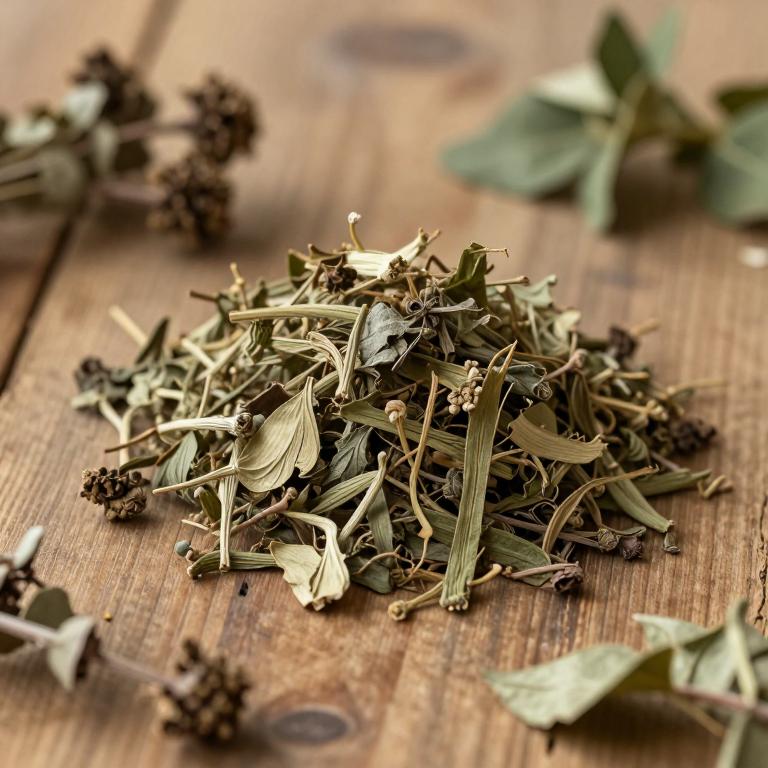
Names and Synonyms
Scientific Names
Accepted name
Dioscorea floribundaSynonyms
- Dioscorea barclayi
Regional and Traditional Names
Spanish:
- Cabeza de negro
- barbasco amarillo
Sources: Wikidata, Catalogue of Life
Taxonomical Classification
This plant belongs to the kingdom Plantae and the phylum Streptophyta, falling under the class Equisetopsida and subclass Magnoliidae. It is further classified within the order Dioscoreales and the family Dioscoreaceae. Ultimately, its taxonomic identity is defined by its placement in the genus Dioscorea.
| Rank | Classification |
|---|---|
| Kingdom | Plantae |
| Phylum | Streptophyta |
| Class | Equisetopsida |
| Subclass | Magnoliidae |
| Order | Dioscoreales |
| Family | Dioscoreaceae |
| Genus | Dioscorea |
Sources: The World Checklist of Vascular Plants (WCVP)
Distribution
This plant exhibits a widespread distribution across several key regions in North and Central America. Within Mexico, its presence is documented in the central, southwest, and southeast territories. Moving southward, the species can also be found within the borders of Belize. Furthermore, its range extends into the country of El Salvador. Together, these locations define the specific geographical footprint of Dioscorea floribunda.
| Region | Area |
|---|---|
| Mexico | Mexico Central |
| Mexico | Mexico Southwest |
| Mexico | Mexico Southeast |
| Central America | Belize |
| Central America | El Salvador |
| Central America | Guatemala |
| Central America | Honduras |
Sources: The World Checklist of Vascular Plants (WCVP)
Botanical Identification
Life history
The life history of Dioscorea floribunda is characterized by its status as a perennial organism, allowing it to persist through multiple growing seasons. As a member of the cryptophyte group, it relies on specialized underground structures to survive unfavorable environmental conditions, ensuring its long-term survival in its natural habitat. Specifically, its biological classification as a geophyte dictates that its regenerative organs are located entirely below the soil surface, typically in the form of tubers or rhizomes, which protect the plant during dormancy periods.
- Life form :
- geophyte
- Life form :
- cryptophyte
- Lifecycle :
- perennial
Morphology
The morphology of Dioscorea floribunda is characterized by its growth form as a non-woody herb, functioning as a herbaceous plant that lacks woody tissue. It exhibits a climbing habit, specifically categorized as a vine, and operates as an obligatory climber to ascend its support. In terms of its ecological positioning, the plant is terrestrial rather than aquatic or epiphytic, and it maintains an independent life cycle, functioning as a non-parasitic organism.
- Aquatic :
- terrestrial
- Climber :
- vine
- Climber :
- obligatory
- Epiphyte :
- terrestrial
- Growth form :
- herb
- Parasite :
- independent
- Woodiness :
- non-woody
Physiology
The physiology of Dioscorea floribunda is characterized by its specialized metabolic processes and nutrient acquisition strategies typical of climbing tuberous perennials. As a member of the Dioscoreaceae family, its physiological framework supports robust vegetative growth through the development of underground storage organs, which serve as carbohydrate reservoirs to facilitate seasonal regrowth. The plant exhibits efficient photosynthetic pathways to sustain its climbing habit, utilizing tendrils and aerial stems to optimize light interception in shaded environments. Regarding its interaction with soil nutrients, the plant does not function as a nitrogen fixer; it lacks the symbiotic relationship with diazotrophic bacteria, such as Rhizobium, required to convert atmospheric nitrogen into bioavailable forms. Consequently, its nitrogen uptake is strictly dependent on the absorption of nitrates and ammonium ions from the soil through its root system.
- Nitrogen fixer :
- no
Sources: Global Inventory of Floras and Traits (GIFT)
Plant Parts
Dioscorea floribunda has 1 reported plant parts identified across 2 scientific publications and several other databases that are studied for medicinal purposes. The most consistently reported plant part include leaf.
| Plant part | Supporting sources | Consensus |
|---|---|---|
| Leaf | 2 supporting sources | ★☆☆☆☆ |
Leaf
- Journal of animal physiology and animal nutrition
- TheScientificWorldJournal
Chemicals
Dioscorea floribunda has 5 reported phytochemicals identified across 2 scientific publications and several other databases. The most consistently reported chemicals include Citronellyl acetate, Elemol, NEROLIDOL, Valerenyl acetate, farnesol.
| Chemical | Supporting sources | Consensus |
|---|---|---|
| Citronellyl acetate | 1 supporting sources | ★☆☆☆☆ |
| Elemol | 1 supporting sources | ★☆☆☆☆ |
| NEROLIDOL | 1 supporting sources | ★☆☆☆☆ |
| Valerenyl acetate | 1 supporting sources | ★☆☆☆☆ |
| farnesol | 1 supporting sources | ★☆☆☆☆ |
Citronellyl acetate
- TheScientificWorldJournal
Elemol
- TheScientificWorldJournal
NEROLIDOL
- TheScientificWorldJournal
Valerenyl acetate
- TheScientificWorldJournal
farnesol
- TheScientificWorldJournal
Preparations
Dioscorea floribunda has 2 reported preparations identified across 2 scientific publications and several other databases. The most consistently reported preparations include essential oil, leaves.
| Preparation | Supporting sources | Consensus |
|---|---|---|
| Essential oil | 1 supporting sources | ★☆☆☆☆ |
| Leaves | 1 supporting sources | ★☆☆☆☆ |
Essential oil
- TheScientificWorldJournal
Leaves
- Journal of animal physiology and animal nutrition