Black Bryony
Dioscorea communis · Accepted scientific name
Scientific literature: Very Sparse (4 studies) · ★☆☆☆☆
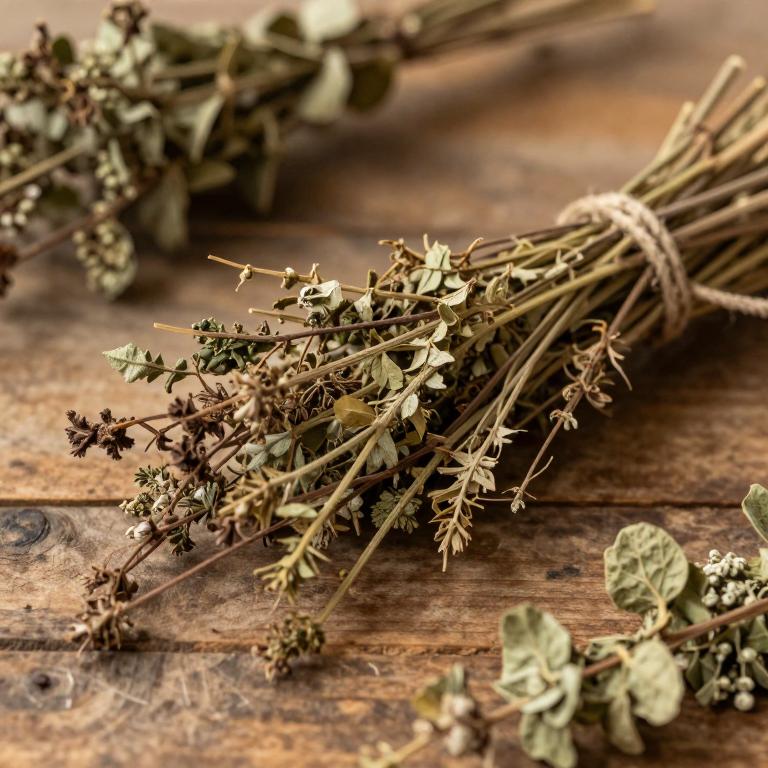
Black Bryony, scientifically known as Dioscorea communis, is a perennial climbing vine native to Europe and North Africa. Characterized by its distinctive dark berries and heart-shaped leaves, this plant contains potent alkaloids. While historically studied for medicinal properties, it is highly toxic and must be handled with extreme caution.
Names and Synonyms
Common Names
- Black Bryony
- black-bindweed
- black-bryony
- lady's-seal
- norça
Scientific Names
Accepted name
Dioscorea communisSynonyms
- Tamus communis var. smilacifolia
- Tamus smilacifolia
- Tamus baccifera
- Tamus communis var. triloba
- Tamus communis
- Tamus cirrhosa
- Tamus communis f. subtriloba
- Tamus communis var. subtriloba
- Tamus cordifolia
- Tamus racemosa
- Tamus norsa
Regional and Traditional Names
Spanish:
- Tamus smilacifolia
- Espárragos hileros
- Espárrago de sepia
- Brionia negra
- Sello de la Virgen
- Espárragos de bicha
- Espárragos de yedros
- Hierba de la mujer apaleada
- Nuez negra
- Espárrago bravío
- Espárragos de lupia
- Espárragos zarceros
- Tamus cretica
- Espárragos de caña
- Planta de la culebra
- Espárragos chirrinantes
- Esparragos hileros
- Esparrago de sepia
- Esparragos de bicha
- Esparragos de yedros
- Esparrago bravio
- Esparragos de lupia
- Esparragos zarceros
- Esparragos chirrinantes
- nueza negra
German:
- Gemeine Schmerwurz
- Tamus communis
- Schmerwurz
- Gewöhnliche Schmerwurz
- echte Schmerwurz
- Schmerwurz
- Feuerwurzel
- Gemeine Schmerwurz
- Gewöhnliche Schmerwurz
- Schmerzwurz
- Stickwurz
French:
- Reponchon
- Raisin du Diable
- Tamier commun
- Herbe à la femme battue
- Respounchous
- Tamus communis
- Repountchou
- Tamier
- herbe aux femmes battues
- Haut liseron
- Racine-vierge
- Raisin du Diable
- Sceau de Notre Dame
- Tamier commun
- Vigne noire
- Tamier
Sources: Wikidata, Catalogue of Life
Taxonomical Classification
This plant belongs to the kingdom Plantae and is classified under the phylum Streptophyta within the class Equisetopsida. It is further categorized under the subclass Magnoliidae and the order Dioscoreales. Finally, its taxonomic hierarchy places it in the family Dioscoreaceae and the genus Dioscorea.
| Rank | Classification |
|---|---|
| Kingdom | Plantae |
| Phylum | Streptophyta |
| Class | Equisetopsida |
| Subclass | Magnoliidae |
| Order | Dioscoreales |
| Family | Dioscoreaceae |
| Genus | Dioscorea |
Sources: The World Checklist of Vascular Plants (WCVP)
Distribution
This plant exhibits a specific range of occurrence across several regions of Europe. In Northern Europe, its presence can be identified in both Great Britain and Ireland. Moving toward Middle Europe, the species is also found within the borders of Belgium. Additionally, its distribution extends into the central landscapes of Germany. Finally, the geographical reach of this medicinal plant includes the country of Austria.
| Region | Area |
|---|---|
| Northern Europe | Great Britain |
| Northern Europe | Ireland |
| Middle Europe | Austria |
| Middle Europe | Belgium |
| Middle Europe | Germany |
| Middle Europe | Hungary |
| Middle Europe | Switzerland |
| Southwestern Europe | Baleares |
| Southwestern Europe | Corse |
| Southwestern Europe | France |
Sources: The World Checklist of Vascular Plants (WCVP)
Botanical Identification
Ecology
The ecology of Dioscorea communis is characterized by its preference for specific vegetational structures and altitudinal gradients. This species is primarily found inhabiting forest environments and shrubberies, where it thrives within the shaded or semi-shaded undergrowth of these ecosystems. Its distribution is vertically constrained within a defined elevational range, occurring from a minimum altitude of 200 m AMSL up to a maximum elevation of 1200 m AMSL.
- Elevational range max:
- 1200 m AMSL
- Elevational range min:
- 200 m AMSL
- Habitat :
- forest, shrubberies
Life history
The life history of Dioscorea communis is characterized by its status as a perennial plant, allowing it to persist through multiple growing seasons. As a cryptophyte, it ensures its survival by protecting its regenerative organs beneath the soil surface. Specifically, it functions as a geophyte, utilizing specialized underground storage organs to endure unfavorable environmental conditions. The plant exhibits a deciduous nature, shedding its foliage during dormant periods as part of its seasonal life cycle.
- Deciduousness :
- deciduous
- Life form :
- geophyte
- Life form :
- cryptophyte
- Lifecycle :
- perennial
Morphology
The morphology of Dioscorea communis is characterized by its growth form as a non-woody herb that functions as an obligatory climber. As a terrestrial plant, it exhibits a scandent shoot orientation, allowing it to ascend through its environment. The plant's physical stature varies, with a total plant height ranging from a minimum of 1 m to a maximum of 3 m, maintaining a mean height of approximately 2.25 m. Its shoot length is substantial, typically spanning between 100 cm and 200 cm. Unlike parasitic or epiphytic species, this plant grows independently in its habitat.
- Aquatic :
- terrestrial
- Climber :
- self-supporting
- Climber :
- obligatory
- Epiphyte :
- terrestrial
- Growth form :
- herb
- Parasite :
- independent
- Plant height max:
- 3 m
- Plant height mean:
- 2.25 m
- Plant height min:
- 1 m
- Shoot length max:
- 200 cm
- Shoot length min:
- 100 cm
- Shoot orientation :
- scandent
- Woodiness :
- non-woody
Physiology
The physiology of Dioscorea communis is characterized by a C3 photosynthetic pathway, which dictates its carbon fixation processes and metabolic efficiency. The plant exhibits significant leaf morphological characteristics, with an average leaf size of 61.24 cm². Furthermore, its leaf architecture is reflected in a mean Specific Leaf Area (SLA) of 303 cm²/g, indicating a specific relationship between its leaf mass and surface area that influences its resource acquisition and light interception strategies.
- Leaf size mean:
- 61.24 cm²
- Photosynthetic pathway :
- C3
- Specific Leaf Area (SLA) mean:
- 303 cm²/g
Reproduction
The reproduction of Dioscorea communis is characterized by a dioecious sexual reproduction system, meaning self-fertilization is absent. The flowering process typically begins in April and concludes in June, featuring violet-colored flowers arranged in a panicle inflorescence. Pollination is driven by biotic factors, specifically through an insect pollination syndrome. Following successful pollination, the plant produces red, dry, indehiscent berries. These fruits vary in size, with a mean length of 1.18 cm (ranging from 1.2 to 1.5 cm) and a mean width of 1.08 cm (ranging from 1.2 to 1.5 cm). Each fruit is highly prolific, containing between 101 and 1000 seeds. The seeds themselves have a mean mass of approximately 0.0179 g (ranging from 0.01549 to 0.0214 g) and a mean volume of 18 mm³ (ranging from 17 to 19 mm³). Dispersal is achieved through a zoochorous mechanism, specifically via endozoochory, where seeds are distributed through the digestive tracts of animals.
- Dehiscence :
- indehiscent
- Dispersal syndrome :
- zoochorous
- Dispersal syndrome :
- endozoochorous
- Flower colour :
- violet
- Flowering time :
- Apr
- Flowering time :
- Jun
- Fruit colour :
- red
- Fruit dryness :
- dry
- Fruit length max:
- 1.5 cm
- Fruit length mean:
- 1.18 cm
- Fruit length min:
- 1.2 cm
- Fruit type :
- berry
- Fruit width max:
- 1.5 cm
- Fruit width mean:
- 1.08 cm
- Fruit width min:
- 1.2 cm
- Inflorescence :
- panicle
- Pollination syndrome :
- insect
- Pollination syndrome :
- biotic
- Reproduction sexual :
- dioecious
- Seed mass max:
- 0.0214 g
- Seed mass mean:
- 0.01789528575 g
- Seed mass min:
- 0.01549 g
- Seed volume max:
- 19 mm³
- Seed volume mean:
- 18 mm³
- Seed volume min:
- 17 mm³
- Seeds_per_fruit :
- 101-1000
- Self fertilization :
- absent
Sources: Global Inventory of Floras and Traits (GIFT)
Plant Parts
Dioscorea communis has 2 reported plant parts identified across 2 scientific publications and several other databases that are studied for medicinal purposes. The most consistently reported plant part include rhizome, root.
| Plant part | Supporting sources | Consensus |
|---|---|---|
| Rhizome | 1 supporting sources | ★☆☆☆☆ |
| Root | 1 supporting sources | ★☆☆☆☆ |
Rhizome
- Bollettino della Societa italiana di biologia sperimentale
Root
- Journal of ethnopharmacology
Activities
Dioscorea communis has 1 reported activities identified across 2 scientific publications and several other databases. The most consistently reported activities include Antimicrobial.
| Activity | Supporting sources | Consensus |
|---|---|---|
| Antimicrobial | 1 supporting sources | ★☆☆☆☆ |
Antimicrobial
- Turkish journal of pharmaceutical sciences
Conditions
Dioscorea communis has 1 reported investigations on conditions identified across 2 scientific publications and several other databases. The most consistently reported conditions include Candida albicans.
| Condition | Supporting sources | Consensus |
|---|---|---|
| Candida albicans | 1 supporting sources | ★☆☆☆☆ |
Candida albicans
- Turkish journal of pharmaceutical sciences
Preparations
Dioscorea communis has 3 reported preparations identified across 2 scientific publications and several other databases. The most consistently reported preparations include ethanol root extract, rhizomes, solvent-free extract.
| Preparation | Supporting sources | Consensus |
|---|---|---|
| Ethanol root extract | 1 supporting sources | ★☆☆☆☆ |
| Rhizomes | 1 supporting sources | ★☆☆☆☆ |
| Solvent-free extract | 1 supporting sources | ★☆☆☆☆ |
Ethanol root extract
- Journal of ethnopharmacology
Rhizomes
- Bollettino della Societa italiana di biologia sperimentale
Solvent-free extract
- Journal of ethnopharmacology