Dioclea lasiophylla
Dioclea lasiophylla · Accepted scientific name
Scientific literature: Very Sparse (5 studies) · ★☆☆☆☆
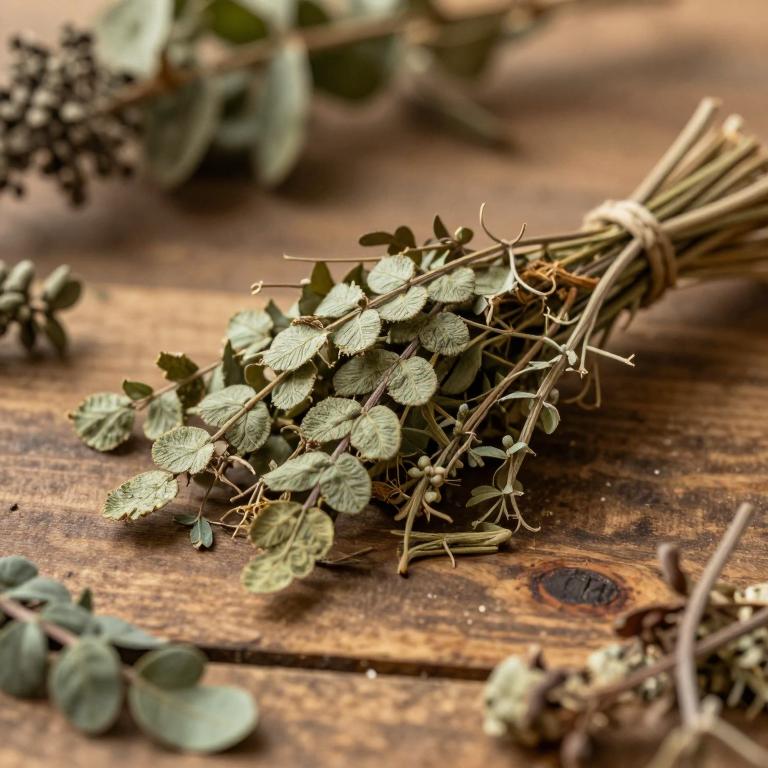
Dioclea lasiophylla, scientifically known as Dioclea lasiophylla, is a significant medicinal plant valued in traditional healing practices. Often found in tropical regions, this species is recognized for its diverse therapeutic properties. Research focuses on its bioactive compounds, which offer potential applications in treating various ailments and advancing pharmacology.
- Family
- Fabaceae
- Native range
- Southern America
- Parts used
- Leaf · Seed
- Common names
- Not available
- Scientific synonyms
- Dioclea Guianensis Var. Lasiophylla
Names and Synonyms
Scientific Names
Accepted name
Dioclea lasiophyllaSynonyms
- Dioclea guianensis var. lasiophylla
Taxonomical Classification
This plant, Dioclea lasiophylla, belongs to the kingdom Plantae and the phylum Streptophyta. Within the class Equisetopsida and subclass Magnoliidae, it is classified under the order Fabales and the family Fabaceae. Finally, it is categorized under the genus Dioclea.
| Rank | Classification |
|---|---|
| Kingdom | Plantae |
| Phylum | Streptophyta |
| Class | Equisetopsida |
| Subclass | Magnoliidae |
| Order | Fabales |
| Family | Fabaceae |
| Genus | Dioclea |
Sources: The World Checklist of Vascular Plants (WCVP)
Distribution
This plant is native to a specific region within the South American continent. Its presence is recorded primarily in the country of Brazil. Within this nation, its habitat is concentrated in the Northeast region. This localized distribution suggests that the species is adapted to the unique environmental conditions found there. Consequently, its geographical range is relatively restricted to these specific Brazilian territories.
| Region | Area |
|---|---|
| Brazil | Brazil Northeast |
Sources: The World Checklist of Vascular Plants (WCVP)
Botanical Identification
Ecology
The ecology of Dioclea lasiophylla is defined by its ability to thrive in diverse and often harsh Brazilian ecosystems, exhibiting a specialized adaptability to specific soil and moisture conditions. It is primarily found within the Caatinga (strictu sensu), where it must contend with seasonal semi-aridity and high temperatures, as well as in the Carrasco formations, which are characterized by rocky outcrops and nutrient-poor soils. Additionally, the species occupies Restinga habitats, indicating a tolerance for sandy, well-drained substrates and coastal environmental influences. This broad distribution across such distinct biomes suggests a resilient ecological strategy that allows the plant to occupy varied niches, ranging from the xeric shrublands of the interior to the more humid, sandy coastal fringes.
- Habitat :
- Caatinga (stricto sensu), Carrasco, Restinga
Morphology
The morphology of Dioclea lasiophylla is characterized by its growth habit as an obligatory climber, utilizing specialized structures to ascend surrounding vegetation. It is a terrestrial species, functioning as an independent organism that does not exhibit parasitic behavior toward its hosts. In terms of its ecological positioning, it is strictly terrestrial rather than being an epiphyte, whether in a holoepiphytic, hemiepiphytic, or facultative capacity. Furthermore, the plant is non-aquatic, maintaining a life cycle strictly within terrestrial environments, avoiding semiaquatic or fully aquatic habitats.
- Aquatic :
- terrestrial
- Climber :
- obligatory
- Epiphyte :
- terrestrial
- Parasite :
- independent
Sources: Global Inventory of Floras and Traits (GIFT)
Plant Parts
Dioclea lasiophylla has 2 reported plant parts identified across 2 scientific publications and several other databases that are studied for medicinal purposes. The most consistently reported plant part include leaf, seed.
| Plant part | Supporting sources | Consensus |
|---|---|---|
| Leaf | 1 supporting sources | ★☆☆☆☆ |
| Seed | 1 supporting sources | ★☆☆☆☆ |
Leaf
- Phytochemistry
Seed
- Immunological investigations
Chemicals
Dioclea lasiophylla has 2 reported phytochemicals identified across 2 scientific publications and several other databases. The most consistently reported chemicals include 2-Methylpentan-2,4-diol, Epicatechin.
| Chemical | Supporting sources | Consensus |
|---|---|---|
| 2-Methylpentan-2,4-diol | 1 supporting sources | ★☆☆☆☆ |
| Epicatechin | 1 supporting sources | ★☆☆☆☆ |
2-Methylpentan-2,4-diol
- Phytochemistry
Epicatechin
- Phytochemistry
Activities
Dioclea lasiophylla has 1 reported activities identified across 2 scientific publications and several other databases. The most consistently reported activities include Antioxidant.
| Activity | Supporting sources | Consensus |
|---|---|---|
| Antioxidant | 1 supporting sources | ★☆☆☆☆ |
Antioxidant
- Phytochemistry
Preparations
Dioclea lasiophylla has 1 reported preparations identified across 2 scientific publications and several other databases. The most consistently reported preparations include leaves of Dioclea lasiophilla.
| Preparation | Supporting sources | Consensus |
|---|---|---|
| Leaves of dioclea lasiophilla | 1 supporting sources | ★☆☆☆☆ |
Leaves of dioclea lasiophilla
- Phytochemistry