Dimorphandra gardneriana
Dimorphandra gardneriana · Accepted scientific name
Scientific literature: Very Sparse (4 studies) · ★☆☆☆☆
Dimorphandra gardneriana, scientifically known as Dimorphandra gardneriana, is a versatile medicinal plant native to West Africa. Renowned for its diverse therapeutic properties, it is extensively used in traditional medicine to treat various ailments, including skin infections, inflammation, and digestive issues, offering significant potential for modern pharmacological research.
- Family
- Fabaceae
- Native range
- Southern America
- Parts used
- Not available
- Common names
- Not available
- Scientific synonyms
- Dimorphandra Biretusa
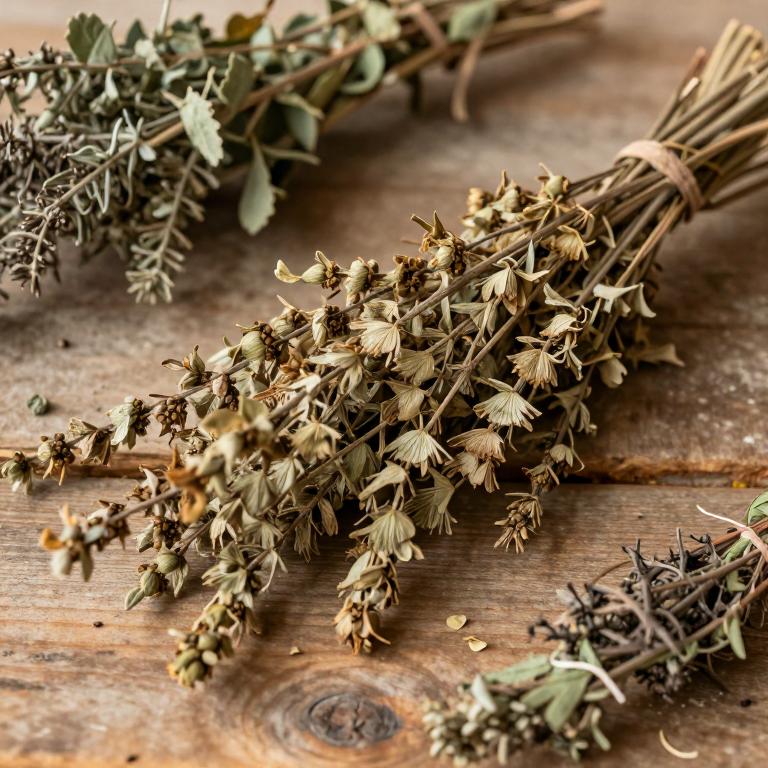
Names and Synonyms
Scientific Names
Accepted name
Dimorphandra gardnerianaSynonyms
- Dimorphandra biretusa
Sources: Wikidata, Catalogue of Life
Taxonomical Classification
This plant belongs to the kingdom Plantae and the phylum Streptophyta, placing it within the class Equisetopsida and subclass Magnoliidae. It is further classified under the order Fabales and the family Fabaceae. Specifically, it is identified by the genus Dimorphandra, with its species name being gardneriana.
| Rank | Classification |
|---|---|
| Kingdom | Plantae |
| Phylum | Streptophyta |
| Class | Equisetopsida |
| Subclass | Magnoliidae |
| Order | Fabales |
| Family | Fabaceae |
| Genus | Dimorphandra |
Sources: The World Checklist of Vascular Plants (WCVP)
Distribution
This plant exhibits a broad geographical distribution across several key regions of South America. In the western portion of the continent, its presence has been documented in Bolivia. Moving toward the east, it is widely spread throughout various territories of Brazil. Specifically, the species can be found in the North, Northeast, and Southeast regions of the country. Additionally, its range extends into the West-Central parts of Brazil.
| Region | Area |
|---|---|
| Western South America | Bolivia |
| Brazil | Brazil West-Central |
| Brazil | Brazil Northeast |
| Brazil | Brazil Southeast |
| Brazil | Brazil North |
Sources: The World Checklist of Vascular Plants (WCVP)
Botanical Identification
Ecology
The ecology of Dimorphan Dra gardneriana is characterized by its ability to inhabit a diverse range of Brazilian biomes, demonstrating significant adaptability to varying environmental conditions. It is primarily found within the Caatinga (strictu sensu), where it must endure semi-arid conditions, as well as in the Cerrado (lato sensu), ranging from open formations to more wooded areas. Furthermore, the species occupies more humid niches, such as the Floresta Ciliar (riparian forests) or Galeria (gallery forests), where it benefits from the increased moisture and protection provided by vegetation adjacent to watercourses. This distribution across both xeric and mesic landscapes highlights its ecological plasticity in responding to different moisture regimes and soil types within these distinct vegetation structures.
- Habitat :
- Caatinga (stricto sensu), Cerrado (lato sensu), Floresta Ciliar ou Galeria
Life history
The life history of Dimorphanidra gardneriana is characterized by its classification as a perennial species, exhibiting a life cycle that can be variable depending on environmental conditions and habitat stability. As a perennial, the plant is capable of surviving for multiple growing seasons, allowing it to establish a persistent presence within its ecosystem. This longevity enables the species to undergo repeated cycles of vegetative growth and reproductive phases, contributing to its long-term survival and ability to colonize specific ecological niches. The variability in its life cycle suggests that while it possesses the biological framework for a multi-year existence, its precise developmental trajectory—ranging from the establishment of its perennial structure to its peak reproductive maturity—is influenced by the surrounding climatic and resource availability.
- Lifecycle :
- perennial
Morphology
The morphology of Dimorphandra gardneriana is characterized by its growth form as a woody tree, typically reaching an average height of 12 m, though individual specimens may exhibit a maximum height of 7 m. As a terrestrial plant, it is not aquatic nor an epiphyte, maintaining an independent existence without relying on other plants for support or nutrients. Unlike vines or lianas, it is a self-supporting structure rather than a climber, characterized by a robust, woody constitution that allows it to maintain its stature within its natural habitat.
- Aquatic :
- terrestrial
- Climber :
- self-supporting
- Epiphyte :
- terrestrial
- Growth form :
- tree
- Parasite :
- independent
- Plant height max:
- 7 m
- Plant height mean:
- 12 m
- Woodiness :
- woody
Physiology
The physiology of Dimorphandra gardneriana is characterized by a highly specialized metabolic relationship with soil microbes, most notably through its capacity as a nitrogen fixer. This plant engages in a symbiotic association with diazotrophic bacteria, typically housed within specialized root nodules, which allows it to convert atmospheric nitrogen into biologically available forms like ammonia. This nitrogen fixation process is a critical physiological mechanism that facilitates growth in nutrient-poor tropical soils, enabling the plant to synthesize essential amino acids and proteins even when soil nitrogen levels are low. By maintaining this efficient nitrogen assimilation pathway, Dimorphandra gardneriana optimizes its internal nutrient cycling, supporting robust vegetative development and reproductive success within its ecological niche.
- Nitrogen fixer :
- yes
Sources: Global Inventory of Floras and Traits (GIFT)
Chemicals
Dimorphandra gardneriana has 1 reported phytochemicals identified across 0 scientific publications and several other databases. The most consistently reported chemicals include Galactomannan.
| Chemical | Supporting sources | Consensus |
|---|---|---|
| Galactomannan | 1 supporting sources | ★☆☆☆☆ |
Galactomannan
- Current pharmaceutical biotechnology
Conditions
Dimorphandra gardneriana has 3 reported investigations on conditions identified across 0 scientific publications and several other databases. The most consistently reported conditions include HSV-1, Herpes Simplex, Poliovirus.
| Condition | Supporting sources | Consensus |
|---|---|---|
| Hsv-1 | 1 supporting sources | ★☆☆☆☆ |
| Herpes simplex | 1 supporting sources | ★☆☆☆☆ |
| Poliovirus | 1 supporting sources | ★☆☆☆☆ |
Hsv-1
- Current pharmaceutical biotechnology
Herpes simplex
- Current pharmaceutical biotechnology
Poliovirus
- Current pharmaceutical biotechnology
Preparations
Dimorphandra gardneriana has 1 reported preparations identified across 0 scientific publications and several other databases. The most consistently reported preparations include extracts.
| Preparation | Supporting sources | Consensus |
|---|---|---|
| Extracts | 1 supporting sources | ★☆☆☆☆ |
Extracts
- Journal of photochemistry and photobiology. B, Biology