Dimetia scandens
Dimetia scandens · Accepted scientific name
Scientific literature: Very Sparse (1 studies) · ★☆☆☆☆
Dimetia scandens, scientifically known as Dimetia scandens, is a remarkable climbing shrub native to the lush tropical forests of Brazil. Renowned for its striking, vibrant foliage and medicinal properties, this plant has long been utilized in traditional herbal practices to support various healing processes and promote overall wellness.
- Family
- Rubiaceae
- Native range
- Asia-Temperate
- Parts used
- Not available
- Common names
- Not available
- Scientific synonyms
- Oldenlandia Scandens · Petesia Hita · 3 more
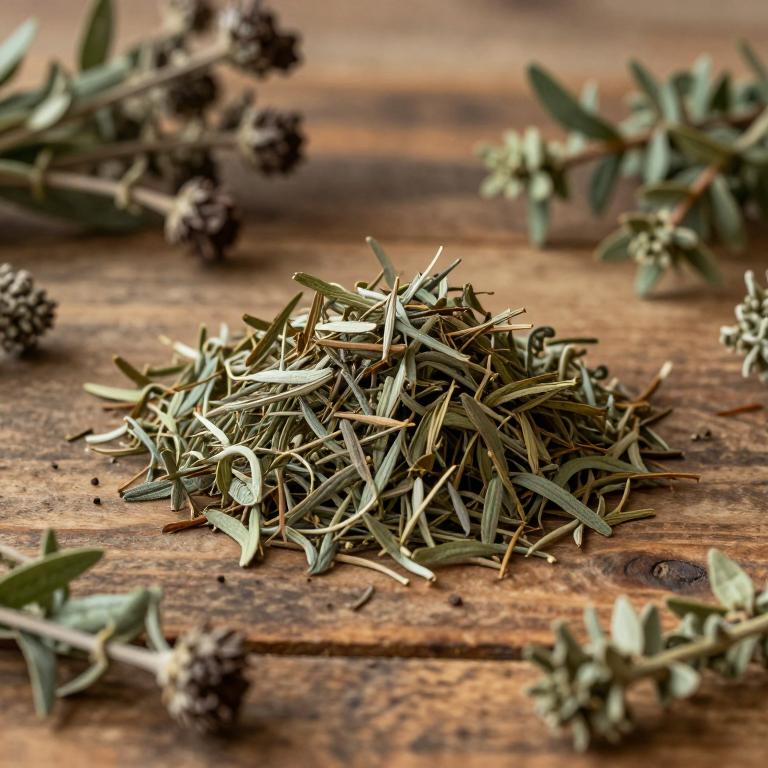
Names and Synonyms
Scientific Names
Accepted name
Dimetia scandensSynonyms
- Oldenlandia scandens
- Petesia hita
- Hedyotis scandens
- Hedyotis subscandens
- Hedyotis polycarpa
Sources: Wikidata
Taxonomical Classification
This plant, Dimetia scandens, belongs to the kingdom Plantae and the phylum Streptophyta. It is classified under the class Equisetopsida and the subclass Magnoliidae within the order Gentianaales. Finally, it is a member of the Rubiaceae family and is categorized under the genus Dimetia.
| Rank | Classification |
|---|---|
| Kingdom | Plantae |
| Phylum | Streptophyta |
| Class | Equisetopsida |
| Subclass | Magnoliidae |
| Order | Gentianales |
| Family | Rubiaceae |
| Genus | Dimetia |
Sources: The World Checklist of Vascular Plants (WCVP)
Distribution
This plant exhibits a specific geographical range concentrated within parts of Asia. In China, its presence is noted throughout the South-Central regions. Within the Indian Subcontinent, it can be found across several distinct territories including India and Bangladesh. Furthermore, the species is distributed through the Assam region and the East Himalaya. Together, these locations define the natural habitat and spread of Dimitia scandens.
| Region | Area |
|---|---|
| China | China South-Central |
| Indian Subcontinent | Assam |
| Indian Subcontinent | Bangladesh |
| Indian Subcontinent | East Himalaya |
| Indian Subcontinent | India |
| Indian Subcontinent | Nepal |
| Indo-China | Cambodia |
| Indo-China | Laos |
| Indo-China | Myanmar |
| Indo-China | Thailand |
Sources: The World Checklist of Vascular Plants (WCVP)
Botanical Identification
Ecology
The ecology of Dimentia scandens is defined by its broad altitudinal distribution, allowing it to inhabit a diverse array of environmental conditions across varying topographical gradients. This species demonstrates significant ecological plasticity, occupying a vast vertical range that begins at low-altitude tropical or subtropical zones as low as 100 m AMSL and extends upward into high-altitude montane environments reaching a maximum of 2800 m AMSL. This wide elevational range suggests an ability to adapt to fluctuations in temperature, atmospheric pressure, and moisture availability, enabling the plant to persist in both humid lowland habitats and cooler, more temperate montane ecosystems.
- Elevational range max:
- 2800 m AMSL
- Elevational range min:
- 100 m AMSL
Life history
The life history of Dimetia scandens is characterized by its specialized growth habits and structural adaptations within its ecosystem. Based on its botanical classification, the plant exhibits a dualistic nature in its life form characteristics, functioning as both a phanerophyte and a nanophanerophyte. As a phanerophyte, it possesses elevated buds located on branches well above the ground level, allowing it to maintain significant structural height and navigate its environment through upward growth. Complementing this, its classification as a nanophanerophyte indicates a specific developmental strategy where the reproductive or vegetative buds are held just above the soil surface or at a very low height, providing a resilient growth pattern that balances vertical reach with ground-level stability. This combination of life forms enables the plant to occupy diverse ecological niches, utilizing its height for light competition while maintaining a low-profile structural reserve.
- Life form :
- nanophanerophyte
- Life form :
- phanerophyte
Morphology
The morphology of Dimetia scandens is characterized by its woody structure and its specific growth habit. It functions as a facultative climber, meaning it possesses the ability to ascend using external support when available, though it is not strictly dependent on it for its entire life cycle. In terms of its growth form, it is categorized as other, distinguishing it from standard herbs, shrubs, or trees. The plant is an independent organism, not functioning as a parasite, and it maintains a terrestrial life strategy rather than acting as an epiphyte.
- Climber :
- facultative
- Epiphyte :
- terrestrial
- Growth form :
- other
- Parasite :
- independent
- Woodiness :
- woody
Sources: Global Inventory of Floras and Traits (GIFT)
Chemicals
Dimetia scandens has 1 reported phytochemicals identified across 0 scientific publications and several other databases. The most consistently reported chemicals include Phytol.
| Chemical | Supporting sources | Consensus |
|---|---|---|
| Phytol | 1 supporting sources | ★☆☆☆☆ |
Phytol
- Journal of ethnopharmacology
Preparations
Dimetia scandens has 4 reported preparations identified across 0 scientific publications and several other databases. The most consistently reported preparations include aqueous extract, fermentation starter cultures, methanolic extract, plant extract.
| Preparation | Supporting sources | Consensus |
|---|---|---|
| Aqueous extract | 1 supporting sources | ★☆☆☆☆ |
| Fermentation starter cultures | 1 supporting sources | ★☆☆☆☆ |
| Methanolic extract | 1 supporting sources | ★☆☆☆☆ |
| Plant extract | 1 supporting sources | ★☆☆☆☆ |
Aqueous extract
- Journal of ethnopharmacology
Fermentation starter cultures
- Journal of ethnobiology and ethnomedicine
Methanolic extract
- Journal of ethnopharmacology
Plant extract
- Journal of ethnopharmacology