rusty foxglove
Digitalis ferruginea · Accepted scientific name
Scientific literature: Very Sparse (5 studies) · ★☆☆☆☆
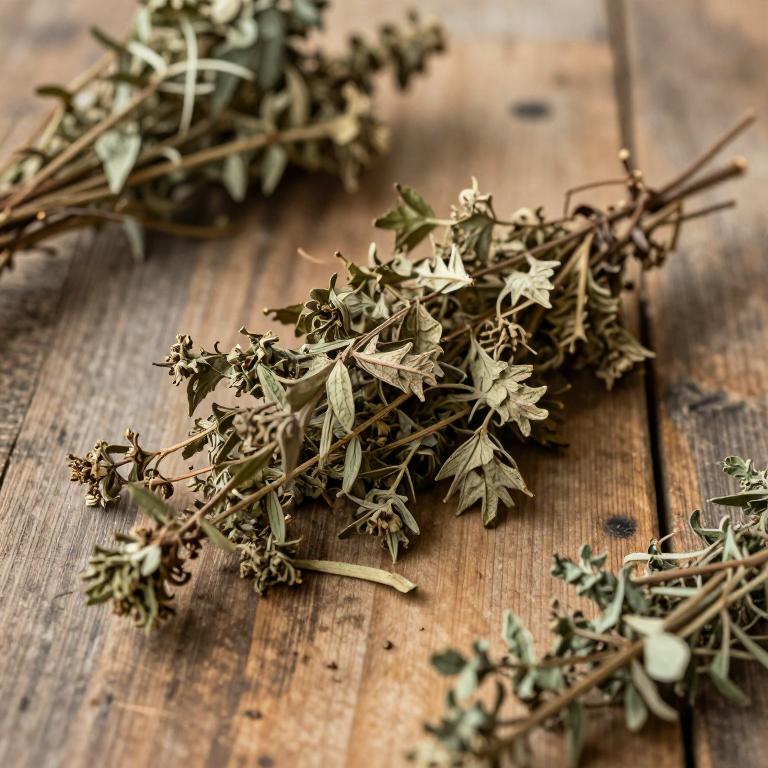
Rusty foxglove, scientifically known as Digitalis ferruginea, is a perennial herb native to the Mediterranean region. Distinguished by its rust-colored, hairy leaves and bell-shaped flowers, it contains potent cardiac glycosides. While historically significant in pharmacology for treating heart conditions, its high toxicity requires extreme caution during medicinal use.
- Family
- Plantaginaceae
- Native range
- Europe
- Parts used
- Not available
- Common names
- Rusty Foxglove
- Scientific synonyms
- Not available
Names and Synonyms
Common Names
- Rusty Foxglove
Scientific Names
Accepted name
Digitalis ferrugineaRegional and Traditional Names
Spanish:
- Digital roja
German:
- Rostfarbiger Fingerhut
- Rostfarbener Fingerhut
- Braunroter Fingerhut
- Rotbrauner Fingerhut
- Balkan-Fingerhut
Sources: Wikidata, Catalogue of Life
Taxonomical Classification
This plant belongs to the kingdom Plantae and the phylum Streptophyta, falling under the class Equisetopsida and subclass Magnoliidae. Within the order Lamiales and the family Plantaginaceae, it is classified under the genus Digitalis. Specifically, Digitalis ferruginea represents a unique medicinal species within this taxonomic hierarchy.
| Rank | Classification |
|---|---|
| Kingdom | Plantae |
| Phylum | Streptophyta |
| Class | Equisetopsida |
| Subclass | Magnoliidae |
| Order | Lamiales |
| Family | Plantaginaceae |
| Genus | Digitalis |
Sources: The World Checklist of Vascular Plants (WCVP)
Distribution
This plant exhibits a diverse range of habitats across various regions of Europe. In Middle Europe, its presence is well-documented in both Germany and Hungary. Moving toward the Balkan Peninsula, its distribution extends into Southeastern Europe. Specifically, it can be found growing in the landscapes of Albania and Bulgaria. Furthermore, the species reaches its southern reaches within the country of Greece.
| Region | Area |
|---|---|
| Middle Europe | Germany |
| Middle Europe | Hungary |
| Southeastern Europe | Albania |
| Southeastern Europe | Bulgaria |
| Southeastern Europe | Greece |
| Southeastern Europe | Italy |
| Southeastern Europe | Romania |
| Southeastern Europe | Türkiye-in-Europe |
| Southeastern Europe | NW. Balkan Pen. |
| Caucasus | North Caucasus |
Sources: The World Checklist of Vascular Plants (WCVP)
Botanical Identification
Ecology
The ecology of Digitalis ferruginea is characterized by its ability to thrive in a variety of open and semi-shaded environments. It is commonly found colonizing forest edges, meadows, and mountain regions, where it benefits from the transitional light conditions provided by woodland margins. The species demonstrates significant adaptability to different soil textures and vegetation structures, frequently appearing in sandy areas and within shrubberies. This distribution pattern suggests a preference for well-drained substrates and disturbed or transitional habitats where competition from dense canopy cover is limited, allowing it to establish itself across diverse montane and temperate landscapes.
- Habitat :
- forest edges, meadows, mountains, sand, shrubberies
Life history
The life history of Digitalis ferruginea is characterized by its status as a perennial plant, allowing it to persist through multiple growing seasons. Structurally, it is classified as a hemicryptophyte, a life form in which the perennating buds are located at the soil surface, protected by leaf litter or other organic debris during unfavorable periods. This life history strategy enables the species to survive seasonal environmental shifts while maintaining the ability to emerge and complete its reproductive cycle annually.
- Life form :
- hemicryptophyte
- Lifecycle :
- perennial
Morphology
The morphology of Digitalis ferruginea is characterized by its growth form as a non-woody herb, specifically categorized as a forb. This self-supporting plant typically grows in terrestrial environments, functioning as an independent organism without parasitic or epiphytic tendencies. In terms of stature, it reaches a plant height ranging from a minimum of 0.4 m to a maximum of 1.5 m.
- Aquatic :
- terrestrial
- Climber :
- self-supporting
- Epiphyte :
- terrestrial
- Growth form :
- herb
- Parasite :
- independent
- Plant height max:
- 1.5 m
- Plant height min:
- 0.4 m
- Woodiness :
- non-woody
Physiology
The physiology of Digitalis ferruginea is characterized by a specialized metabolic framework geared toward survival in temperate environments, primarily utilizing a C3 photosynthetic pathway. Within this pathway, carbon fixation occurs via the enzyme Rubisco during the Calvin cycle, which is most efficient under the moderate light intensities and cooler temperatures typically found in its native woodland and scrubland habitats. This C3 mechanism involves the direct fixation of atmospheric $\text{CO}_2$ into three-carbon organic compounds, a process that necessitates careful regulation of stomatal conductance to balance carbon uptake with the risk of transpirational water loss. Furthermore, the plant exhibits complex secondary physiological processes involving the biosynthesis and sequestration of cardiac glycosides, such as digitoxin, within specialized vacuoles to serve as a chemical defense mechanism. Its physiological activity is also heavily influenced by seasonal photoperiodism, which triggers the transition from a vegetative rosette stage to a rapid reproductive flowering phase, driven by intricate hormonal signaling and nutrient translocation within its vascular tissues.
- Photosynthetic pathway :
- C3
Reproduction
The reproduction of Digitalis ferruginea is characterized by a specific flowering period that typically begins in July and concludes in August. During this reproductive phase, the plant produces seeds that exhibit a very small mass, with a minimum recorded value of 0.0002 g, a maximum of 0.000467 g, and an overall mean seed mass of approximately 0.0006487 g. The dispersal of these seeds is facilitated by multiple mechanisms; the species is classified under an unspecialized dispersal syndrome, utilizing various natural methods, while also being subject to anthropochorous dispersal, where human activity plays a role in the movement of the seeds.
- Dispersal syndrome :
- unspecialized
- Dispersal syndrome :
- anthropochorous
- Flowering time :
- Jul
- Flowering time :
- Aug
- Seed mass max:
- 0.000467 g
- Seed mass mean:
- 0.0006487 g
- Seed mass min:
- 2e-04 g
Sources: Global Inventory of Floras and Traits (GIFT)
Chemicals
Digitalis ferruginea has 5 reported phytochemicals identified across 0 scientific publications and several other databases. The most consistently reported chemicals include Cardenolides, Flavonoids, Hispidulin, digoxin, p-coumaric acid.
| Chemical | Supporting sources | Consensus |
|---|---|---|
| Cardenolides | 1 supporting sources | ★☆☆☆☆ |
| Flavonoids | 1 supporting sources | ★☆☆☆☆ |
| Hispidulin | 1 supporting sources | ★☆☆☆☆ |
| digoxin | 1 supporting sources | ★☆☆☆☆ |
| p-coumaric acid | 1 supporting sources | ★☆☆☆☆ |
Cardenolides
- Frontiers in plant science
Flavonoids
- Frontiers in plant science
Hispidulin
- Frontiers in plant science
digoxin
- Frontiers in plant science
p-coumaric acid
- Frontiers in plant science