False Amaranth
Digera muricata · Accepted scientific name
Scientific literature: Very Sparse (13 studies) · ★☆☆☆☆
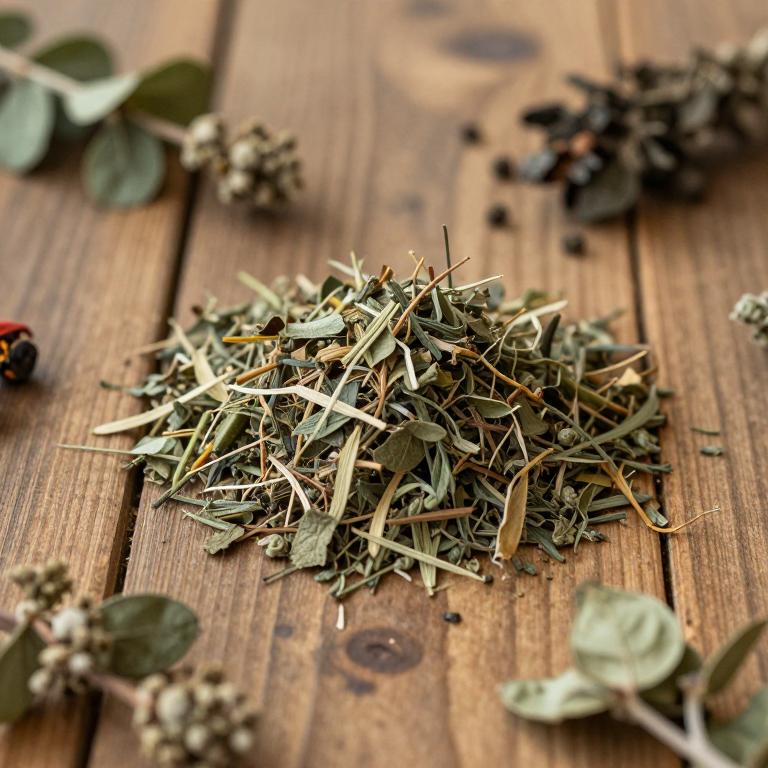
False Amaranth, scientifically known as Digera muriata, is a versatile annual herb widely recognized for its profound medicinal properties. Often found in tropical regions, this plant is traditionally utilized in folk medicine to treat various ailments, including digestive issues, skin inflammations, and kidney disorders, thanks to its rich bioactive compounds.
- Family
- Amaranthaceae
- Native range
- Europe
- Parts used
- Leaf · Stem
- Common names
- False Amaranth
- Scientific synonyms
- Chamissoa Muricata · Cladostachys Muricata · 2 more
Names and Synonyms
Common Names
- False Amaranth
Scientific Names
Accepted name
Digera muricataSynonyms
- Chamissoa muricata
- Cladostachys muricata
- Achyranthes muricata
- Desmochaeta muricata
Sources: Wikidata, Catalogue of Life
Taxonomical Classification
This plant belongs to the kingdom Plantae and the phylum Streptophyta, falling under the class Equisetopsida and subclass Magnoliidae. Within the order Caryophyllales, it is classified under the family Amaranthaceae. Finally, its specific taxonomic placement is within the genus Digera.
| Rank | Classification |
|---|---|
| Kingdom | Plantae |
| Phylum | Streptophyta |
| Class | Equisetopsida |
| Subclass | Magnoliidae |
| Order | Caryophyllales |
| Family | Amaranthaceae |
| Genus | Digera |
Sources: The World Checklist of Vascular Plants (WCVP)
Distribution
This plant exhibits a diverse geographical distribution spanning multiple continents and climate zones. In Middle Europe, its presence can be documented within the borders of Germany. Moving toward the African continent, it is found across Northern Africa, specifically in Egypt. The species also extends into West-Central Tropical Africa, with occurrences noted in Burundi. Finally, its range reaches into Northeast Tropical Africa, where it is located in both Djibouti and Eritrea.
| Region | Area |
|---|---|
| Middle Europe | Germany |
| Northern Africa | Egypt |
| West-Central Tropical Africa | Burundi |
| Northeast Tropical Africa | Djibouti |
| Northeast Tropical Africa | Eritrea |
| Northeast Tropical Africa | Ethiopia |
| Northeast Tropical Africa | Socotra |
| Northeast Tropical Africa | Somalia |
| Northeast Tropical Africa | Sudan-South Sudan |
| East Tropical Africa | Kenya |
Sources: The World Checklist of Vascular Plants (WCVP)
Botanical Identification
Ecology
The ecology of Digera muricata is characterized by its remarkable adaptability across a diverse array of environments, allowing it to thrive in many kinds of habitats. It is commonly found occupying disturbed and waste ground, areas of cultivation, and within Acacia-Commiphora bushland. Additionally, the species frequently colonizes seasonal streambeds, eroded hillsides, and coastal bushland. In terms of altitudinal distribution, the plant maintains a broad vertical range, occurring at elevations starting from a minimum of 500 m AMSL up to a maximum of 1800 m AMSL.
- Elevational range max:
- 1800 m AMSL
- Elevational range min:
- 500 m AMSL
- Habitat :
- many kinds of habitats, mostly on disturbed and waste ground, cultivation, Acacia-Commiphora bushland, seasonal streambeds, eroded hillsides, coastal bushland
Life history
The life history of Digera muricata is characterized by an annual lifecycle, meaning the plant completes its entire developmental sequence—from germination to seed production—within a single growing season. As a therophyte, its life strategy is centered around surviving unfavorable conditions in the form of seeds, which remain dormant until environmental triggers facilitate regrowth. This specific life form indicates that the majority of the plant's vegetative structure dies back at the end of its annual cycle, leaving only the seeds to persist through the dormant period.
- Life form :
- therophyte
- Lifecycle :
- annual
Morphology
The morphology of Digera muricata is characterized by a non-woody growth form, functioning as both a herb and a forb. This species is a terrestrial plant that exists independently, without being a parasite or an epiphyte. In terms of its physical structure, it is a self-supporting plant rather than a vine or liana. The plant's stature varies in height, with a minimum height of approximately 0.30 m, a mean height of 0.7 m, and a maximum height reaching up to 1.52 m.
- Aquatic :
- terrestrial
- Climber :
- self-supporting
- Epiphyte :
- terrestrial
- Growth form :
- herb
- Growth form :
- forb
- Parasite :
- independent
- Plant height max:
- 1.524018532 m
- Plant height mean:
- 0.7 m
- Plant height min:
- 0.304803706 m
- Woodiness :
- non-woody
Physiology
The physiology of Digera muricata is characterized by a C3 photosynthetic pathway, meaning it utilizes the Calvin cycle to fix carbon dioxide directly through the enzyme RuBisCO without the specialized carbon-concentrating mechanisms found in C4 or CAM plants. This metabolic process implies that the plant is most efficient in environments with moderate temperatures and sufficient water availability, as it is susceptible to photorespiration under high-heat or drought conditions. Furthermore, the plant does not function as a nitrogen fixer, lacking the symbiotic relationship with nitrogen-fixing bacteria required to convert atmospheric nitrogen into bioavailable forms, and thus relies on the uptake of nitrates and ammonium from the soil to support its protein synthesis and metabolic activities.
- Nitrogen fixer :
- no
- Photosynthetic pathway :
- C3
Reproduction
The reproduction of Digera muricata is characterized by the production of highly uniform seeds, with a consistent seed mass measured at 0.0044 g, representing both the minimum and maximum values recorded for the species. This lack of variance in seed weight suggests a highly standardized reproductive output. Regarding its movement from the parent plant, the species utilizes an anemochorous dispersal syndrome, relying on wind currents to transport its seeds to new locations.
- Dispersal syndrome :
- anemochorous
- Seed mass mean:
- 0.0044 g
Sources: Global Inventory of Floras and Traits (GIFT)
Plant Parts
Digera muricata has 2 reported plant parts identified across 2 scientific publications and several other databases that are studied for medicinal purposes. The most consistently reported plant part include leaf, stem.
| Plant part | Supporting sources | Consensus |
|---|---|---|
| Leaf | 1 supporting sources | ★☆☆☆☆ |
| Stem | 1 supporting sources | ★☆☆☆☆ |
Leaf
- Pakistan journal of pharmaceutical sciences
Stem
- Pakistan journal of pharmaceutical sciences
Chemicals
Digera muricata has 5 reported phytochemicals identified across 2 scientific publications and several other databases. The most consistently reported chemicals include COPPER, Flavonoids, IRON, SAPONIN, Tannins.
| Chemical | Supporting sources | Consensus |
|---|---|---|
| COPPER | 1 supporting sources | ★☆☆☆☆ |
| Flavonoids | 1 supporting sources | ★☆☆☆☆ |
| IRON | 1 supporting sources | ★☆☆☆☆ |
| SAPONIN | 1 supporting sources | ★☆☆☆☆ |
| Tannins | 1 supporting sources | ★☆☆☆☆ |
COPPER
- Pakistan journal of pharmaceutical sciences
Flavonoids
- Pakistan journal of pharmaceutical sciences
IRON
- Pakistan journal of pharmaceutical sciences
SAPONIN
- Pakistan journal of pharmaceutical sciences
Tannins
- Pakistan journal of pharmaceutical sciences