mahogany fern
Didymochlaena truncatula · Accepted scientific name
Scientific literature: Very Sparse (5 studies) · ★☆☆☆☆
Mahogany fern, scientifically known as Didymochlaena truncatula, is a distinctive pteridophyte valued for its unique medicinal properties. Often found in shaded, moist environments, this fern is traditionally utilized in various herbal practices to support holistic healing, offering a fascinating intersection between botanical beauty and natural therapeutic potential.
- Family
- Polypodiaceae
- Native range
- Asia-Tropical
- Parts used
- Not available
- Common names
- Mahogany Fern · Cloak Fern · 1 more
- Scientific synonyms
- Aspidium Truncatulum · Tegularia Adiantifolia
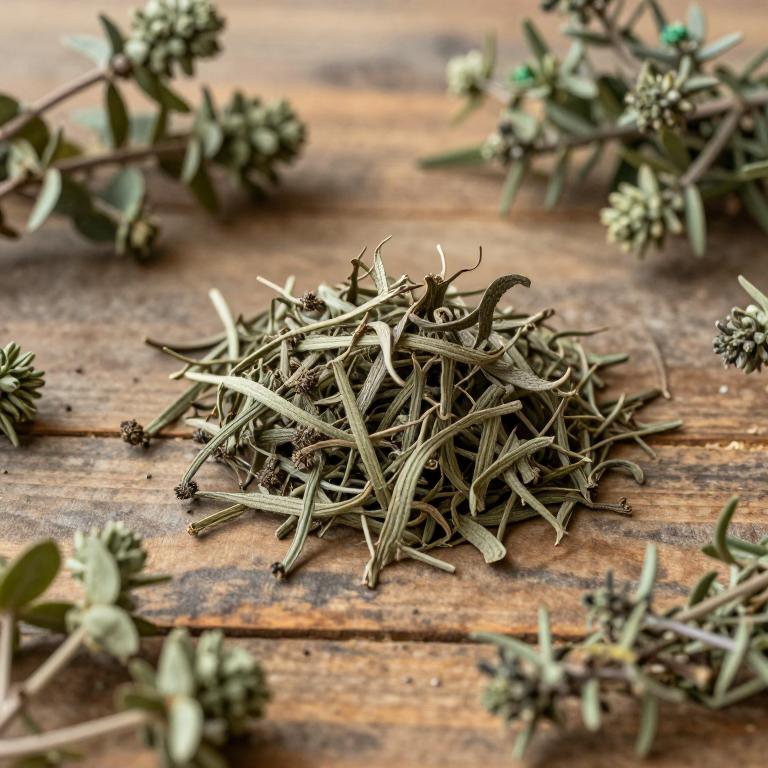
Names and Synonyms
Common Names
- mahogany fern
- Cloak Fern
- Tree Maidenhair Fern
Scientific Names
Accepted name
Didymochlaena truncatulaSynonyms
- Aspidium truncatulum
- Tegularia adiantifolia
Sources: Wikidata, Catalogue of Life
Taxonomical Classification
This plant belongs to the kingdom Plantae and is classified under the phylum Streptophyta within the class Equisetopsida. Following its placement in the subclass Polypodiinae and order Polypodiales, it is categorized under the family Polypodiaceae. Ultimately, the species is identified by the genus Didymochlaena and the specific name truncatula.
| Rank | Classification |
|---|---|
| Kingdom | Plantae |
| Phylum | Streptophyta |
| Class | Equisetopsida |
| Subclass | Polypodiinae |
| Order | Polypodiales |
| Family | Polypodiaceae |
| Genus | Didymochlaena |
Sources: The World Checklist of Vascular Plants (WCVP)
Distribution
This plant is widely distributed across the diverse tropical landscapes of the Malesia region. Within this expansive area, it can be found growing on the island of Borneo. Its range also extends to the Indonesian island of Jawa. Additionally, the species is documented to inhabit the territory of Sulawesi. Finally, its geographical presence includes the large island of Sumatera.
| Region | Area |
|---|---|
| Malesia | Borneo |
| Malesia | Jawa |
| Malesia | Sulawesi |
| Malesia | Sumatera |
Sources: The World Checklist of Vascular Plants (WCVP)
Botanical Identification
Ecology
The ecology of Didymochlena truncatula is characterized by a broad altitudinal distribution, spanning an elevational range from 0 m AMSL to a maximum of 3000 m AMSL. Within this diverse vertical gradient, the species is specifically found inhabiting the Bosque medio, where its growth and survival are shaped by the distinct environmental conditions of these mid-altitude forests.
- Elevational range max:
- 3000 m AMSL
- Elevational range min:
- 0 m AMSL
- Habitat :
- Bosque medio
Life history
The life history of Didymochlena truncatula is characterized by a perennial lifecycle, allowing the plant to persist through multiple growing seasons. It functions as a cryptophyte, specifically exhibiting a geophyte life form, which indicates that its essential regenerative organs are located underground to survive unfavorable environmental conditions.
- Life form :
- geophyte
- Life form :
- cryptophyte
- Lifecycle :
- perennial
Morphology
The morphology of Didymochlaena truncatula is characterized by a herbaceous growth form, functioning as a non-woody herb. This plant is terrestrial in nature, neither aquatic nor epiphytic, and exists as an independent organism without parasitic tendencies. In terms of stature, it is a self-supporting species that does not require climbing structures, such as lianas or vines, to maintain its upright posture. The plant exhibits a variable height profile, with a minimum recorded height of 0.5 m, a maximum of 2 m, and a mean height of approximately 2.3 m.
- Aquatic :
- terrestrial
- Climber :
- self-supporting
- Epiphyte :
- terrestrial
- Growth form :
- herb
- Parasite :
- independent
- Plant height max:
- 2 m
- Plant height mean:
- 2.3 m
- Plant height min:
- 0.5 m
- Woodiness :
- non-woody
Physiology
The physiology of Didymochlaena truncatula is fundamentally characterized by its photosynthetic pathway, which follows the C3 mechanism. In this process, the initial fixation of atmospheric carbon dioxide is catalyzed by the enzyme ribulose-1,5-bisphosphate carboxylase/oxygenase (RuBisCO), resulting in the direct formation of a three-carbon compound, 3-phosphoglycerate. This metabolic route dictates the plant's gas exchange dynamics and water-use efficiency, as the reliance on the C3 pathway necessitates the maintenance of open stomata for CO2 uptake, subsequently making the plant's physiological processes sensitive to transpiration rates and environmental humidity. Consequently, its carbon assimilation and energy production are governed by the standard Calvin cycle, typical of many moisture-dependent pteridophytes.
- Photosynthetic pathway :
- C3
Sources: Global Inventory of Floras and Traits (GIFT)
Chemicals
Didymochlaena truncatula has 5 reported phytochemicals identified across 0 scientific publications and several other databases. The most consistently reported chemicals include (-)-Wikstromol, 9-Methoxycamptothecin, Stigmast-4-en-3-one, camptothecin, stigmast-4-en-3beta-ol.
| Chemical | Supporting sources | Consensus |
|---|---|---|
| (-)-Wikstromol | 1 supporting sources | ★☆☆☆☆ |
| 9-Methoxycamptothecin | 1 supporting sources | ★☆☆☆☆ |
| Stigmast-4-en-3-one | 1 supporting sources | ★☆☆☆☆ |
| camptothecin | 1 supporting sources | ★☆☆☆☆ |
| stigmast-4-en-3beta-ol | 1 supporting sources | ★☆☆☆☆ |
(-)-Wikstromol
- Journal of natural products
9-Methoxycamptothecin
- Journal of natural products
Stigmast-4-en-3-one
- Journal of natural products
camptothecin
- Journal of natural products
stigmast-4-en-3beta-ol
- Journal of natural products
Preparations
Didymochlaena truncatula has 1 reported preparations identified across 0 scientific publications and several other databases. The most consistently reported preparations include EtOH extracts.
| Preparation | Supporting sources | Consensus |
|---|---|---|
| Etoh extracts | 1 supporting sources | ★☆☆☆☆ |
Etoh extracts
- Journal of natural products