Sixangle Foldwing
Dicliptera sexangularis · Accepted scientific name
Scientific literature: Very Sparse (2 studies) · ★☆☆☆☆
Sixangle Foldwing, scientifically known as Dicliptera sexangularis, is a distinctive medicinal herb characterized by its unique six-angled calyx. Native to tropical regions, this plant is valued in traditional medicine for its diverse therapeutic properties, often utilized to treat inflammatory conditions, skin ailments, and various internal imbalances through its bioactive compounds.
- Family
- Acanthaceae
- Native range
- Northern America
- Parts used
- Not available
- Common names
- Sixangle Foldwing
- Scientific synonyms
- Solenochasma Assurgens · Dianthera Sexangularis · 21 more
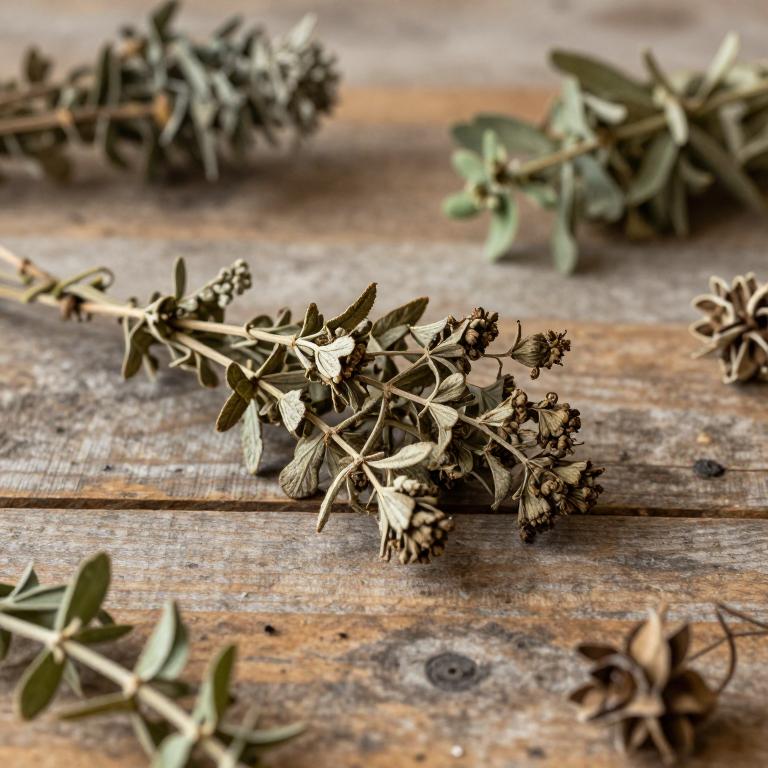
Names and Synonyms
Common Names
- Sixangle Foldwing
Scientific Names
Accepted name
Dicliptera sexangularisSynonyms
- Solenochasma assurgens
- Dianthera sexangularis
- Dicliptera assurgens
- Dactylostegium assurgens
- Dactylostegium portoricense
- Diapedium sparsiflorum
- Dicliptera sparsiflora
- Diapedium falciflorum
- Dactylostegium sparsiflorum
- Dicliptera assurgens var. conferta
- Justicia leptospermifolia
- Justicia annua
- Justicia sparsiflora
- Justicia assurgens
- Justicia ladanoides
- Diapedium sexangulare
- Diapedium assurgens
- Dicliptera portoricensis
- Dicliptera mollis
- Dicliptera assurgens var. vahliana
- Dicliptera falciflora
- Dicliptera vahliana
- Justicia sexangularis
Regional and Traditional Names
Spanish:
- Cruceta
Sources: Wikidata, Catalogue of Life
Taxonomical Classification
This plant belongs to the kingdom Plantae and is classified under the phylum Streptophyta and the class Equisetopsida. Within the subclass Magnoliidae, it is ordered under Lamiales and placed in the family Acanthaceae. Finally, it is identified by its specific genus, Dicliptera.
| Rank | Classification |
|---|---|
| Kingdom | Plantae |
| Phylum | Streptophyta |
| Class | Equisetopsida |
| Subclass | Magnoliidae |
| Order | Lamiales |
| Family | Acanthaceae |
| Genus | Dicliptera |
Sources: The World Checklist of Vascular Plants (WCVP)
Distribution
This plant exhibits a diverse geographical range spanning across several key regions of North America. In the South-Central United States, its presence is specifically noted within the state of Texas. Moving toward the Southeastern United States, the species can also be found in Florida. Its distribution extends significantly into Mexico, where it inhabits the Central and Northeastern regions. Additionally, the plant is documented growing throughout the coastal areas of the Mexico Gulf.
| Region | Area |
|---|---|
| South-Central U.S.A. | Texas |
| Southeastern U.S.A. | Florida |
| Mexico | Mexico Central |
| Mexico | Mexico Northeast |
| Mexico | Mexico Gulf |
| Mexico | Mexico Southwest |
| Mexico | Mexico Southeast |
| Central America | Belize |
| Central America | Costa Rica |
| Central America | El Salvador |
Sources: The World Checklist of Vascular Plants (WCVP)
Botanical Identification
Ecology
The ecology of Dicliptera sexangularis is characterized by its preference for moist and shaded environments, specifically thriving within forest and riverine habitats. This species occupies a wide altitudinal gradient, ranging from sea level up to an elevation of 1000 m AMSL. Its presence in riverine ecosystems suggests a dependency on high soil moisture and proximity to water bodies, while its association with forest settings indicates an adaptation to the filtered light and organic-rich substrates typical of woodland understories.
- Elevational range max:
- 1000 m AMSL
- Elevational range min:
- 0 m AMSL
- Habitat :
- forest, riverine
Life history
The life history of Dicliptera sexangularis is characterized by its nature as a perennial plant, allowing it to persist through multiple growing seasons rather than completing its cycle in a single year. As a perennial species, it establishes a stable presence within its ecological niche, often utilizing established root systems to support regrowth following dormant periods. This longevity enables the plant to engage in repeated reproductive cycles over several years, contributing to its long-term survival and ability to colonize specific habitats within its range.
- Lifecycle :
- perennial
Morphology
The morphology of Dicliptera sexangularis is characterized by its growth form as a non-woody herb and specifically a forb. It functions as an independent organism, meaning it does not exhibit parasitic behavior, and it maintains a terrestrial existence rather than being aquatic or semiaquatic. While it possesses a self-supporting habit, it does not function as an obligatory or facultative climber, liana, or vine, nor does it act as an epiphyte, remaining strictly terrestrial in its ecological niche.
- Aquatic :
- terrestrial
- Climber :
- self-supporting
- Epiphyte :
- terrestrial
- Growth form :
- herb
- Growth form :
- forb
- Parasite :
- independent
- Woodiness :
- non-woody
Sources: Global Inventory of Floras and Traits (GIFT)
Chemicals
Dicliptera sexangularis has 1 reported phytochemicals identified across 0 scientific publications and several other databases. The most consistently reported chemicals include Justalakonin.
| Chemical | Supporting sources | Consensus |
|---|---|---|
| Justalakonin | 1 supporting sources | ★☆☆☆☆ |
Justalakonin
- Journal of natural products
Preparations
Dicliptera sexangularis has 1 reported preparations identified across 0 scientific publications and several other databases. The most consistently reported preparations include whole plants.
| Preparation | Supporting sources | Consensus |
|---|---|---|
| Whole plants | 1 supporting sources | ★☆☆☆☆ |
Whole plants
- Journal of natural products