Dichapetalum filicaule
Dichapetalum filicaule · Accepted scientific name
Scientific literature: Very Sparse (6 studies) · ★☆☆☆☆
, scientifically known as Dichapetalum filicaudum, is a versatile medicinal shrub native to tropical Africa. Renowned for its therapeutic properties, it is widely used in traditional medicine to treat various ailments, including skin infections, fever, and inflammation. Its leaves and roots contain bioactive compounds essential for holistic healing.
- Family
- Dichapetalaceae
- Native range
- Africa
- Parts used
- Root
- Common names
- Not available
- Scientific synonyms
- Not available
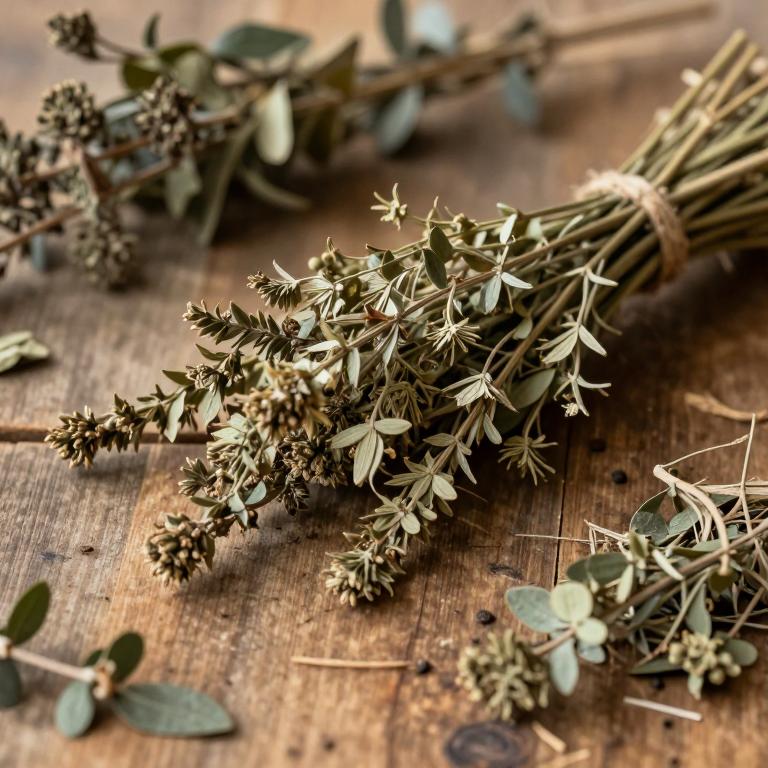
Names and Synonyms
Scientific Names
Accepted name
Dichapetalum filicauleSources: Wikidata
Taxonomical Classification
This plant belongs to the kingdom Plantae and the phylum Streptophyta. It is classified under the class Equisetopsida and subclass Magnoliidae, falling within the order Malpighiales. Finally, it is a member of the family Dichapetalaceae and the genus Dichapetalum.
| Rank | Classification |
|---|---|
| Kingdom | Plantae |
| Phylum | Streptophyta |
| Class | Equisetopsida |
| Subclass | Magnoliidae |
| Order | Malpighiales |
| Family | Dichapetalaceae |
| Genus | Dichapetalum |
Sources: The World Checklist of Vascular Plants (WCVP)
Distribution
This plant, known scientifically as Dichapetalum filicaudum, exhibits a specific geographical range within the West Tropical Africa region. Its distribution is primarily concentrated in several key nations across the western coastline. Specifically, it can be found growing within the borders of Ghana. Furthermore, the species is documented to inhabit the tropical landscapes of the Ivory Coast. Finally, its presence extends into the forested areas of Liberia.
| Region | Area |
|---|---|
| West Tropical Africa | Ghana |
| West Tropical Africa | Ivory Coast |
| West Tropical Africa | Liberia |
Sources: The World Checklist of Vascular Plants (WCVP)
Botanical Identification
Life history
The life history of Dichapetalum filicaudum is characterized by its growth habit as a woody perennial, primarily classified under the life forms of phanerophyte and nanophanerophyte. As a phanerophyte, the plant maintains its buds well above the ground level on permanent woody branches, allowing it to persist through various seasonal changes. Depending on the specific environmental conditions and the development of its stem structure, it can also exhibit characteristics of a nanophanerophyte, where the woody stems remain relatively low to the ground. This life history strategy enables the species to establish a stable presence in its habitat, utilizing its perennial woody architecture to survive and reproduce over multiple growing seasons.
- Life form :
- nanophanerophyte
- Life form :
- phanerophyte
Morphology
The morphology of Dichapetalum filicaudum is characterized by its growth habit as a woody liana, functioning as a climbing vine that often requires external support to ascend. It is classified as an obligatory climber, meaning it relies on other structures for vertical development rather than being a self-supporting shrub. In terms of its ecological positioning, the plant is terrestrial, rooting in the soil rather than growing as an epiphyte. The structural integrity of the plant is defined by its woody nature, providing the necessary rigidity for its climbing lifestyle.
- Climber :
- liana
- Climber :
- obligatory
- Epiphyte :
- terrestrial
- Woodiness :
- woody
Sources: Global Inventory of Floras and Traits (GIFT)
Plant Parts
Dichapetalum filicaule has 1 reported plant parts identified across 1 scientific publications and several other databases that are studied for medicinal purposes. The most consistently reported plant part include root.
| Plant part | Supporting sources | Consensus |
|---|---|---|
| Root | 1 supporting sources | ★☆☆☆☆ |
Root
- Pharmaceutical biology
Chemicals
Dichapetalum filicaule has 5 reported phytochemicals identified across 1 scientific publications and several other databases. The most consistently reported chemicals include D:A-Friedooleanan-3-one, Dichapetalin A, Dichapetalin X, GLYCEROL MONOSTEARATE, Pomolic acid.
| Chemical | Supporting sources | Consensus |
|---|---|---|
| D:A-Friedooleanan-3-one | 1 supporting sources | ★☆☆☆☆ |
| Dichapetalin A | 1 supporting sources | ★☆☆☆☆ |
| Dichapetalin X | 1 supporting sources | ★☆☆☆☆ |
| GLYCEROL MONOSTEARATE | 1 supporting sources | ★☆☆☆☆ |
| Pomolic acid | 1 supporting sources | ★☆☆☆☆ |
D:A-Friedooleanan-3-one
- Pharmaceutical biology
Dichapetalin A
- Pharmaceutical biology
Dichapetalin X
- Pharmaceutical biology
GLYCEROL MONOSTEARATE
- Pharmaceutical biology
Pomolic acid
- Pharmaceutical biology