St. John's bush
Dianthera secunda · Accepted scientific name
Scientific literature: Very Sparse (5 studies) · ★☆☆☆☆
St. John's bush, scientifically known as Dianthera secunda, is a resilient shrub native to diverse landscapes. Renowned for its traditional medicinal properties, this plant is often utilized in herbal remedies to support wellness. Understanding its unique botanical characteristics is essential for exploring its potential roles in natural healing practices.
- Family
- Acanthaceae
- Native range
- Africa
- Parts used
- Not available
- Common names
- St. John'S Bush
- Scientific synonyms
- Rhytiglossa Lucida · Rhacodiscus Lucidus · 20 more
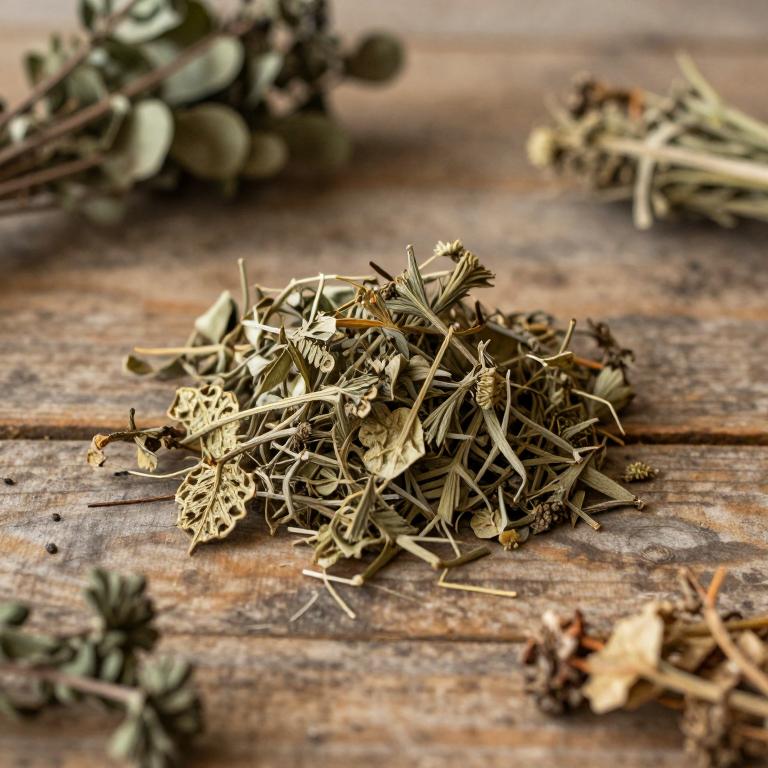
Names and Synonyms
Common Names
- St. John's bush
Scientific Names
Accepted name
Dianthera secundaSynonyms
- Rhytiglossa lucida
- Rhacodiscus lucidus
- Ecbolium geniculatum
- Ecbolium lucidum
- Rhytiglossa secunda
- Rhacodiscus secundus
- Ecbolium secundum
- Dianthera secunda var. holtonii
- Sericographis caripensis
- Rhacodiscus moricandianus
- Rhytiglossa moricandiana
- Rhytiglossa geniculata
- Lustrinia geniculata
- Justicia caripensis
- Justicia secunda var. leucantha
- Justicia secunda
- Dianthera secunda var. geniculata
- Ecbolium orthotactus
- Ecbolium moricandianum
- Dianthera secunda var. lucida
- Dianthera lucida
- Amphiscopia ciliata
Regional and Traditional Names
Spanish:
- Insulina
- Singamochila
Sources: Wikidata, Catalogue of Life
Taxonomical Classification
This plant belongs to the kingdom Plantae within the phylum Streptophyta and the class Equisetopsida. It is further classified under the subclass Magnoliidae and the order Lamiales. Finally, it is a member of the family Acanthaceae, falling under the genus Dianthera.
| Rank | Classification |
|---|---|
| Kingdom | Plantae |
| Phylum | Streptophyta |
| Class | Equisetopsida |
| Subclass | Magnoliidae |
| Order | Lamiales |
| Family | Acanthaceae |
| Genus | Dianthera |
Sources: The World Checklist of Vascular Plants (WCVP)
Distribution
This plant exhibits a diverse geographical distribution spanning both African and American continents. In West Tropical Africa, it can be found within the borders of Benin. Its presence extends into West-Central Tropical Africa, specifically documented in Gabon. Moving to the Americas, the species is located across several regions of Central America. Specifically, it inhabits the territories of El Salvador, Guatemala, and Panamá.
| Region | Area |
|---|---|
| West Tropical Africa | Benin |
| West-Central Tropical Africa | Gabon |
| Central America | El Salvador |
| Central America | Guatemala |
| Central America | Panamá |
| Caribbean | Bermuda |
| Caribbean | Leeward Is. |
| Caribbean | Trinidad-Tobago |
| Caribbean | Venezuelan Antilles |
| Caribbean | Windward Is. |
Sources: The World Checklist of Vascular Plants (WCVP)
Botanical Identification
Ecology
The ecology of Dianthera secunda is characterized by its presence within the Floresta Ombrófila (also known as Floresta Pluvial), a humid tropical rainforest environment. This species demonstrates a broad altitudinal distribution, thriving across a diverse range of topographical gradients. Its elevational range extends from sea level (0 m AMSL) up to a maximum altitude of 2100 m AMSL, allowing it to occupy various ecological niches within the moisture-rich strata of the rainforest.
- Elevational range max:
- 2100 m AMSL
- Elevational range min:
- 0 m AMSL
- Habitat :
- Floresta Ombrófila (= Floresta Pluvial)
Morphology
The morphology of Dianthera secunda is characterized by its growth form as a non-woody herb, exhibiting a primarily terrestrial habit. It functions as an independent organism, lacking any parasitic tendencies, and does not exhibit epiphytic behavior, remaining firmly rooted in the soil rather than growing on other plants. In terms of its structural support, the plant is self-supporting, meaning it does not require a host or external structure to climb, such as a liana or vine, but instead maintains its own upright or spreading stature. While its habitat can span across various moisture gradients, its primary classification is terrestrial rather than aquatic or semiaquatic.
- Aquatic :
- terrestrial
- Climber :
- self-supporting
- Epiphyte :
- terrestrial
- Growth form :
- herb
- Parasite :
- independent
- Woodiness :
- non-woody
Sources: Global Inventory of Floras and Traits (GIFT)
Chemicals
Dianthera secunda has 1 reported phytochemicals identified across 0 scientific publications and several other databases. The most consistently reported chemicals include Flavonoids.
| Chemical | Supporting sources | Consensus |
|---|---|---|
| Flavonoids | 1 supporting sources | ★☆☆☆☆ |
Flavonoids
- Antioxidants (Basel, Switzerland)
Activities
Dianthera secunda has 3 reported activities identified across 0 scientific publications and several other databases. The most consistently reported activities include Anticancer, Antiviral, Cytotoxic.
| Activity | Supporting sources | Consensus |
|---|---|---|
| Anticancer | 1 supporting sources | ★☆☆☆☆ |
| Antiviral | 1 supporting sources | ★☆☆☆☆ |
| Cytotoxic | 1 supporting sources | ★☆☆☆☆ |
Anticancer
- Antioxidants (Basel, Switzerland)
Antiviral
- Antioxidants (Basel, Switzerland)
Cytotoxic
- Antioxidants (Basel, Switzerland)
Preparations
Dianthera secunda has 7 reported preparations identified across 0 scientific publications and several other databases. The most consistently reported preparations include Methanol and acetone extracts, aqueous: macerated and infused, dichlorocthane, ethyl acetate, methanol.
| Preparation | Supporting sources | Consensus |
|---|---|---|
| Methanol and acetone extracts | 1 supporting sources | ★☆☆☆☆ |
| Aqueous: macerated and infused | 1 supporting sources | ★☆☆☆☆ |
| Dichlorocthane | 1 supporting sources | ★☆☆☆☆ |
| Ethyl acetate | 1 supporting sources | ★☆☆☆☆ |
| Methanol | 1 supporting sources | ★☆☆☆☆ |
| Methanolic | 1 supporting sources | ★☆☆☆☆ |
| Water (infused) | 1 supporting sources | ★☆☆☆☆ |
Methanol and acetone extracts
- The West Indian medical journal
Aqueous: macerated and infused
- Antioxidants (Basel, Switzerland)
Dichlorocthane
- Antioxidants (Basel, Switzerland)
Ethyl acetate
- Antioxidants (Basel, Switzerland)
Methanol
- Antioxidants (Basel, Switzerland)
Methanolic
- Antioxidants (Basel, Switzerland)
Water (infused)
- Antioxidants (Basel, Switzerland)