Desert Guezah
Deverra denudata · Accepted scientific name
Scientific literature: Very Sparse (19 studies) · ★☆☆☆☆
Desert Guezah, scientifically known as Deverra denudata, is a resilient succulent native to the arid regions of the Middle East. Renowned for its diverse therapeutic properties, this plant is traditionally used in folk medicine to treat various ailments, offering significant potential for modern pharmacological research and natural healing treatments.
- Family
- Apiaceae
- Native range
- Africa
- Parts used
- Not available
- Common names
- Desert Guezah
- Scientific synonyms
- Pituranthos Chloranthus · Bunium Pityranthon · 8 more
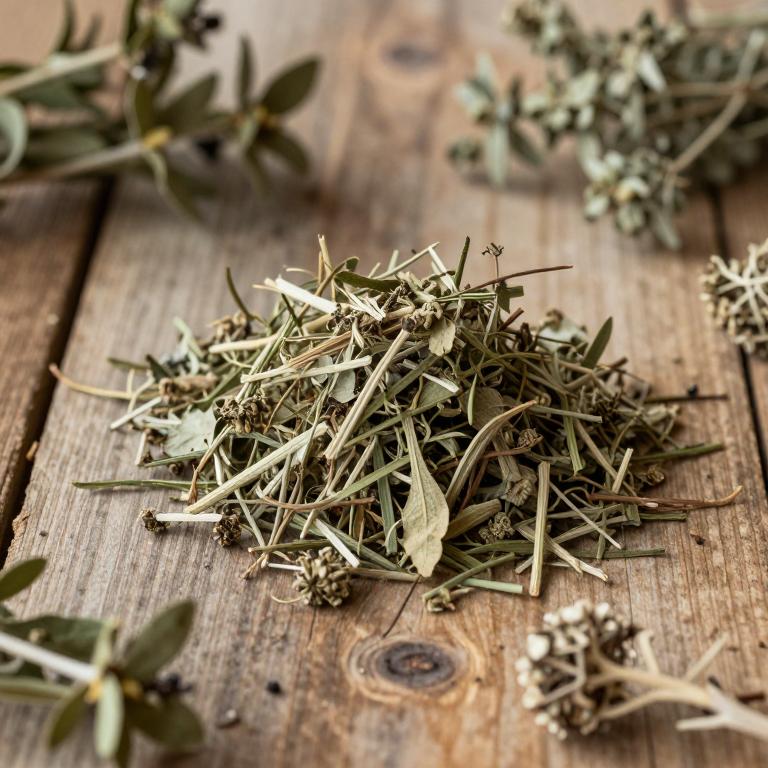
Names and Synonyms
Common Names
- Desert Guezah
Scientific Names
Accepted name
Deverra denudataSynonyms
- Pituranthos chloranthus
- Bunium pityranthon
- Deverra pityranthos
- Hymenophora denudata
- Deverra chlorantha
- Pituranthos denudatus
- Pituranthos crassifolius
- Pituranthos chloranthus subsp. robustus
- Pituranthos chloranthus subsp. cossonianus
- Pituranthos chloranthus var. calvescens
Sources: Wikidata, Catalogue of Life
Taxonomical Classification
This plant belongs to the kingdom Plantae and is classified within the phylum Streptophyta and the class Equisetopsida. It is further categorized under the subclass Magnoliidae and the order Apiales, falling within the family Apiaceae. Ultimately, its taxonomic identity is defined by the genus Deverra, specifically the species Deverra denudata.
| Rank | Classification |
|---|---|
| Kingdom | Plantae |
| Phylum | Streptophyta |
| Class | Equisetopsida |
| Subclass | Magnoliidae |
| Order | Apiales |
| Family | Apiaceae |
| Genus | Deverra |
Sources: The World Checklist of Vascular Plants (WCVP)
Distribution
This plant, known as Deverra denudata, is primarily found throughout the northern reaches of the African continent. Its natural range extends across several key countries within the Northern Africa region. Specifically, it can be located in the territories of Algeria and Libya. The species is also widely distributed across Morocco and Tunisia. Furthermore, its geographical presence includes the arid landscapes of Western Sahara.
| Region | Area |
|---|---|
| Northern Africa | Algeria |
| Northern Africa | Libya |
| Northern Africa | Morocco |
| Northern Africa | Tunisia |
| Northern Africa | Western Sahara |
| West Tropical Africa | Mauritania |
Sources: The World Checklist of Vascular Plants (WCVP)
Botanical Identification
Ecology
The ecology of Deverra denudata is characterized by its ability to thrive across a diverse topographical gradient, occupying various montane and sub-montane niches. This species exhibits a broad altitudinal distribution, finding suitable habitats at elevations ranging from a minimum of 60 m AMSL to a maximum of 2000 m AMSL. Such an expansive elevational range suggests a high degree of ecological plasticity, allowing the plant to adapt to varying temperature regimes, atmospheric pressures, and moisture levels found between lowland coastal or arid zones and higher mountain slopes. This adaptability enables it to persist in diverse microclimates within its geographic range, utilizing different vertical strata to avoid competition and optimize its survival within its specific environmental niche.
- Elevational range max:
- 2000 m AMSL
- Elevational range min:
- 60 m AMSL
Life history
The life history of Deverra denudata is characterized by its status as a perennial species, allowing the plant to persist in its environment over multiple growing seasons. As a perennial, it does not complete its life cycle in a single season but instead undergoes recurring cycles of growth and dormancy, which aids in its long-term survival and establishment within its natural habitat. This continuous lifecycle enables the plant to accumulate resources over time, supporting its structural development and reproductive capabilities across successive years.
- Lifecycle :
- perennial
Morphology
The morphology of Deverra denudata is characterized by a growth form that functions as a shrubby herb, exhibiting a non-woody structure. This plant typically reaches a height ranging from a minimum of 0.3 m to a maximum of 1 m. While it displays a self-supporting habit rather than acting as a vine or liana, it maintains an independent existence as a non-parasitic species. In terms of its ecological positioning and habitat preference, it is categorized as a terrestrial plant, spanning across aquatic, semiaquatic, and terrestrial environments, and it functions as a terrestrial organism rather than an epiphyte.
- Aquatic :
- terrestrial
- Climber :
- self-supporting
- Epiphyte :
- terrestrial
- Growth form :
- herb
- Growth form :
- shrub
- Parasite :
- independent
- Plant height max:
- 1 m
- Plant height min:
- 0.3 m
- Woodiness :
- non-woody
Reproduction
The reproduction of Deverra denudata is characterized by the production of highly uniform seeds, which play a critical role in its dispersal and establishment processes. Quantitative analysis of its reproductive output reveals a remarkably consistent seed morphology, with a recorded seed mass that does not deviate across different samples. Specifically, the seed mass exhibits a mean value of 0.00272 g, a figure that is identical to both its maximum and minimum measured values of 0.00272 g. This lack of variance in seed mass suggests a highly stabilized reproductive strategy, ensuring that each seed carries a precise and predictable amount of nutrient reserves to support early seedling development.
- Seed mass mean:
- 0.00272 g
Sources: Global Inventory of Floras and Traits (GIFT)
Chemicals
Deverra denudata has 15 reported phytochemicals identified across 0 scientific publications and several other databases. The most consistently reported chemicals include 8-methyldecanal, ALPHA-PHELLANDRENE, ALPHA-PINENE, BETA-PHELLANDRENE, BETA-PINENE.
| Chemical | Supporting sources | Consensus |
|---|---|---|
| 8-methyldecanal | 1 supporting sources | ★☆☆☆☆ |
| ALPHA-PHELLANDRENE | 1 supporting sources | ★☆☆☆☆ |
| ALPHA-PINENE | 1 supporting sources | ★☆☆☆☆ |
| BETA-PHELLANDRENE | 1 supporting sources | ★☆☆☆☆ |
| BETA-PINENE | 1 supporting sources | ★☆☆☆☆ |
| CAMPHENE | 1 supporting sources | ★☆☆☆☆ |
| CARVACROL | 1 supporting sources | ★☆☆☆☆ |
| GERANIOL | 1 supporting sources | ★☆☆☆☆ |
| LIMONENE | 1 supporting sources | ★☆☆☆☆ |
| P-CYMENE | 1 supporting sources | ★☆☆☆☆ |
8-methyldecanal
- Natural product communications
ALPHA-PHELLANDRENE
- Natural product communications
ALPHA-PINENE
- Natural product communications
BETA-PHELLANDRENE
- Natural product communications
BETA-PINENE
- Natural product communications
CAMPHENE
- Natural product communications
CARVACROL
- Natural product communications
GERANIOL
- Natural product communications
LIMONENE
- Natural product communications
P-CYMENE
- Natural product communications
Preparations
Deverra denudata has 1 reported preparations identified across 0 scientific publications and several other databases. The most consistently reported preparations include essential oils.
| Preparation | Supporting sources | Consensus |
|---|---|---|
| Essential oils | 1 supporting sources | ★☆☆☆☆ |
Essential oils
- Natural product communications