manayupa
Desmodium molliculum · Accepted scientific name
Scientific literature: Very Sparse (7 studies) · ★☆☆☆☆
Mana缺yuya, scientifically known as Desmodium molliculum, is a resilient perennial legume native to northern climates. Often referred to as hairy desmodium, this plant is valued for its nitrogen-fixing capabilities and ecological importance. In traditional practices, its medicinal properties are explored for their potential therapeutic benefits in holistic healing.
- Family
- Fabaceae
- Native range
- Northern America
- Parts used
- Leaf
- Common names
- Manayupa
- Scientific synonyms
- Hedysarum Molliculum · Meibomia Mollicula · 3 more
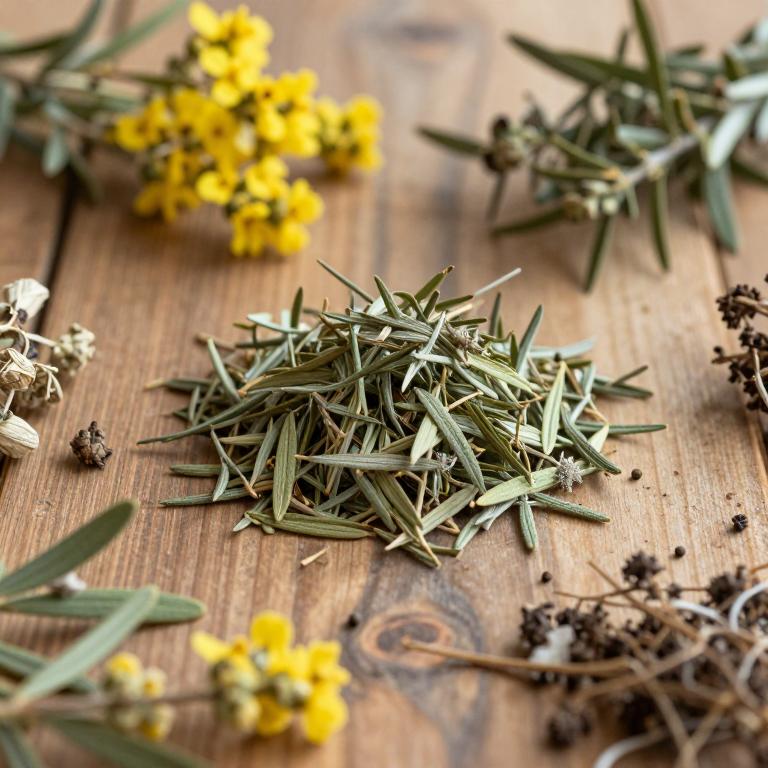
Names and Synonyms
Common Names
- manayupa
Scientific Names
Accepted name
Desmodium molliculumSynonyms
- Hedysarum molliculum
- Meibomia mollicula
- Hedysarum adscendens var. caeruleum
- Desmodium mexicanum
- Desmodium adscendens var. caeruleum
Regional and Traditional Names
Spanish:
- Manayupa (Perú)
- Pata de perro
- Amor seco
- Pata de perro
Sources: Wikidata, Catalogue of Life
Taxonomical Classification
This plant, Desmodium molliculum, belongs to the kingdom Plantae and the phylum Streptophyta. It is classified under the class Equisetopsida and subclass Magnoliidae, falling within the order Fabales. Furthermore, it is a member of the Fabaceae family and is categorized under the genus Desmodium.
| Rank | Classification |
|---|---|
| Kingdom | Plantae |
| Phylum | Streptophyta |
| Class | Equisetopsida |
| Subclass | Magnoliidae |
| Order | Fabales |
| Family | Fabaceae |
| Genus | Desmodium |
Sources: The World Checklist of Vascular Plants (WCVP)
Distribution
This plant exhibits a broad presence across several key regions within the country of Mexico. Its distribution begins in the central part of Mexico, where it occupies significant territory. Moving toward the coastal and eastern areas, the species can also be found throughout Mexico Northeast and the Mexico Gulf regions. Additionally, the plant extends its reach into the western territories of Mexico Northwest. Finally, its geographical range concludes with its presence in the Mexico Southwest area.
| Region | Area |
|---|---|
| Mexico | Mexico Central |
| Mexico | Mexico Northeast |
| Mexico | Mexico Gulf |
| Mexico | Mexico Northwest |
| Mexico | Mexico Southwest |
| Mexico | Mexico Southeast |
| Central America | Costa Rica |
| Central America | Guatemala |
| Central America | Honduras |
| Central America | Nicaragua |
Sources: The World Checklist of Vascular Plants (WCVP)
Botanical Identification
Ecology
The ecology of Desmodium molliculum is characterized by its ability to inhabit diverse montane and sub-alpine environments across a broad altitudinal gradient. This species is typically found within specific topographical strata, occupying an elevational range that extends from a minimum of 1000 m AMSL to a maximum of 3420 m AMSL. Within these varying elevations, the plant adapts to the shifting climatic variables, such as temperature fluctuations and moisture availability, that define these high-altitude ecosystems. Its presence across such a significant vertical span suggests a versatile ecological niche, allowing it to thrive in various soil compositions and light conditions found throughout its native mountain habitats.
- Elevational range max:
- 3420 m AMSL
- Elevational range min:
- 1000 m AMSL
Morphology
The morphology of Desmodium molliculum is characterized by its growth form as a non-woody herb, exhibiting a soft and flexible structure. As a terrestrial plant, it does not inhabit aquatic or semiaquatic environments, nor does it function as an epiphyte, maintaining an independent existence without the need for host support. In terms of its climbing habit, the species is categorized as self-supporting, meaning it does not act as an obligatory or facultative vine or liana, but rather maintains its own upright or spreading stature. Furthermore, the plant is an independent organism, lacking any parasitic tendencies, and its physical composition is entirely non-woody, consistent with its classification as a herbaceous forb.
- Aquatic :
- terrestrial
- Climber :
- self-supporting
- Epiphyte :
- terrestrial
- Growth form :
- herb
- Parasite :
- independent
- Woodiness :
- non-woody
Sources: Global Inventory of Floras and Traits (GIFT)
Plant Parts
Desmodium molliculum has 1 reported plant parts identified across 1 scientific publications and several other databases that are studied for medicinal purposes. The most consistently reported plant part include leaf.
| Plant part | Supporting sources | Consensus |
|---|---|---|
| Leaf | 1 supporting sources | ★☆☆☆☆ |
Leaf
- Preventive nutrition and food science
Chemicals
Desmodium molliculum has 3 reported phytochemicals identified across 1 scientific publications and several other databases. The most consistently reported chemicals include CHLOROGENIC ACID, Flavonoids, TANNIC ACID.
| Chemical | Supporting sources | Consensus |
|---|---|---|
| CHLOROGENIC ACID | 1 supporting sources | ★☆☆☆☆ |
| Flavonoids | 1 supporting sources | ★☆☆☆☆ |
| TANNIC ACID | 1 supporting sources | ★☆☆☆☆ |
CHLOROGENIC ACID
- Frontiers in plant science
Flavonoids
- Preventive nutrition and food science
TANNIC ACID
- Frontiers in plant science
Conditions
Desmodium molliculum has 2 reported investigations on conditions identified across 1 scientific publications and several other databases. The most consistently reported conditions include stomach ulcers, wound healing.
| Condition | Supporting sources | Consensus |
|---|---|---|
| Stomach ulcers | 1 supporting sources | ★☆☆☆☆ |
| Wound healing | 1 supporting sources | ★☆☆☆☆ |
Stomach ulcers
- Frontiers in plant science
Wound healing
- Frontiers in plant science
Preparations
Desmodium molliculum has 2 reported preparations identified across 1 scientific publications and several other databases. The most consistently reported preparations include dried, tea infusions.
| Preparation | Supporting sources | Consensus |
|---|---|---|
| Dried | 1 supporting sources | ★☆☆☆☆ |
| Tea infusions | 1 supporting sources | ★☆☆☆☆ |
Dried
- Preventive nutrition and food science
Tea infusions
- Preventive nutrition and food science