Derris ovalifolia
Derris ovalifolia · Accepted scientific name
Scientific literature: Very Sparse (2 studies) · ★☆☆☆☆
Derris ovalifolia, scientifically known as Derris ovalifolia, is a climbing woody vine native to tropical rainforests. Renowned for its diverse ethnobotanical uses, this plant contains bioactive compounds traditionally employed in indigenous medicine to treat various ailments, offering significant potential for pharmacological research into its unique therapeutic properties and chemical constituents.
- Family
- Fabaceae
- Native range
- Asia-Tropical
- Parts used
- Not available
- Common names
- Not available
- Scientific synonyms
- Millettia Ovalifolia · Pterocarpus Ovalifolius · 2 more
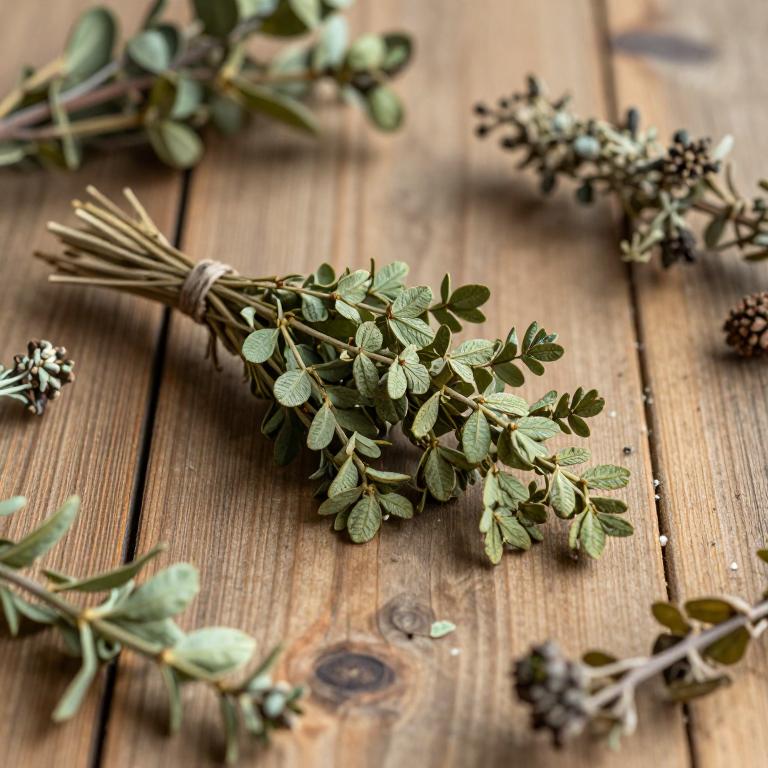
Names and Synonyms
Scientific Names
Accepted name
Derris ovalifoliaSynonyms
- Millettia ovalifolia
- Pterocarpus ovalifolius
- Phaseoloides ovalifolium
- Pongamia ovalifolia
Sources: Wikidata
Taxonomical Classification
This plant belongs to the kingdom Plantae and is classified under the phylum Streptophyta and class Equisetopsida. Within the subclass Magnoliidae, it is ordered under Fabales and situated in the family Fabaceae. Finally, it is identified by the genus Derris, specifically as the species Derris ovalifolia.
| Rank | Classification |
|---|---|
| Kingdom | Plantae |
| Phylum | Streptophyta |
| Class | Equisetopsida |
| Subclass | Magnoliidae |
| Order | Fabales |
| Family | Fabaceae |
| Genus | Derris |
Sources: The World Checklist of Vascular Plants (WCVP)
Distribution
This plant is specifically known for its restricted natural range within the Indian Subcontinent. Its documented presence is primarily concentrated within the borders of India. Within this region, the species occupies specific ecological niches that support its growth. Because its known distribution is so localized, it is considered a regional botanical feature. Consequently, understanding its habitat in India is essential for studying its natural occurrence.
| Region | Area |
|---|---|
| Indian Subcontinent | India |
Sources: The World Checklist of Vascular Plants (WCVP)
Botanical Identification
Physiology
The physiology of Derris ovalifolia is fundamentally characterized by its utilization of the C3 photosynthetic pathway, a metabolic process where the first stable intermediate formed during carbon fixation is a three-carbon molecule. This pathway involves the direct fixation of atmospheric carbon dioxide by the enzyme RuBisCO within the mesophyll cells, facilitating the production of sugars necessary for the plant's growth and energy requirements. As a C3 plant, its physiological efficiency is highly dependent on environmental conditions such as light intensity, temperature, and moisture availability, as the reliance on RuBisCO makes it susceptible to photorespiration under high-temperature or low-CO2 conditions. This metabolic framework governs its carbon assimilation rates and influences its overall resource allocation and adaptive strategies within its native ecological niche.
- Photosynthetic pathway :
- C3
Reproduction
The reproduction of Derris ovalifolia involves the production of seeds that exhibit a high degree of uniformity in their physical dimensions. Based on morphological data, the seed mass is exceptionally consistent, with a recorded mean, maximum, and minimum value all measuring exactly 0.221 g. This lack of variance in seed mass suggests a highly stabilized reproductive strategy, where each seed produced carries a standardized amount of nutrient reserves to facilitate successful germination and early seedling establishment.
- Seed mass mean:
- 0.221 g
Sources: Global Inventory of Floras and Traits (GIFT)
Chemicals
Derris ovalifolia has 1 reported phytochemicals identified across 0 scientific publications and several other databases. The most consistently reported chemicals include 7-Hydroxy-6-methoxy-2H-chromen-2-one.
| Chemical | Supporting sources | Consensus |
|---|---|---|
| 7-Hydroxy-6-methoxy-2H-chromen-2-one | 1 supporting sources | ★☆☆☆☆ |
7-Hydroxy-6-methoxy-2H-chromen-2-one
- Pakistan journal of pharmaceutical sciences