derris
Derris elliptica · Accepted scientific name
Scientific literature: Very Sparse (15 studies) · ★☆☆☆☆
Derris, scientifically known as Derris ellipticica, is a climbing woody vine native to tropical regions. Renowned primarily for its high concentration of rotenone, it has historically been utilized as a potent natural insecticide. This versatile plant holds significant value in traditional medicine and organic pest management across various ecosystems.
- Family
- Fabaceae
- Native range
- Africa
- Parts used
- Leaf · Root
- Common names
- Derris · Tubaroot
- Scientific synonyms
- Millettia Elliptica · Nothoderris Elliptica · 18 more
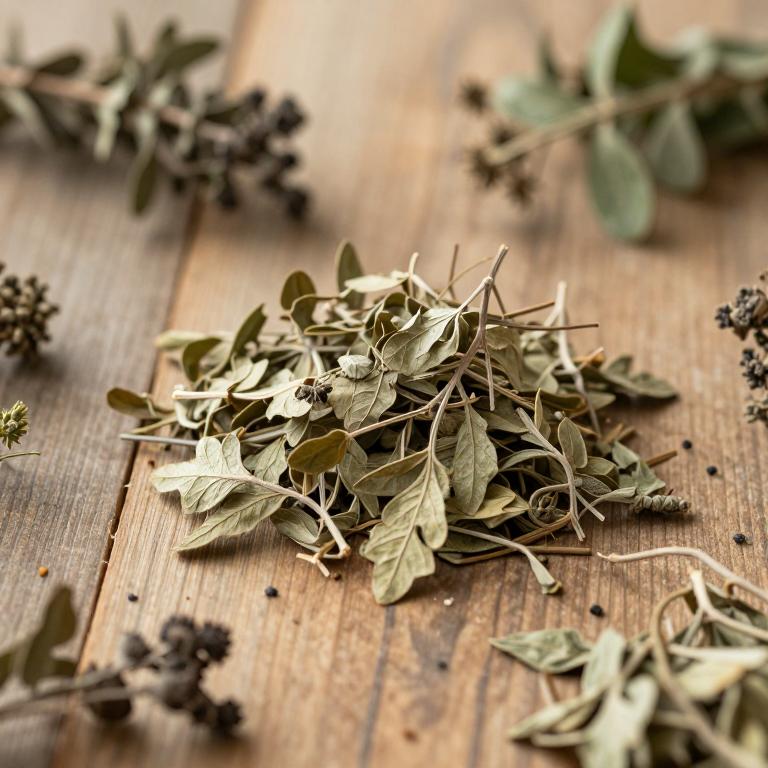
Names and Synonyms
Common Names
- derris
- tubaroot
Scientific Names
Accepted name
Derris ellipticaSynonyms
- Millettia elliptica
- Nothoderris elliptica
- Paraderris elliptica var. chittagongensis
- Paraderris elliptica
- Galedupa elliptica
- Dalbergia glaucescens
- Pongamia volubilis var. glaucophylla
- Pongamia horsfieldii
- Pongamia hypoleuca
- Pongamia grandiflora
- Nothoderris glaucescens
- Pterocarpus ellipticus
- Pongamia elliptica
- Pongamia volubilis
- Nothoderris purpurea
- Deguelia elliptica
- Derris elliptica var. chittagongensis
- Derris elliptica var. glaucophylla
- Derris elliptica var. tonkinensis
- Dalbergia elliptica
Regional and Traditional Names
German:
- Tubawurzel
Sources: Wikidata, Catalogue of Life
Taxonomical Classification
This plant belongs to the kingdom Plantae and is classified under the phylum Streptophyta within the class Equisetopsida. As a member of the subclass Magnoliidae and the order Fabales, it is specifically situated in the family Fabaceae. Finally, it is identified by the genus Derris, with the species name being Derris elliptica.
| Rank | Classification |
|---|---|
| Kingdom | Plantae |
| Phylum | Streptophyta |
| Class | Equisetopsida |
| Subclass | Magnoliidae |
| Order | Fabales |
| Family | Fabaceae |
| Genus | Derris |
Sources: The World Checklist of Vascular Plants (WCVP)
Distribution
This plant exhibits a diverse geographical range that spans across several distinct regions. In West-Central Tropical Africa, its presence is documented within the DR Congo. Its distribution in China is extensive, covering the South-Central, Southeast, and Hainan areas. Furthermore, it can be found in Eastern Asia, specifically within the Ogasawara-shoto islands. These varied locations highlight the wide ecological adaptability of the species.
| Region | Area |
|---|---|
| West-Central Tropical Africa | DR Congo |
| China | China South-Central |
| China | Hainan |
| China | China Southeast |
| Eastern Asia | Ogasawara-shoto |
| Eastern Asia | Taiwan |
| Indian Subcontinent | Assam |
| Indian Subcontinent | Bangladesh |
| Indian Subcontinent | India |
| Indian Subcontinent | Nepal |
Sources: The World Checklist of Vascular Plants (WCVP)
Botanical Identification
Life history
The life history of Derris ellipta is characterized by its long-term survival strategy as a perennial organism, allowing it to persist through multiple growing seasons. As a phanerophyte, its regenerative buds are located high above the ground on woody stems, a structural adaptation that facilitates its growth habit. This phanerophyte classification is consistent across its developmental stages, ensuring that its primary biomass and reproductive potential are maintained through elevated, persistent stem structures.
- Life form :
- phanerophyte
- Lifecycle :
- perennial
Morphology
The morphology of Derris elliptica is characterized by its growth as a liana, functioning as an obligatory climber that reaches an average height of approximately 16 m. Although categorized under broader growth forms such as shrubs or other non-standard types, it is specifically a climbing plant that exists in a terrestrial habitat rather than an aquatic or epiphytic environment. As an independent organism, it does not exhibit parasitic behavior, and its woodiness is classified as variable.
- Aquatic :
- terrestrial
- Climber :
- liana
- Climber :
- obligatory
- Epiphyte :
- terrestrial
- Growth form :
- shrub
- Growth form :
- other
- Parasite :
- independent
- Plant height mean:
- 16 m
- Woodiness :
- variable
Physiology
The physiology of Derris elliptica is characterized by a C3 photosynthetic pathway, which is the standard carbon fixation mechanism for most woody legumes, utilizing the enzyme Rubisco to incorporate carbon dioxide directly into the Calvin cycle. Regarding its water management and morphological adaptations, the species does not exhibit succulence, meaning it lacks specialized parenchymatous tissues for significant water storage within its leaves or stems. Furthermore, despite belonging to the Fabaceae family, this specific plant is not categorized as a nitrogen fixer in the context of its primary physiological profile, as it does not engage in the symbiotic nitrogen fixation processes typically associated with certain other members of its lineage.
- Nitrogen fixer :
- no
- Photosynthetic pathway :
- C3
- Succulence :
- no
Reproduction
Reproduction in Derris elliptica is characterized by a complex series of mechanisms for seed dispersal and propagation. The plant utilizes several distinct dispersal syndromes to ensure its survival across different environments. The primary modes of movement for its seeds include being anemochorous, where wind plays a role in transport, and hydrochorous, allowing for dispersal via water currents. Additionally, the species exhibits zoochorous tendencies, specifically through endozoochory, where seeds are passed through the digestive tracts of animals, and epizoochory, where seeds adhere to the exterior of passing fauna. The dispersal strategy is further supplemented by autochory, involving self-dispersal mechanisms, and can be influenced by anthropogenic factors through anthropochory. While some dispersal may occur via myrmecochory through interaction with ants, the plant's overall reproductive success relies on these combined specialized and unspecialized methods to colonize new habitats.
- Dispersal syndrome :
- anemochorous
Sources: Global Inventory of Floras and Traits (GIFT)
Plant Parts
Derris elliptica has 2 reported plant parts identified across 3 scientific publications and several other databases that are studied for medicinal purposes. The most consistently reported plant part include leaf, root.
| Plant part | Supporting sources | Consensus |
|---|---|---|
| Leaf | 2 supporting sources | ★☆☆☆☆ |
| Root | 1 supporting sources | ★☆☆☆☆ |
Leaf
- Pharmacognosy magazine
- Saudi pharmaceutical journal : SPJ : the official publication of the Saudi Pharmaceutical Society
Root
- Journal of Asian natural products research
Chemicals
Derris elliptica has 2 reported phytochemicals identified across 3 scientific publications and several other databases. The most consistently reported chemicals include quercetin, rotenone.
| Chemical | Supporting sources | Consensus |
|---|---|---|
| quercetin | 1 supporting sources | ★☆☆☆☆ |
| rotenone | 1 supporting sources | ★☆☆☆☆ |
quercetin
- Saudi pharmaceutical journal : SPJ : the official publication of the Saudi Pharmaceutical Society
rotenone
- Journal of chromatography. A
Activities
Derris elliptica has 1 reported activities identified across 3 scientific publications and several other databases. The most consistently reported activities include Antidiabetic.
| Activity | Supporting sources | Consensus |
|---|---|---|
| Antidiabetic | 1 supporting sources | ★☆☆☆☆ |
Antidiabetic
- Saudi pharmaceutical journal : SPJ : the official publication of the Saudi Pharmaceutical Society
Conditions
Derris elliptica has 7 reported investigations on conditions identified across 3 scientific publications and several other databases. The most consistently reported conditions include diabetes mellitus, fever, headache, influenza, menorrhagia.
| Condition | Supporting sources | Consensus |
|---|---|---|
| Diabetes mellitus | 1 supporting sources | ★☆☆☆☆ |
| Fever | 1 supporting sources | ★☆☆☆☆ |
| Headache | 1 supporting sources | ★☆☆☆☆ |
| Influenza | 1 supporting sources | ★☆☆☆☆ |
| Menorrhagia | 1 supporting sources | ★☆☆☆☆ |
| Rheumatism | 1 supporting sources | ★☆☆☆☆ |
| Toothache | 1 supporting sources | ★☆☆☆☆ |
Diabetes mellitus
- Saudi pharmaceutical journal : SPJ : the official publication of the Saudi Pharmaceutical Society
Fever
- Journal of ethnopharmacology
Headache
- Pharmacognosy magazine
Influenza
- Journal of ethnopharmacology
Menorrhagia
- Pharmacognosy magazine
Rheumatism
- Pharmacognosy magazine
Toothache
- Pharmacognosy magazine
Preparations
Derris elliptica has 3 reported preparations identified across 3 scientific publications and several other databases. The most consistently reported preparations include aqueous and ethanolic extracts, aqueous extracts, dried leaves.
| Preparation | Supporting sources | Consensus |
|---|---|---|
| Aqueous and ethanolic extracts | 1 supporting sources | ★☆☆☆☆ |
| Aqueous extracts | 1 supporting sources | ★☆☆☆☆ |
| Dried leaves | 1 supporting sources | ★☆☆☆☆ |
Aqueous and ethanolic extracts
- Tropical biomedicine
Aqueous extracts
- Asian Pacific journal of cancer prevention : APJCP
Dried leaves
- Pharmacognosy magazine