Gympie gympie
Dendrocnide moroides · Accepted scientific name
Scientific literature: Very Sparse (3 studies) · ★☆☆☆☆
Gympie gympie, scientifically known as Dendrocnide moroides, is a notorious tropical plant famous for its excruciatingly painful stings. While primarily feared for its neurotoxic, silica-tipped hairs that cause intense agony, various cultures have historically explored its chemical properties, though its extreme toxicity makes it highly dangerous to handle.
- Family
- Urticaceae
- Native range
- Asia-Tropical
- Parts used
- Not available
- Common names
- Gimpi Gimpi · Gympie Gympie · 2 more
- Scientific synonyms
- Urticastrum Moroides · Laportea Moroides
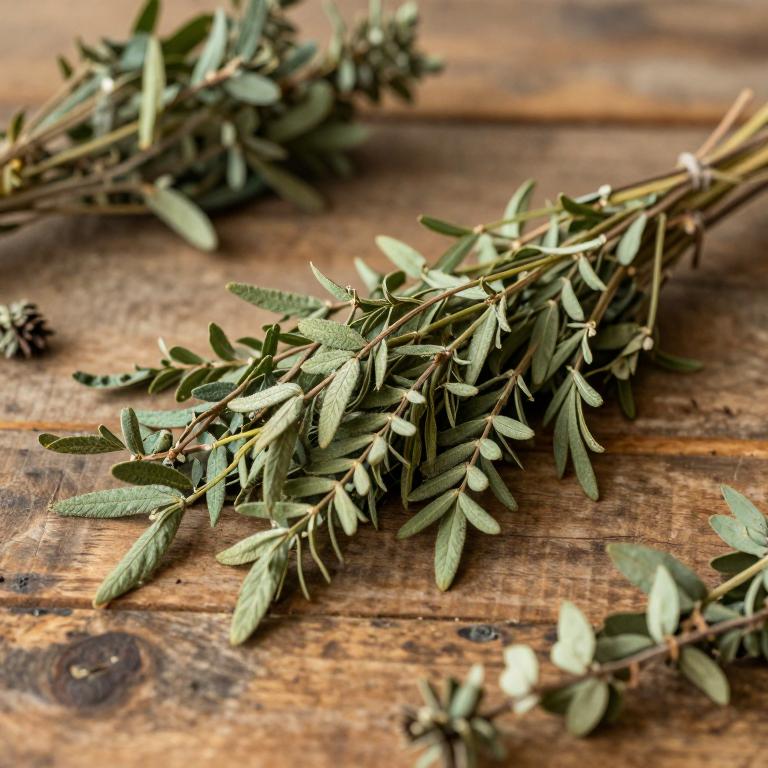
Names and Synonyms
Common Names
- Gimpi Gimpi
- Gympie Gympie
- Gympie Stinging Tree
- Moonlighter
Scientific Names
Accepted name
Dendrocnide moroidesSynonyms
- Urticastrum moroides
- Laportea moroides
Regional and Traditional Names
German:
- Australische Brennnessel
Sources: Wikidata, Catalogue of Life
Taxonomical Classification
This plant belongs to the kingdom Plantae and is classified under the phylum Streptophyta and class Equisetopsida. Within the subclass Magnoliidae, it is further organized under the order Rosales and the family Urticaceae. Finally, its specific taxonomic identity is defined by the genus Dendrocnide.
| Rank | Classification |
|---|---|
| Kingdom | Plantae |
| Phylum | Streptophyta |
| Class | Equisetopsida |
| Subclass | Magnoliidae |
| Order | Rosales |
| Family | Urticaceae |
| Genus | Dendrocnide |
Sources: The World Checklist of Vascular Plants (WCVP)
Distribution
This plant exhibits a broad geographical distribution across several distinct oceanic and continental regions. Within the Malesia botanical region, it is specifically found throughout the Lesser Sunda Islands. Its range extends into Australia, where it can be located in both New South Wales and Queensland. Additionally, the species is present in the Southwestern Pacific, specifically within Vanuatu. These diverse locations highlight the wide ecological footprint of Dendrocnide moroides.
| Region | Area |
|---|---|
| Malesia | Lesser Sunda Is. |
| Australia | New South Wales |
| Australia | Queensland |
| Southwestern Pacific | Vanuatu |
Sources: The World Checklist of Vascular Plants (WCVP)
Botanical Identification
Morphology
The morphology of Dendrocnide moroides is characterized by a woody growth form, primarily manifesting as a shrub. It is a self-supporting plant that does not function as an obligatory or facultative climber, nor does it behave as a liana or vine. In terms of its ecological positioning, it is a terrestrial species, functioning as an independent organism rather than a parasite or an epiphyte. The plant reaches a maximum height of 4 meters, maintaining a sturdy, woody structure throughout its development.
- Aquatic :
- terrestrial
- Climber :
- self-supporting
- Epiphyte :
- terrestrial
- Growth form :
- shrub
- Parasite :
- independent
- Plant height max:
- 4 m
- Woodiness :
- woody
Physiology
The physiology of Dendrocnide moroides is characterized by a C3 photosynthetic pathway, which dictates its carbon fixation processes and metabolic efficiency in varying environmental conditions. The morphological structure of its foliage plays a critical role in its gas exchange and light interception capabilities, featuring leaves that vary significantly in size. Specifically, the leaf dimensions range from a minimum length of 10 cm to a maximum length of 25 cm, while the leaf width fluctuates between a minimum of 8 cm and a maximum of 20 cm. These varying leaf proportions influence the plant's overall surface area, directly impacting its transpiration rates and its ability to manage thermal regulation during the photosynthetic cycle.
- Leaf length max:
- 25 cm
- Leaf length min:
- 10 cm
- Leaf width max:
- 20 cm
- Leaf width min:
- 8 cm
- Photosynthetic pathway :
- C3
Reproduction
The reproduction of Dendrocnide moroides is characterized by the production of small, specialized fruits classified as achenes. These fruits are indehiscent, meaning they do not split open at maturity to release their contents, instead relying on the complete fruit structure to protect the developing progeny. The seeds contained within are notably minute, exhibiting a high degree of uniformity in weight. The seed mass ranges from a minimum of 0.00065 g to a maximum of 0.00077 g, with an overall mean seed mass of 0.00071 g.
- Dehiscence :
- indehiscent
- Fruit type :
- achene
- Seed mass max:
- 0.00077 g
- Seed mass mean:
- 0.00071 g
- Seed mass min:
- 0.00065 g
Sources: Global Inventory of Floras and Traits (GIFT)
Chemicals
Dendrocnide moroides has 1 reported phytochemicals identified across 0 scientific publications and several other databases. The most consistently reported chemicals include Moroidin.
| Chemical | Supporting sources | Consensus |
|---|---|---|
| Moroidin | 2 supporting sources | ★☆☆☆☆ |
Moroidin
- Journal of the American Chemical Society
- Journal of natural products
Conditions
Dendrocnide moroides has 1 reported investigations on conditions identified across 0 scientific publications and several other databases. The most consistently reported conditions include pain.
| Condition | Supporting sources | Consensus |
|---|---|---|
| Pain | 1 supporting sources | ★☆☆☆☆ |
Pain
- Journal of the American Chemical Society