Dendrobium
Dendrobium · Accepted scientific name
Scientific literature: Moderate (133 studies) · ★★★☆☆
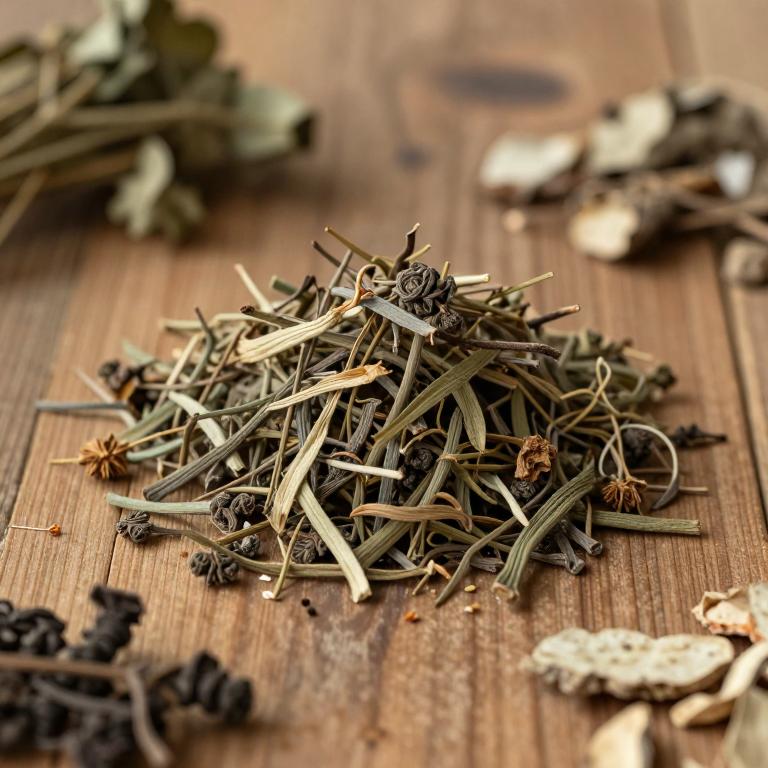
Scientifically known as Dendrobium, is a diverse genus of orchids renowned for their stunning blooms and therapeutic potential. Often utilized in traditional medicine, particularly in Asia, these plants are valued for their antioxidant, anti-inflammatory, and immune-boosting properties, offering a natural approach to holistic wellness and restorative healing.
- Family
- Orchidaceae
- Native range
- Africa
- Parts used
- Stem · Leaf
- Common names
- Not available
- Scientific synonyms
- Flickingeria · Leioanthum · 66 more
Names and Synonyms
Scientific Names
Accepted name
DendrobiumSynonyms
- Flickingeria
- Leioanthum
- Bolbodium
- Thelychiton
- × Vappaculum
- Bouletia
- Winika
- Amblyanthe
- Epigeneium
- Aporum
- Aclinia
- Goldschmidtia
- Australorchis
- Latourorchis
- Froscula
- Keranthus
- Cadetia
- Eriopexis
- Kinetochilus
- Microphytanthe
- Inobulbon
- Cannaeorchis
- Monanthos
- Herpetophytum
- Ceraia
- Euphlebium
- Conostalix
- Gersinia
- Stachyobium
- Coelandria
- Dolichocentrum
- Tetrodon
- Sarcocadetia
- Grastidium
- Dockrillia
- Tetrabaculum
- Pedilonum
- Ditulima
- Thicuania
- Ormostema
- Diplocaulobium
- Aporopsis
- Stilbophyllum
- Dichopus
- Schismoceras
- Ephemerantha
- Vappodes
- Sayeria
- Endeisa
- Chromatotriccum
- Davejonesia
- Macrostomium
- Ceratobium
- Hibiscorchis
- Dendrobates
- Tropilis
- Cepobaculum
- Trachyrhizum
- Distichorchis
- × Dockrilobium
- Durabaculum
- Abaxianthus
- Exochanthus
- Oxyglossellum
- Eleutheroglossum
- Maccraithea
- Eurycaulis
- Orthoglottis
Regional and Traditional Names
Spanish:
- Orquídeas asiáticas de tallo suave
Sources: Wikidata, Catalogue of Life
Taxonomical Classification
This plant belongs to the kingdom Plantae and the phylum Streptophyta, falling under the class Equisetopsida and subclass Magnoliidae. It is classified within the order Asparagales and the family Orchidaceae. Specifically, it is identified by the genus Dendrobium.
| Rank | Classification |
|---|---|
| Kingdom | Plantae |
| Phylum | Streptophyta |
| Class | Equisetopsida |
| Subclass | Magnoliidae |
| Order | Asparagales |
| Family | Orchidaceae |
| Genus | Dendrobium |
Sources: The World Checklist of Vascular Plants (WCVP)
Distribution
This plant exhibits a wide geographical distribution across several distinct regions. In the Western Indian Ocean, its presence is noted specifically in the Seychelles. Within China, it can be found throughout the South-Central areas. The species also inhabits the tropical landscapes of Hainan. Finally, its range extends to the North-Central and Southeast regions of China.
| Region | Area |
|---|---|
| Western Indian Ocean | Seychelles |
| China | China South-Central |
| China | Hainan |
| China | China North-Central |
| China | China Southeast |
| China | Tibet |
| Eastern Asia | Japan |
| Eastern Asia | Korea |
| Eastern Asia | Nansei-shoto |
| Eastern Asia | Taiwan |
Sources: The World Checklist of Vascular Plants (WCVP)
Plant Parts
Dendrobium has 4 reported plant parts identified across 14 scientific publications and several other databases that are studied for medicinal purposes. The most consistently reported plant part include stem, leaf, flower, root.
| Plant part | Supporting sources | Consensus |
|---|---|---|
| Stem | 10 supporting sources | ★★★★★ |
| Leaf | 2 supporting sources | ★☆☆☆☆ |
| Flower | 1 supporting sources | ★☆☆☆☆ |
| Root | 1 supporting sources | ★☆☆☆☆ |
Stem
- International journal of biological macromolecules
- Phytomedicine : international journal of phytotherapy and phytopharmacology
- Royal Society open science
- Planta medica
- Molecules (Basel, Switzerland)
View 5 additional sources
- Zhongguo Zhong yao za zhi = Zhongguo zhongyao zazhi = China journal of Chinese materia medica
- Genomics
- Frontiers in microbiology
- Heliyon
- Frontiers in plant science
Leaf
- International journal of biological macromolecules
- Yao xue xue bao = Acta pharmaceutica Sinica
Flower
- Heliyon
Root
- Molecules (Basel, Switzerland)
Chemicals
Dendrobium has 27 reported phytochemicals identified across 14 scientific publications and several other databases. The most consistently reported chemicals include Dendrobine, Flavonoids, Phenols, Lignans, Phenanthrenes.
| Chemical | Supporting sources | Consensus |
|---|---|---|
| Dendrobine | 4 supporting sources | ★★☆☆☆ |
| Flavonoids | 3 supporting sources | ★★☆☆☆ |
| Phenols | 3 supporting sources | ★★☆☆☆ |
| Lignans | 2 supporting sources | ★☆☆☆☆ |
| Phenanthrenes | 2 supporting sources | ★☆☆☆☆ |
| Steroids | 2 supporting sources | ★☆☆☆☆ |
| Anthocyanins | 1 supporting sources | ★☆☆☆☆ |
| BIBENZYL | 1 supporting sources | ★☆☆☆☆ |
| Carotenoids | 1 supporting sources | ★☆☆☆☆ |
| Coumarins | 1 supporting sources | ★☆☆☆☆ |
Dendrobine
- Molecules (Basel, Switzerland)
- Frontiers in plant science
- Frontiers in pharmacology
- Frontiers in microbiology
Flavonoids
- Journal of ethnopharmacology
- Zhongguo Zhong yao za zhi = Zhongguo zhongyao zazhi = China journal of Chinese materia medica
- Mini reviews in medicinal chemistry
Phenols
- Natural products and bioprospecting
- International journal of molecular sciences
- Zhongguo Zhong yao za zhi = Zhongguo zhongyao zazhi = China journal of Chinese materia medica
Lignans
- Journal of ethnopharmacology
- Zhongguo Zhong yao za zhi = Zhongguo zhongyao zazhi = China journal of Chinese materia medica
Phenanthrenes
- Zhongguo Zhong yao za zhi = Zhongguo zhongyao zazhi = China journal of Chinese materia medica
- Mini reviews in medicinal chemistry
Steroids
- Natural products and bioprospecting
- Zhongguo Zhong yao za zhi = Zhongguo zhongyao zazhi = China journal of Chinese materia medica
Anthocyanins
- Mini reviews in medicinal chemistry
BIBENZYL
- Yao xue xue bao = Acta pharmaceutica Sinica
Carotenoids
- Mini reviews in medicinal chemistry
Coumarins
- Zhongguo Zhong yao za zhi = Zhongguo zhongyao zazhi = China journal of Chinese materia medica
Activities
Dendrobium has 20 reported activities identified across 14 scientific publications and several other databases. The most consistently reported activities include Antioxidant, Neuroprotective, Anticancer, Analgesic, Antiaging.
| Activity | Supporting sources | Consensus |
|---|---|---|
| Antioxidant | 6 supporting sources | ★★★☆☆ |
| Neuroprotective | 5 supporting sources | ★★★☆☆ |
| Anticancer | 2 supporting sources | ★☆☆☆☆ |
| Analgesic | 1 supporting sources | ★☆☆☆☆ |
| Antiaging | 1 supporting sources | ★☆☆☆☆ |
| Antiangiogenic | 1 supporting sources | ★☆☆☆☆ |
| Antibacterial | 1 supporting sources | ★☆☆☆☆ |
| Antidiabetic | 1 supporting sources | ★☆☆☆☆ |
| Antifungal | 1 supporting sources | ★☆☆☆☆ |
| Antiherpetic | 1 supporting sources | ★☆☆☆☆ |
Antioxidant
- Biomedicine & pharmacotherapy = Biomedecine & pharmacotherapie
- Environmental science and pollution research international
- Applied microbiology and biotechnology
- Zhongguo Zhong yao za zhi = Zhongguo zhongyao zazhi = China journal of Chinese materia medica
- Natural products and bioprospecting
View 1 additional sources
- Frontiers in plant science
Neuroprotective
- Biomedicine & pharmacotherapy = Biomedecine & pharmacotherapie
- Phytomedicine : international journal of phytotherapy and phytopharmacology
- Aging and disease
- Applied microbiology and biotechnology
- Frontiers in plant science
Anticancer
- Aging and disease
- Applied microbiology and biotechnology
Analgesic
- Aging and disease
Antiaging
- Natural products and bioprospecting
Antiangiogenic
- Applied microbiology and biotechnology
Antibacterial
- Applied microbiology and biotechnology
Antidiabetic
- Applied microbiology and biotechnology
Antifungal
- Applied microbiology and biotechnology
Antiherpetic
- Applied microbiology and biotechnology
Conditions
Dendrobium has 34 reported investigations on conditions identified across 14 scientific publications and several other databases. The most consistently reported conditions include inflammation, antidiabetic, immunity, stomach, type 2 diabetes.
| Condition | Supporting sources | Consensus |
|---|---|---|
| Inflammation | 4 supporting sources | ★★☆☆☆ |
| Antidiabetic | 2 supporting sources | ★☆☆☆☆ |
| Immunity | 2 supporting sources | ★☆☆☆☆ |
| Stomach | 2 supporting sources | ★☆☆☆☆ |
| Type 2 diabetes | 2 supporting sources | ★☆☆☆☆ |
| Adipogenesis | 1 supporting sources | ★☆☆☆☆ |
| Angiogenesis | 1 supporting sources | ★☆☆☆☆ |
| Antimalarial | 1 supporting sources | ★☆☆☆☆ |
| Arthritis | 1 supporting sources | ★☆☆☆☆ |
| Bacterial infections | 1 supporting sources | ★☆☆☆☆ |
Inflammation
- Zhongguo Zhong yao za zhi = Zhongguo zhongyao zazhi = China journal of Chinese materia medica
- Zhongguo ying yong sheng li xue za zhi = Zhongguo yingyong shenglixue zazhi = Chinese journal of applied physiology
- Current topics in medicinal chemistry
- Mini reviews in medicinal chemistry
Antidiabetic
- Applied microbiology and biotechnology
- Current topics in medicinal chemistry
Immunity
- Zhongguo Zhong yao za zhi = Zhongguo zhongyao zazhi = China journal of Chinese materia medica
- Spectrochimica acta. Part A, Molecular and biomolecular spectroscopy
Stomach
- Aging and disease
- PloS one
Type 2 diabetes
- Nutrients
- Chinese medicine
Adipogenesis
- Nutrients
Angiogenesis
- Yao xue xue bao = Acta pharmaceutica Sinica
Antimalarial
- Applied microbiology and biotechnology
Arthritis
- Current topics in medicinal chemistry
Bacterial infections
- Zhongguo Zhong yao za zhi = Zhongguo zhongyao zazhi = China journal of Chinese materia medica
Preparations
Dendrobium has 12 reported preparations identified across 14 scientific publications and several other databases. The most consistently reported preparations include Shihu, Dendrobium extract, Dendrobium polysaccharides, Dendrobium tonic, Herba Dendrobii.
| Preparation | Supporting sources | Consensus |
|---|---|---|
| Shihu | 2 supporting sources | ★☆☆☆☆ |
| Dendrobium extract | 1 supporting sources | ★☆☆☆☆ |
| Dendrobium polysaccharides | 1 supporting sources | ★☆☆☆☆ |
| Dendrobium tonic | 1 supporting sources | ★☆☆☆☆ |
| Herba dendrobii | 1 supporting sources | ★☆☆☆☆ |
| Herba dendrobii (shihu) | 1 supporting sources | ★☆☆☆☆ |
| Aqueous extracts | 1 supporting sources | ★☆☆☆☆ |
| Commercial crude drugs | 1 supporting sources | ★☆☆☆☆ |
| Dried | 1 supporting sources | ★☆☆☆☆ |
| Fresh | 1 supporting sources | ★☆☆☆☆ |
Shihu
- Journal of pharmaceutical and biomedical analysis
- Zhongguo Zhong yao za zhi = Zhongguo zhongyao zazhi = China journal of Chinese materia medica
Dendrobium extract
- Signal transduction and targeted therapy
Dendrobium polysaccharides
- Nature communications
Dendrobium tonic
- Aging and disease
Herba dendrobii
- Journal of biochemical and biophysical methods
Herba dendrobii (shihu)
- Planta medica
Aqueous extracts
- Journal of ethnopharmacology
Commercial crude drugs
- Yao xue xue bao = Acta pharmaceutica Sinica
Dried
- Zhongguo Zhong yao za zhi = Zhongguo zhongyao zazhi = China journal of Chinese materia medica
Fresh
- Zhongguo Zhong yao za zhi = Zhongguo zhongyao zazhi = China journal of Chinese materia medica