Dendrobium xantholeucum
Dendrobium xantholeucum · Accepted scientific name
Scientific literature: Very Sparse (17 studies) · ★☆☆☆☆
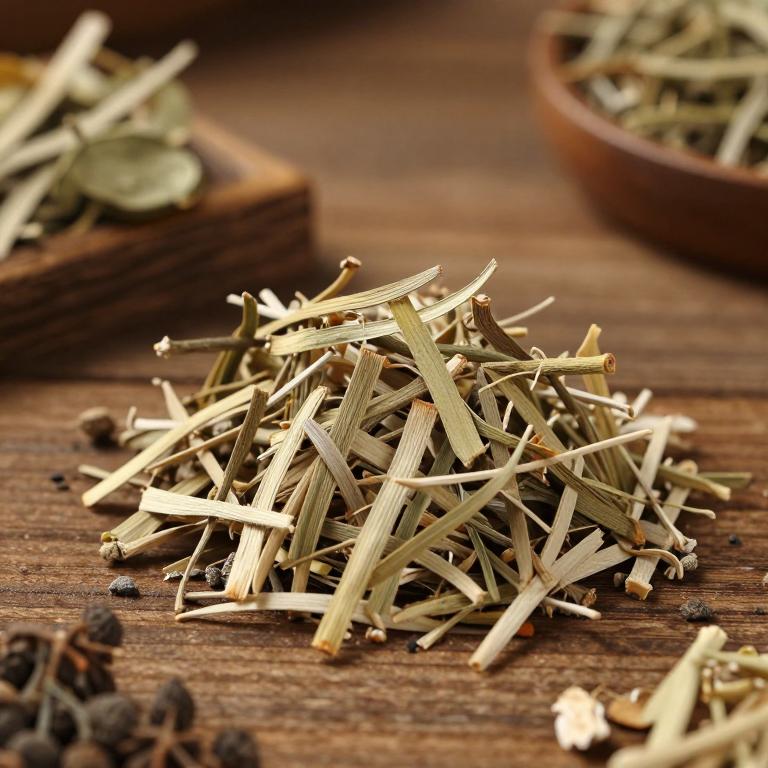
, scientifically known as Dendrobium xantholeucum, is a remarkable medicinal orchid prized in traditional Eastern practices. Renowned for its therapeutic properties, this plant is often utilized to nourish the body, soothe respiratory ailments, and support overall vitality. Its unique biological profile makes it a significant subject in botanical pharmacology.
- Family
- Orchidaceae
- Native range
- Asia-Temperate
- Parts used
- Stem
- Common names
- Not available
- Scientific synonyms
- Callista Xantholeuca · Desmotrichum Xantholeucum · 10 more
Names and Synonyms
Scientific Names
Accepted name
Dendrobium xantholeucumSynonyms
- Callista xantholeuca
- Desmotrichum xantholeucum
- Callista lonchophylla
- Desmotrichum lonchophyllum
- Flickingeria xantholeuca
- Desmotrichum pallidiflorum
- Flickingeria lonchophylla
- Dendrobium lonchophyllum
- Dendrobium pallidiflorum
- Ephemerantha xantholeuca
- Ephemerantha lonchophylla
- Dendrobium xantholeucum var. obtusilobum
Sources: Wikidata, Catalogue of Life
Taxonomical Classification
This plant, Dendrobium xantholeucum, belongs to the kingdom Plantae and the phylum Streptophyta. Within the class Equisetopsida and subclass Magnoliidae, it is categorized under the order Asparagales. Finally, it is classified within the family Orchidaceae under the genus Dendrobium.
| Rank | Classification |
|---|---|
| Kingdom | Plantae |
| Phylum | Streptophyta |
| Class | Equisetopsida |
| Subclass | Magnoliidae |
| Order | Asparagales |
| Family | Orchidaceae |
| Genus | Dendrobium |
Sources: The World Checklist of Vascular Plants (WCVP)
Distribution
This plant exhibits a broad geographical distribution across several key regions of Asia. Within Eastern Asia, it can be found growing in the natural habitats of Taiwan. Its range extends into Indo-China, specifically documented in the country of Thailand. Furthermore, the species is widely distributed throughout the Malesia region, including Borneo and Jawa. Finally, it is also known to inhabit the various landscapes of Malaya.
| Region | Area |
|---|---|
| Eastern Asia | Taiwan |
| Indo-China | Thailand |
| Malesia | Borneo |
| Malesia | Jawa |
| Malesia | Malaya |
| Malesia | Sumatera |
Sources: The World Checklist of Vascular Plants (WCVP)
Botanical Identification
Morphology
The morphology of Dendrobium xantholeucum is characterized by its growth habit as an obligatory epiphyte, meaning it relies on host plants or structures for support rather than growing terrestrially. It functions as an independent plant, exhibiting no parasitic behavior toward its hosts. As a climber, it is classified as self-supporting in its structural arrangement. In terms of physical scale, the plant maintains a relatively modest stature, with a maximum plant height reaching approximately 0.3 m.
- Climber :
- self-supporting
- Epiphyte :
- obligatory
- Parasite :
- independent
- Plant height max:
- 0.3 m
Sources: Global Inventory of Floras and Traits (GIFT)
Plant Parts
Dendrobium xantholeucum has 1 reported plant parts identified across 1 scientific publications and several other databases that are studied for medicinal purposes. The most consistently reported plant part include stem.
| Plant part | Supporting sources | Consensus |
|---|---|---|
| Stem | 1 supporting sources | ★☆☆☆☆ |
Stem
- Zhong yao cai = Zhongyaocai = Journal of Chinese medicinal materials
Chemicals
Dendrobium xantholeucum has 9 reported phytochemicals identified across 1 scientific publications and several other databases. The most consistently reported chemicals include 3-methylgigantol, denbinobin, erianthridin, 3,7-dihydroxy-2,4-dimethoxyphenanthrene, Dihydrostilbene.
| Chemical | Supporting sources | Consensus |
|---|---|---|
| 3-methylgigantol | 2 supporting sources | ★☆☆☆☆ |
| denbinobin | 2 supporting sources | ★☆☆☆☆ |
| erianthridin | 2 supporting sources | ★☆☆☆☆ |
| 3,7-dihydroxy-2,4-dimethoxyphenanthrene | 1 supporting sources | ★☆☆☆☆ |
| Dihydrostilbene | 1 supporting sources | ★☆☆☆☆ |
| Ephemeranthol B | 1 supporting sources | ★☆☆☆☆ |
| Flickinxanthoside D | 1 supporting sources | ★☆☆☆☆ |
| Flickinxanthoside E | 1 supporting sources | ★☆☆☆☆ |
| ephemeranthone | 1 supporting sources | ★☆☆☆☆ |
3-methylgigantol
- Journal of natural products
- Planta medica
denbinobin
- Journal of natural products
- Planta medica
erianthridin
- Zhong yao cai = Zhongyaocai = Journal of Chinese medicinal materials
- Planta medica
3,7-dihydroxy-2,4-dimethoxyphenanthrene
- Planta medica
Dihydrostilbene
- Journal of natural products
Ephemeranthol B
- Zhong yao cai = Zhongyaocai = Journal of Chinese medicinal materials
Flickinxanthoside D
- Journal of natural medicines
Flickinxanthoside E
- Journal of natural medicines
ephemeranthone
- Journal of natural products
Activities
Dendrobium xantholeucum has 1 reported activities identified across 1 scientific publications and several other databases. The most consistently reported activities include Antioxidant.
| Activity | Supporting sources | Consensus |
|---|---|---|
| Antioxidant | 1 supporting sources | ★☆☆☆☆ |
Antioxidant
- Journal of natural products
Preparations
Dendrobium xantholeucum has 4 reported preparations identified across 1 scientific publications and several other databases. The most consistently reported preparations include ethanolic extract, MeOH extracts, Stems, pseudobulbs.
| Preparation | Supporting sources | Consensus |
|---|---|---|
| Ethanolic extract | 2 supporting sources | ★☆☆☆☆ |
| Meoh extracts | 1 supporting sources | ★☆☆☆☆ |
| Stems | 1 supporting sources | ★☆☆☆☆ |
| Pseudobulbs | 1 supporting sources | ★☆☆☆☆ |
Ethanolic extract
- Journal of natural products
- Planta medica
Meoh extracts
- Journal of natural medicines
Stems
- Zhong yao cai = Zhongyaocai = Journal of Chinese medicinal materials
Pseudobulbs
- Zhong yao cai = Zhongyaocai = Journal of Chinese medicinal materials