Dendrobium wardianum
Dendrobium wardianum · Accepted scientific name
Scientific literature: Very Sparse (9 studies) · ★☆☆☆☆
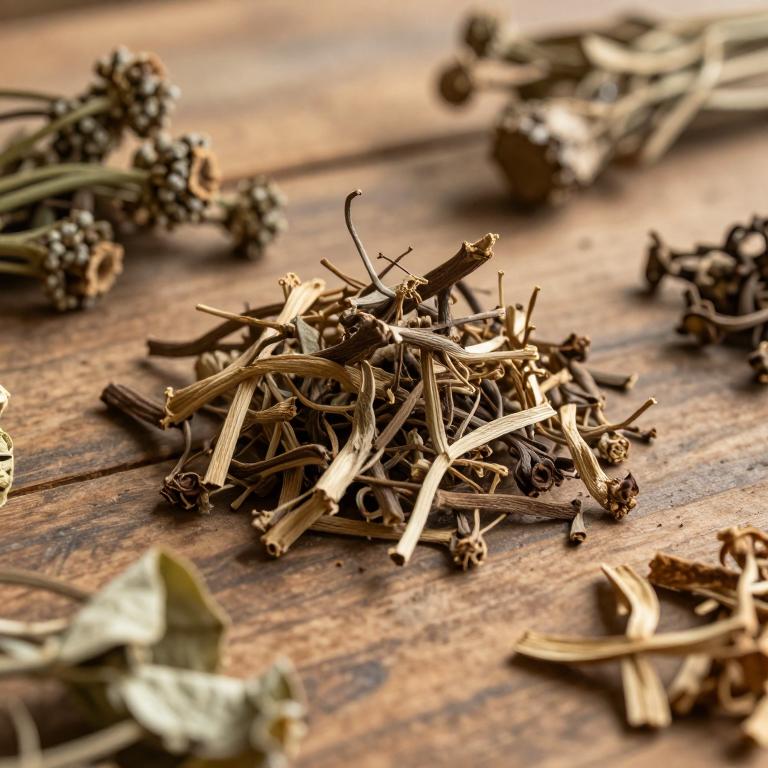
, scientifically known as Dendrobium wardianum, is a captivating epiphytic orchid cherished for its striking, pendulous blooms. Beyond its ornamental beauty, this species holds significant value in traditional herbal medicine. It is frequently utilized in various cultures for its purported therapeutic properties, particularly in balancing vital energies and promoting wellness.
- Family
- Orchidaceae
- Native range
- Asia-Temperate
- Parts used
- Not available
- Common names
- Not available
- Scientific synonyms
- Dendrobium Wardianum Var. Pictum · Callista Wardiana · 2 more
Names and Synonyms
Scientific Names
Accepted name
Dendrobium wardianumSynonyms
- Dendrobium wardianum var. pictum
- Callista wardiana
- Dendrobium wardianum candidum
- Dendrobium wardianum var. assamicum
Sources: Wikidata, Catalogue of Life
Taxonomical Classification
This plant belongs to the kingdom Plantae and is classified under the phylum Streptophyta and the class Equisetopsida. Within the subclass Magnoliidae, it follows the order Asparagales and is a member of the Orchidaceae family. Specifically, Dendrobium wardianum is categorized under the genus Dendrobium.
| Rank | Classification |
|---|---|
| Kingdom | Plantae |
| Phylum | Streptophyta |
| Class | Equisetopsida |
| Subclass | Magnoliidae |
| Order | Asparagales |
| Family | Orchidaceae |
| Genus | Dendrobium |
Sources: The World Checklist of Vascular Plants (WCVP)
Distribution
This plant exhibits a diverse range of habitats across several distinct Asian regions. In China, its presence is specifically noted within the South-Central areas. Moving into the Indian Subcontinent, it can be found in Assam, Bangladesh, and the East Himalaya regions. Furthermore, its distribution extends into the Indo-China territory, specifically within Myanmar. Together, these locations highlight the wide geographical reach of this medicinal species.
| Region | Area |
|---|---|
| China | China South-Central |
| Indian Subcontinent | Assam |
| Indian Subcontinent | Bangladesh |
| Indian Subcontinent | East Himalaya |
| Indo-China | Myanmar |
| Indo-China | Thailand |
| Indo-China | Vietnam |
Sources: The World Checklist of Vascular Plants (WCVP)
Botanical Identification
Morphology
The morphology of Dendrobium wardianum is characterized by its specialized growth habit and structural adaptations to its ecological niche. It functions as an obligatory epiphyte, relying on host trees for physical support to access light within its habitat. While it exhibits a climbing nature, it is specifically classified as a self-supporting climber, meaning it possesses the structural integrity to maintain its upright or sprawling posture through its own vegetative tissue once anchored. Furthermore, the plant is entirely independent in its nutritional requirements, functioning as a non-parasitic organism that derives its own sustenance rather than relying on a host for nutrients.
- Climber :
- self-supporting
- Epiphyte :
- obligatory
- Parasite :
- independent
Sources: Global Inventory of Floras and Traits (GIFT)
Chemicals
Dendrobium wardianum has 8 reported phytochemicals identified across 0 scientific publications and several other databases. The most consistently reported chemicals include 3,4-dihydroxy-5,4'-dimethoxy bibenzyl, Dendrocandin A, Dihydroshihunine, Gigantol, Loddigesiinol A.
| Chemical | Supporting sources | Consensus |
|---|---|---|
| 3,4-dihydroxy-5,4'-dimethoxy bibenzyl | 1 supporting sources | ★☆☆☆☆ |
| Dendrocandin A | 1 supporting sources | ★☆☆☆☆ |
| Dihydroshihunine | 1 supporting sources | ★☆☆☆☆ |
| Gigantol | 1 supporting sources | ★☆☆☆☆ |
| Loddigesiinol A | 1 supporting sources | ★☆☆☆☆ |
| Loddigesiinol B | 1 supporting sources | ★☆☆☆☆ |
| Moscatilin | 1 supporting sources | ★☆☆☆☆ |
| denbinobin | 1 supporting sources | ★☆☆☆☆ |
3,4-dihydroxy-5,4'-dimethoxy bibenzyl
- Fitoterapia
Dendrocandin A
- Fitoterapia
Dihydroshihunine
- Fitoterapia
Gigantol
- Fitoterapia
Loddigesiinol A
- Fitoterapia
Loddigesiinol B
- Fitoterapia
Moscatilin
- Fitoterapia
denbinobin
- Fitoterapia
Activities
Dendrobium wardianum has 1 reported activities identified across 0 scientific publications and several other databases. The most consistently reported activities include Cytotoxic.
| Activity | Supporting sources | Consensus |
|---|---|---|
| Cytotoxic | 1 supporting sources | ★☆☆☆☆ |
Cytotoxic
- Fitoterapia