Dendrobium huoshanense
Dendrobium huoshanense · Accepted scientific name
Scientific literature: Moderate (127 studies) · ★★★☆☆
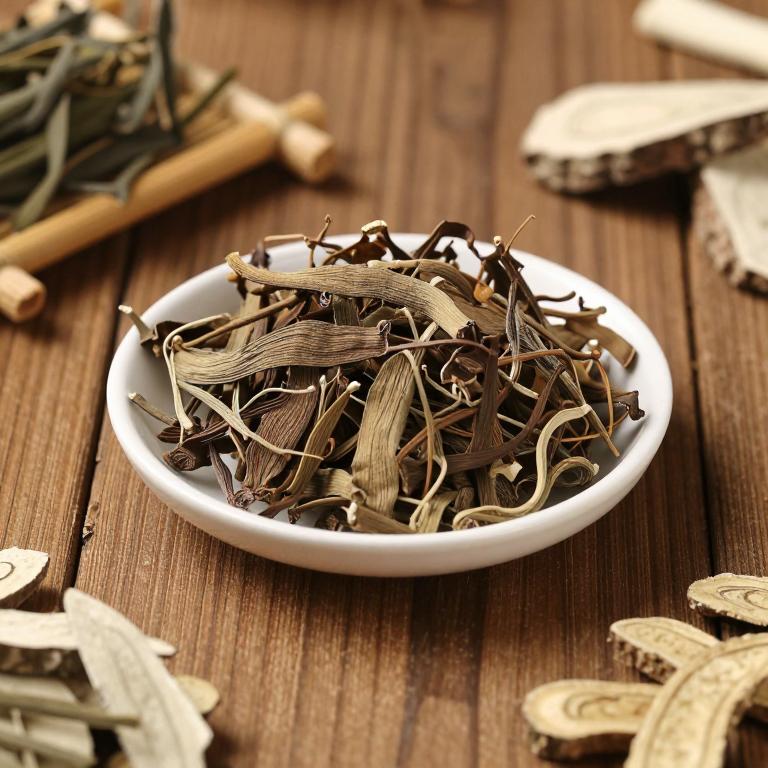
, scientifically known as Dendrobium huoshanense, is a rare epiphytic orchid highly valued in traditional Chinese medicine. Renowned for its therapeutic properties, this precious plant is often used to nourish Yin, clear heat, and support respiratory health. Its unique medicinal profile makes it a significant botanical treasure in herbal pharmacology.
- Family
- Orchidaceae
- Native range
- Asia-Temperate
- Parts used
- Stem · Leaf
- Common names
- Not available
- Scientific synonyms
- Not available
Names and Synonyms
Scientific Names
Accepted name
Dendrobium huoshanenseSources: Wikidata, Catalogue of Life
Taxonomical Classification
This plant belongs to the kingdom Plantae within the phylum Streptophyta and the class Equisetopsida. Classified under the subclass Magnoliidae and the order Asparagales, it is a member of the Orchidaceae family. Within this family, it is specifically categorized under the genus Dendrobium.
| Rank | Classification |
|---|---|
| Kingdom | Plantae |
| Phylum | Streptophyta |
| Class | Equisetopsida |
| Subclass | Magnoliidae |
| Order | Asparagales |
| Family | Orchidaceae |
| Genus | Dendrobium |
Sources: The World Checklist of Vascular Plants (WCVP)
Distribution
This plant is primarily found within the specific environmental regions of China. Its natural habitat is concentrated in the Southeast portion of the country. Within this territory, it thrives in the unique climates characteristic of the southeastern provinces. This localized distribution highlights its reliance on the particular ecological conditions found in that area. Consequently, the geographical range of Dendrobium huoshanense remains restricted to these southeastern Chinese landscapes.
| Region | Area |
|---|---|
| China | China Southeast |
Sources: The World Checklist of Vascular Plants (WCVP)
Plant Parts
Dendrobium huoshanense has 3 reported plant parts identified across 16 scientific publications and several other databases that are studied for medicinal purposes. The most consistently reported plant part include stem, leaf, root.
| Plant part | Supporting sources | Consensus |
|---|---|---|
| Stem | 8 supporting sources | ★★★★☆ |
| Leaf | 4 supporting sources | ★★☆☆☆ |
| Root | 4 supporting sources | ★★☆☆☆ |
Stem
- Bioorganic & medicinal chemistry
- BMC genomics
- International journal of biological macromolecules
- Microscopy research and technique
- PloS one
View 3 additional sources
- Planta medica
- Biomolecules
- Genes
Leaf
- Bioorganic & medicinal chemistry
- BMC genomics
- Microscopy research and technique
- Genes
Root
- BMC genomics
- Microscopy research and technique
- Planta medica
- Genes
Chemicals
Dendrobium huoshanense has 47 reported phytochemicals identified across 16 scientific publications and several other databases. The most consistently reported chemicals include Flavonoids, Polysaccharide, glucose, mannose, galactose.
| Chemical | Supporting sources | Consensus |
|---|---|---|
| Flavonoids | 9 supporting sources | ★★★★☆ |
| Polysaccharide | 4 supporting sources | ★★☆☆☆ |
| glucose | 4 supporting sources | ★★☆☆☆ |
| mannose | 4 supporting sources | ★★☆☆☆ |
| galactose | 3 supporting sources | ★★☆☆☆ |
| 4-allyl-2,6-dimethoxyphenyl glucoside | 1 supporting sources | ★☆☆☆☆ |
| Alcohols | 1 supporting sources | ★☆☆☆☆ |
| CO | 1 supporting sources | ★☆☆☆☆ |
| Dendrobine | 1 supporting sources | ★☆☆☆☆ |
| FE | 1 supporting sources | ★☆☆☆☆ |
Flavonoids
- PloS one
- Frontiers in plant science
- Scientific reports
- Frontiers in pharmacology
- Plants (Basel, Switzerland)
View 4 additional sources
- Physiology and molecular biology of plants : an international journal of functional plant biology
- Biomedical chromatography : BMC
- Phytochemical analysis : PCA
- Genes
Polysaccharide
- Journal of ethnopharmacology
- Zhong yao cai = Zhongyaocai = Journal of Chinese medicinal materials
- International journal of biological macromolecules
- PloS one
glucose
- International journal of biological macromolecules
- Zhong yao cai = Zhongyaocai = Journal of Chinese medicinal materials
- Carbohydrate polymers
- PloS one
mannose
- International journal of biological macromolecules
- Zhong yao cai = Zhongyaocai = Journal of Chinese medicinal materials
- Carbohydrate polymers
- Physiology and molecular biology of plants : an international journal of functional plant biology
galactose
- Zhong yao cai = Zhongyaocai = Journal of Chinese medicinal materials
- Carbohydrate polymers
- PloS one
4-allyl-2,6-dimethoxyphenyl glucoside
- Talanta
Alcohols
- PloS one
CO
- Frontiers in nutrition
Dendrobine
- International journal of biological macromolecules
FE
- Frontiers in nutrition
Activities
Dendrobium huoshanense has 7 reported activities identified across 16 scientific publications and several other databases. The most consistently reported activities include Antioxidant, Antibacterial, Antitumor, Gastroprotective, Hepatoprotective.
| Activity | Supporting sources | Consensus |
|---|---|---|
| Antioxidant | 5 supporting sources | ★★★☆☆ |
| Antibacterial | 1 supporting sources | ★☆☆☆☆ |
| Antitumor | 1 supporting sources | ★☆☆☆☆ |
| Gastroprotective | 1 supporting sources | ★☆☆☆☆ |
| Hepatoprotective | 1 supporting sources | ★☆☆☆☆ |
| Hypoglycemic | 1 supporting sources | ★☆☆☆☆ |
| Neuroprotective | 1 supporting sources | ★☆☆☆☆ |
Antioxidant
- Molecules (Basel, Switzerland)
- Phytomedicine : international journal of phytotherapy and phytopharmacology
- Journal of ethnopharmacology
- Plants (Basel, Switzerland)
- Frontiers in pharmacology
Antibacterial
- Pakistan journal of pharmaceutical sciences
Antitumor
- Journal of ethnopharmacology
Gastroprotective
- Talanta
Hepatoprotective
- Frontiers in pharmacology
Hypoglycemic
- Molecules (Basel, Switzerland)
Neuroprotective
- Journal of ethnopharmacology
Conditions
Dendrobium huoshanense has 24 reported investigations on conditions identified across 16 scientific publications and several other databases. The most consistently reported conditions include antioxidant, neuroinflammation, Alzheimer's disease, Parkinson's disease, abiotic stress.
| Condition | Supporting sources | Consensus |
|---|---|---|
| Antioxidant | 2 supporting sources | ★☆☆☆☆ |
| Neuroinflammation | 2 supporting sources | ★☆☆☆☆ |
| Alzheimer's disease | 1 supporting sources | ★☆☆☆☆ |
| Parkinson's disease | 1 supporting sources | ★☆☆☆☆ |
| Abiotic stress | 1 supporting sources | ★☆☆☆☆ |
| Apoptosis | 1 supporting sources | ★☆☆☆☆ |
| Atherosclerosis | 1 supporting sources | ★☆☆☆☆ |
| Blood glucose | 1 supporting sources | ★☆☆☆☆ |
| Cancer | 1 supporting sources | ★☆☆☆☆ |
| Cognitive dysfunction | 1 supporting sources | ★☆☆☆☆ |
Antioxidant
- Molecules (Basel, Switzerland)
- Frontiers in pharmacology
Neuroinflammation
- Journal of ethnopharmacology
- International journal of biological macromolecules
Alzheimer's disease
- International journal of biological macromolecules
Parkinson's disease
- Journal of ethnopharmacology
Abiotic stress
- BMC plant biology
Apoptosis
- Polymers
Atherosclerosis
- Phytomedicine : international journal of phytotherapy and phytopharmacology
Blood glucose
- Zhongguo Zhong yao za zhi = Zhongguo zhongyao zazhi = China journal of Chinese materia medica
Cancer
- PloS one
Cognitive dysfunction
- International journal of biological macromolecules
Preparations
Dendrobium huoshanense has 24 reported preparations identified across 16 scientific publications and several other databases. The most consistently reported preparations include DH extracts, DHPD1, DHPs-1, Dendrobium huoshanense polysaccharides (DHP), Fe3O4 NPs.
| Preparation | Supporting sources | Consensus |
|---|---|---|
| Dh extracts | 1 supporting sources | ★☆☆☆☆ |
| Dhpd1 | 1 supporting sources | ★☆☆☆☆ |
| Dhps-1 | 1 supporting sources | ★☆☆☆☆ |
| Dendrobium huoshanense polysaccharides (dhp) | 1 supporting sources | ★☆☆☆☆ |
| Fe3o4 nps | 1 supporting sources | ★☆☆☆☆ |
| Fengdou | 1 supporting sources | ★☆☆☆☆ |
| Hs | 1 supporting sources | ★☆☆☆☆ |
| Alcohol precipitation | 1 supporting sources | ★☆☆☆☆ |
| Aqueous extracts | 1 supporting sources | ★☆☆☆☆ |
| Deacetylated mucilage obtained from an alkaline treatment | 1 supporting sources | ★☆☆☆☆ |
Dh extracts
- Journal of ethnopharmacology
Dhpd1
- Carbohydrate polymers
Dhps-1
- International journal of biological macromolecules
Dendrobium huoshanense polysaccharides (dhp)
- Phytomedicine : international journal of phytotherapy and phytopharmacology
Fe3o4 nps
- Frontiers in nutrition
Fengdou
- Microscopy research and technique
Hs
- Phytochemical analysis : PCA
Alcohol precipitation
- Zhong yao cai = Zhongyaocai = Journal of Chinese medicinal materials
Aqueous extracts
- Biomedical chromatography : BMC
Deacetylated mucilage obtained from an alkaline treatment
- Bioorganic & medicinal chemistry