Lovely Dendrobium
Dendrobium amoenum · Accepted scientific name
Scientific literature: Very Sparse (11 studies) · ★☆☆☆☆
Lovely Dendrobium, scientifically known as Dendrobium amoenum, is a stunning epiphytic orchid cherished both for its aesthetic elegance and traditional medicinal properties. Renowned for its fragrant, delicate blooms, this species is utilized in various herbal practices to support vitality, offering a unique intersection of natural beauty and therapeutic potential.
- Family
- Orchidaceae
- Native range
- Asia-Tropical
- Parts used
- Not available
- Common names
- Not available
- Scientific synonyms
- Callista Amoena · Dendrobium Mesochlorum · 1 more
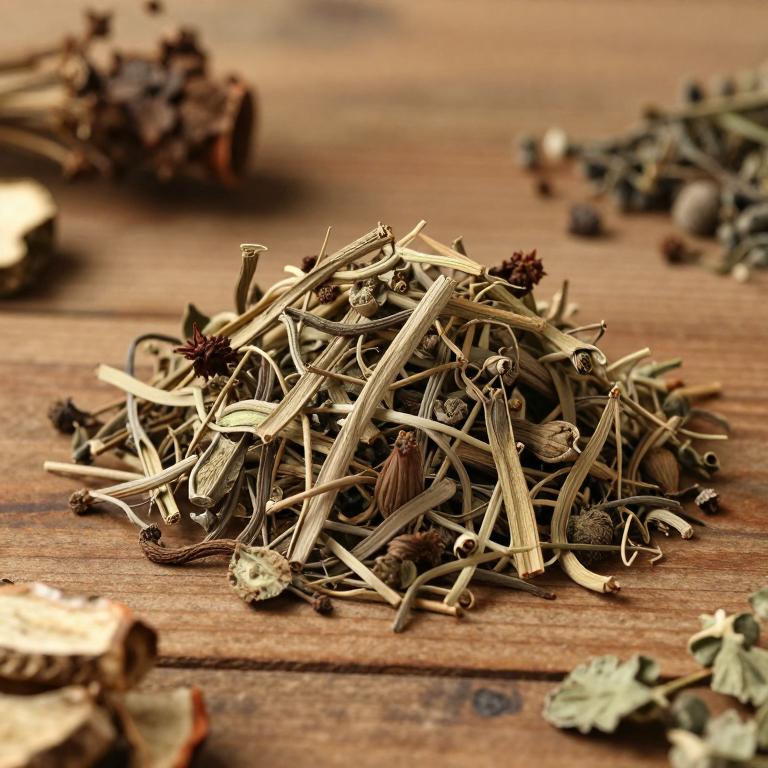
Names and Synonyms
Scientific Names
Accepted name
Dendrobium amoenumSynonyms
- Callista amoena
- Dendrobium mesochlorum
- Dendrobium egertoniae
Sources: Wikidata, Catalogue of Life
Taxonomical Classification
This plant, Dendrobium amoenum, belongs to the kingdom Plantae and the phylum Streptophyta. Within the class Equisetopsida and subclass Magnoliidae, it is classified under the order Asparagales. It is a member of the Orchidaceae family and is specifically categorized under the genus Dendrobium.
| Rank | Classification |
|---|---|
| Kingdom | Plantae |
| Phylum | Streptophyta |
| Class | Equisetopsida |
| Subclass | Magnoliidae |
| Order | Asparagales |
| Family | Orchidaceae |
| Genus | Dendrobium |
Sources: The World Checklist of Vascular Plants (WCVP)
Distribution
This plant exhibits a specific geographical presence across several regions within the Indian Subcontinent. It can be found growing naturally in the state of Assam and throughout various parts of India. Furthermore, its distribution extends into the neighboring country of Bangladesh. The species is also documented within the rugged terrain of the East Himalaya. Finally, its range reaches into the mountainous landscapes of Nepal.
| Region | Area |
|---|---|
| Indian Subcontinent | Assam |
| Indian Subcontinent | Bangladesh |
| Indian Subcontinent | East Himalaya |
| Indian Subcontinent | India |
| Indian Subcontinent | Nepal |
| Indian Subcontinent | West Himalaya |
| Indo-China | Myanmar |
Sources: The World Checklist of Vascular Plants (WCVP)
Botanical Identification
Ecology
The ecology of Dendrobium amoenum is defined by its specific niche within montane forest ecosystems, where it thrives across a distinct altitudinal gradient. This species is primarily distributed within an elevational range that spans from a minimum of 600 m AMSL to a maximum of 1700 m AMSL. Within these parameters, the plant occupies various microhabitats, typically functioning as an epiphyte that relies on the structural complexity of the forest canopy to access light and moisture. Its presence within this specific elevational belt suggests a specialized adaptation to the temperature and humidity regimes characteristic of mid-to-high altitude tropical or subtropical montane environments.
- Elevational range max:
- 1700 m AMSL
- Elevational range min:
- 600 m AMSL
Morphology
The morphology of Dendrobium amoenum is characterized by its growth form as a non-woody herb that exhibits an obligatory epiphytic lifestyle. As a climbing plant, it functions as a self-supporting organism, utilizing its structural adaptations to thrive within its niche without being a parasite, thus maintaining an independent existence.
- Climber :
- self-supporting
- Epiphyte :
- obligatory
- Growth form :
- herb
- Parasite :
- independent
- Woodiness :
- non-woody
Sources: Global Inventory of Floras and Traits (GIFT)
Chemicals
Dendrobium amoenum has 6 reported phytochemicals identified across 0 scientific publications and several other databases. The most consistently reported chemicals include 2,6-dimethoxy-4-(2-propenyl)-phenol, 2-Methoxy-4-vinylphenol, 2-methoxy-4-(1-propenyl)-Phenol, 3,4-dimethoxy phenol, 3-Methoxy-1,2-benzenediol.
| Chemical | Supporting sources | Consensus |
|---|---|---|
| 2,6-dimethoxy-4-(2-propenyl)-phenol | 1 supporting sources | ★☆☆☆☆ |
| 2-Methoxy-4-vinylphenol | 1 supporting sources | ★☆☆☆☆ |
| 2-methoxy-4-(1-propenyl)-Phenol | 1 supporting sources | ★☆☆☆☆ |
| 3,4-dimethoxy phenol | 1 supporting sources | ★☆☆☆☆ |
| 3-Methoxy-1,2-benzenediol | 1 supporting sources | ★☆☆☆☆ |
| Flavonoid | 1 supporting sources | ★☆☆☆☆ |
2,6-dimethoxy-4-(2-propenyl)-phenol
- BMC complementary medicine and therapies
2-Methoxy-4-vinylphenol
- BMC complementary medicine and therapies
2-methoxy-4-(1-propenyl)-Phenol
- BMC complementary medicine and therapies
3,4-dimethoxy phenol
- BMC complementary medicine and therapies
3-Methoxy-1,2-benzenediol
- BMC complementary medicine and therapies
Flavonoid
- BMC complementary medicine and therapies
Activities
Dendrobium amoenum has 2 reported activities identified across 0 scientific publications and several other databases. The most consistently reported activities include Antioxidant, Cytotoxic.
| Activity | Supporting sources | Consensus |
|---|---|---|
| Antioxidant | 1 supporting sources | ★☆☆☆☆ |
| Cytotoxic | 1 supporting sources | ★☆☆☆☆ |
Antioxidant
- BMC complementary medicine and therapies
Cytotoxic
- BMC complementary medicine and therapies
Conditions
Dendrobium amoenum has 1 reported investigations on conditions identified across 0 scientific publications and several other databases. The most consistently reported conditions include HeLa cells.
| Condition | Supporting sources | Consensus |
|---|---|---|
| Hela cells | 1 supporting sources | ★☆☆☆☆ |
Hela cells
- BMC complementary medicine and therapies
Preparations
Dendrobium amoenum has 1 reported preparations identified across 0 scientific publications and several other databases. The most consistently reported preparations include methanol extract.
| Preparation | Supporting sources | Consensus |
|---|---|---|
| Methanol extract | 1 supporting sources | ★☆☆☆☆ |
Methanol extract
- BMC complementary medicine and therapies