Jadwar
Delphinium denudatum · Accepted scientific name
Scientific literature: Very Sparse (7 studies) · ★☆☆☆☆
Jadwar, scientifically known as Delphinium denudatum, is a remarkable medicinal plant prized in traditional healing. Renowned for its vibrant blooms, this species contains potent bioactive compounds used to treat various ailments. Its unique phytochemical profile offers significant therapeutic potential, making it a subject of intense botanical and pharmacological interest.
- Family
- Ranunculaceae
- Native range
- Asia-Temperate
- Parts used
- Not available
- Common names
- Not available
- Scientific synonyms
- Delphinium Denudatum Var. Latifolium · Delphinium Denudatum Var. Linearifolium
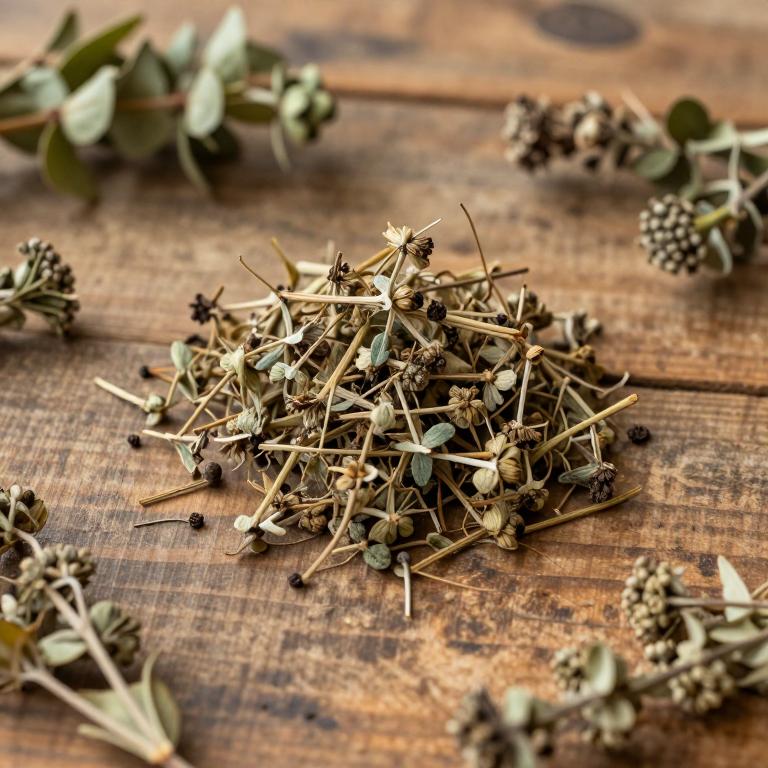
Names and Synonyms
Scientific Names
Accepted name
Delphinium denudatumSynonyms
- Delphinium denudatum var. latifolium
- Delphinium denudatum var. linearifolium
Sources: Wikidata
Taxonomical Classification
This plant belongs to the kingdom Plantae and the phylum Streptophyta, falling under the class Equisetopsida and subclass Magnoliidae. Within the order Ranunculales, it is classified under the family Ranunculaceae. Finally, it is identified by the genus Delphinium.
| Rank | Classification |
|---|---|
| Kingdom | Plantae |
| Phylum | Streptophyta |
| Class | Equisetopsida |
| Subclass | Magnoliidae |
| Order | Ranunculales |
| Family | Ranunculaceae |
| Genus | Delphinium |
Sources: The World Checklist of Vascular Plants (WCVP)
Distribution
This plant exhibits a specific distribution pattern across several key regions of Asia. Within Western Asia, it can be found growing in the terrain of Afghanistan. Its presence extends significantly into the Indian Subcontinent, where it inhabits various parts of India. Additionally, the species is documented as growing within the borders of Pakistan. Finally, it is also native to the mountainous regions of the West Himalaya.
| Region | Area |
|---|---|
| Western Asia | Afghanistan |
| Indian Subcontinent | India |
| Indian Subcontinent | Pakistan |
| Indian Subcontinent | West Himalaya |
Sources: The World Checklist of Vascular Plants (WCVP)
Botanical Identification
Ecology
The ecology of Delphinium denudatum is defined by its specialized occupation of high-altitude montane environments, specifically thriving within a distinct altitudinal belt. This species is primarily found in mountainous regions where it occupies an elevational range spanning from a minimum of 1800 m AMSL to a maximum of 3000 m AMSL. This vertical distribution suggests an adaptation to the cooler temperatures, increased ultraviolet exposure, and specific moisture regimes characteristic of subalpine or high-elevation alpine zones. Its presence within this specific 1200-meter altitudinal gradient indicates a niche requirement for the unique soil compositions and climatic stability found in these upper-elevation ecosystems.
- Elevational range max:
- 3000 m AMSL
- Elevational range min:
- 1800 m AMSL
Life history
The life history of Delphinium denudatum is characterized by a variable lifecycle that can manifest as an annual, biennial, or perennial depending on environmental conditions and local ecological stability. As a species that adapts its longevity to its habitat, it often functions as a perennial, establishing a persistent root system that allows it to survive through multiple growing seasons and regrow from existing structures. During its active phase, the plant undergoes a seasonal progression starting with vegetative growth, followed by the development of its distinctive inflorescence, and concluding with seed production. The variability in its lifecycle allows the plant to optimize its reproductive success, shifting between rapid annual cycles in disturbed or transient environments and more stable perennial strategies in established, favorable habitats.
- Lifecycle :
- annual
Morphology
The morphology of Delphinium denudatum is characterized by its growth form as a herb, which lacks a woody structure and is classified as non-woody. The plant functions as an independent organism rather than a parasite, maintaining its own metabolic processes without reliance on a host. In terms of its climbing habit, it exhibits a self-supporting nature, functioning as a liana or vine that can support its own weight through its structural development.
- Climber :
- self-supporting
- Growth form :
- herb
- Parasite :
- independent
- Woodiness :
- non-woody
Reproduction
The reproduction of Delphinium denudatum is characterized by a specific seasonal flowering cycle that governs its reproductive phase. The flowering period typically commences in April, marking the onset of its reproductive activity. This period continues through the spring and early summer months, eventually reaching its conclusion in July. While the timing can be variable depending on environmental conditions, the primary window for flower production and subsequent pollination occurs between these two months.
- Flowering time :
- Apr
- Flowering time :
- Jul
Sources: Global Inventory of Floras and Traits (GIFT)
Chemicals
Delphinium denudatum has 2 reported phytochemicals identified across 0 scientific publications and several other databases. The most consistently reported chemicals include AFB1, AFB2.
| Chemical | Supporting sources | Consensus |
|---|---|---|
| AFB1 | 1 supporting sources | ★☆☆☆☆ |
| AFB2 | 1 supporting sources | ★☆☆☆☆ |
AFB1
- Journal of pharmacy & pharmaceutical sciences : a publication of the Canadian Society for Pharmaceutical Sciences, Societe canadienne des sciences pharmaceutiques
AFB2
- Journal of pharmacy & pharmaceutical sciences : a publication of the Canadian Society for Pharmaceutical Sciences, Societe canadienne des sciences pharmaceutiques
Activities
Delphinium denudatum has 1 reported activities identified across 0 scientific publications and several other databases. The most consistently reported activities include Anticonvulsant.
| Activity | Supporting sources | Consensus |
|---|---|---|
| Anticonvulsant | 1 supporting sources | ★☆☆☆☆ |
Anticonvulsant
- Phytotherapy research : PTR
Conditions
Delphinium denudatum has 4 reported investigations on conditions identified across 0 scientific publications and several other databases. The most consistently reported conditions include Alzheimer diseases, epilepsy, mortality, seizures.
| Condition | Supporting sources | Consensus |
|---|---|---|
| Alzheimer diseases | 1 supporting sources | ★☆☆☆☆ |
| Epilepsy | 1 supporting sources | ★☆☆☆☆ |
| Mortality | 1 supporting sources | ★☆☆☆☆ |
| Seizures | 1 supporting sources | ★☆☆☆☆ |
Alzheimer diseases
- Bioorganic chemistry
Epilepsy
- Phytotherapy research : PTR
Mortality
- Phytotherapy research : PTR
Seizures
- Phytotherapy research : PTR
Preparations
Delphinium denudatum has 2 reported preparations identified across 0 scientific publications and several other databases. The most consistently reported preparations include FS-1 subfraction, plant extracts.
| Preparation | Supporting sources | Consensus |
|---|---|---|
| Fs-1 subfraction | 1 supporting sources | ★☆☆☆☆ |
| Plant extracts | 1 supporting sources | ★☆☆☆☆ |
Fs-1 subfraction
- Phytotherapy research : PTR
Plant extracts
- Journal of pharmacy & pharmaceutical sciences : a publication of the Canadian Society for Pharmaceutical Sciences, Societe canadienne des sciences pharmaceutiques