Delphinium consolida
Delphinium consolida · Accepted scientific name
Scientific literature: Very Sparse (2 studies) · ★☆☆☆☆
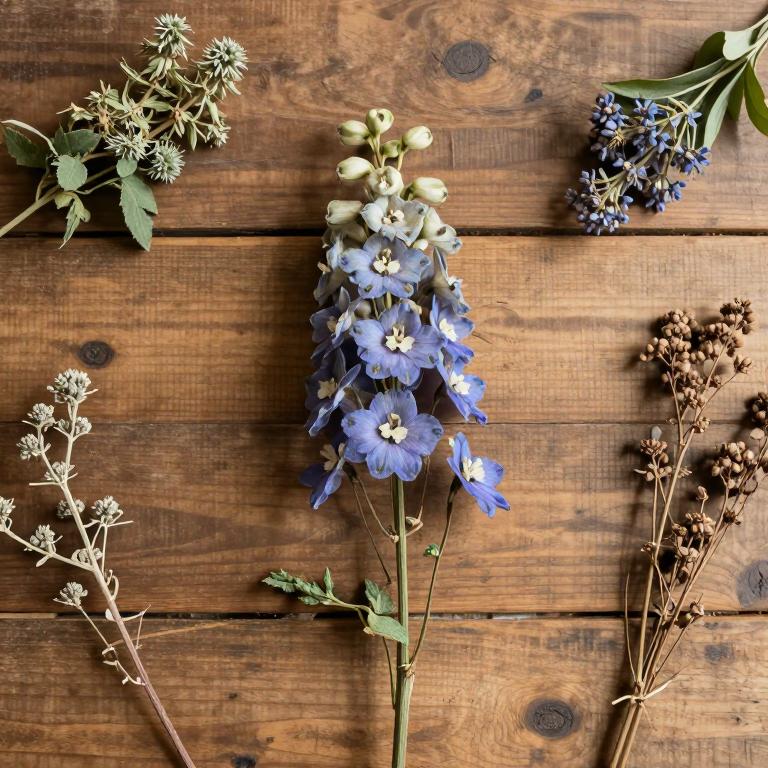
Delphinium consolida, scientifically known as Delphinium consolida, is a striking perennial herb celebrated for its elegant, spurred flowers. Beyond its ornamental beauty, this plant has historical significance in traditional medicine. It is often studied for its complex alkaloids, which possess diverse pharmacological properties and potential therapeutic applications.
- Family
- Not available
- Native range
- Europe
- Parts used
- Seed
- Common names
- Not available
- Scientific synonyms
- Not available
Names and Synonyms
Scientific Names
Accepted name
Delphinium consolidaDistribution
This plant exhibits a specific distribution across several regions of the European continent. In Northern Europe, its presence is documented in the countries of Denmark, Finland, Norway, and Sweden. Moving southward, the species can also be found within the borders of Middle Europe. Specifically, it inhabits the landscape of Austria. These locations represent the primary geographical range for Delphinium consolida.
| Region | Area |
|---|---|
| Northern Europe | Denmark |
| Northern Europe | Finland |
| Northern Europe | Norway |
| Northern Europe | Sweden |
| Middle Europe | Austria |
| Middle Europe | Belgium |
| Middle Europe | Czechia-Slovakia |
| Middle Europe | Germany |
| Middle Europe | Hungary |
| Middle Europe | Poland |
Sources: The World Checklist of Vascular Plants (WCVP)
Botanical Identification
Ecology
The ecology of Delphinium consolidatum is characterized by its ability to colonize disturbed and open environments, frequently manifesting in anthropogenic landscapes such as crop fields and roadsides. These habitats provide the necessary sunlight and soil disturbance that favor its growth patterns. By establishing itself in these transitional zones, the species leverages the nutrient availability and modified soil structures often found in agricultural margins and along transport corridors.
- Habitat :
- crop fields, roadsides
Life history
The life history of Delphinium consolidare is characterized by an annual lifecycle, meaning the plant completes its entire developmental process from germination to seed production within a single growing season. As a therophyte, it survives the unfavorable seasons through highly resistant seeds rather than through persistent vegetative structures above the ground. This species exhibits a deciduous nature, shedding its foliage as it completes its seasonal cycle.
- Deciduousness :
- deciduous
- Life form :
- therophyte
- Lifecycle :
- annual
Morphology
The morphology of Delphinium consolidare is characterized by its growth form as a non-woody herb and forb. This terrestrial plant is independent, functioning as neither a parasite nor an epiphyte, and it maintains a self-supporting structure rather than acting as a climber, liana, or vine. The shoots exhibit an erect orientation, growing upward from the ground. In terms of stature, the plant typically reaches a mean height of 0.225 m, though individual specimens can range from a minimum of 0.15 m to a maximum height of 1.2 m.
- Aquatic :
- terrestrial
- Climber :
- self-supporting
- Epiphyte :
- terrestrial
- Growth form :
- herb
- Growth form :
- forb
- Parasite :
- independent
- Plant height max:
- 1.2 m
- Plant height mean:
- 0.225 m
- Plant height min:
- 0.15 m
- Shoot orientation :
- erect
- Woodiness :
- non-woody
Physiology
The physiology of Delphinium consolida is characterized by a C3 photosynthetic pathway, which dictates its carbon fixation processes and metabolic efficiency. The plant exhibits a non-carnivorous nutritional strategy, relying entirely on soil-based nutrient uptake rather than the capture of prey. Its foliar morphology is defined by linear leaf forms, which are notably narrow with a minimum width of 0.1 cm and a maximum width of 0.2 cm. These leaves possess a mean surface area of 3.9568 cm², contributing to a mean Specific Leaf Area (SLA) of 243.8 cm²/g, a value that reflects the plant's leaf mass per area and its strategy for balancing light interception with water-use efficiency.
- Carnivory :
- non-carnivorous
- Leaf form :
- linear
- Leaf size mean:
- 3.9568 cm²
- Leaf width max:
- 0.2 cm
- Leaf width min:
- 0.1 cm
- Photosynthetic pathway :
- C3
- Specific Leaf Area (SLA) mean:
- 243.8 cm²/g
Reproduction
The reproduction of Delphinium consolida is characterized by a specialized sexual process, as asexual reproduction is notably absent. The flowering period typically commences in June and concludes in August, producing flowers that exhibit a distinct blue color. These flowers are relatively small, with lengths ranging from a minimum of 0.12 cm to a maximum of 0.15 cm. The plant relies on biotic pollination syndromes, specifically utilizing insects, with bees serving as a primary pollinator. Self-fertilization is absent, ensuring genetic diversity through cross-pollination. Following fertilization, the plant develops fruit in the form of a capsule. This fruit is dehiscent, meaning it opens at maturity to facilitate seed dispersal. The dispersal syndrome is classified as autochorous, where seeds are dispersed by the plant's own mechanisms. The resulting seeds are quite minute, with a mean seed mass of approximately 0.00125733325 g, and a mass range spanning from a minimum of 0.00063 g to a maximum of 0.00223 g.
- Dehiscence :
- dehiscent
- Dispersal syndrome :
- autochorous
- Flower colour :
- blue
- Flower length max:
- 0.15 cm
- Flower length min:
- 0.12 cm
- Flowering time :
- Jun
- Flowering time :
- Aug
- Fruit type :
- capsule
- Pollination syndrome :
- insect
- Pollination syndrome :
- bee
- Pollination syndrome :
- biotic
- Reproduction asexual :
- absent
- Seed mass max:
- 0.00223 g
- Seed mass mean:
- 0.00125733325 g
- Seed mass min:
- 0.00063 g
- Self fertilization :
- absent
Sources: Global Inventory of Floras and Traits (GIFT)
Plant Parts
Delphinium consolida has 1 reported plant parts identified across 1 scientific publications and several other databases that are studied for medicinal purposes. The most consistently reported plant part include seed.
| Plant part | Supporting sources | Consensus |
|---|---|---|
| Seed | 1 supporting sources | ★☆☆☆☆ |
Seed
- Biomedical & environmental mass spectrometry
Conditions
Delphinium consolida has 1 reported investigations on conditions identified across 1 scientific publications and several other databases. The most consistently reported conditions include bleeding.
| Condition | Supporting sources | Consensus |
|---|---|---|
| Bleeding | 1 supporting sources | ★☆☆☆☆ |
Bleeding
- Plants (Basel, Switzerland)
Preparations
Delphinium consolida has 1 reported preparations identified across 1 scientific publications and several other databases. The most consistently reported preparations include seed oils.
| Preparation | Supporting sources | Consensus |
|---|---|---|
| Seed oils | 1 supporting sources | ★☆☆☆☆ |
Seed oils
- Biomedical & environmental mass spectrometry