Decaspermum blancoi
Decaspermum blancoi · Accepted scientific name
Scientific literature: Very Extensive (655 studies) · ★★★★★
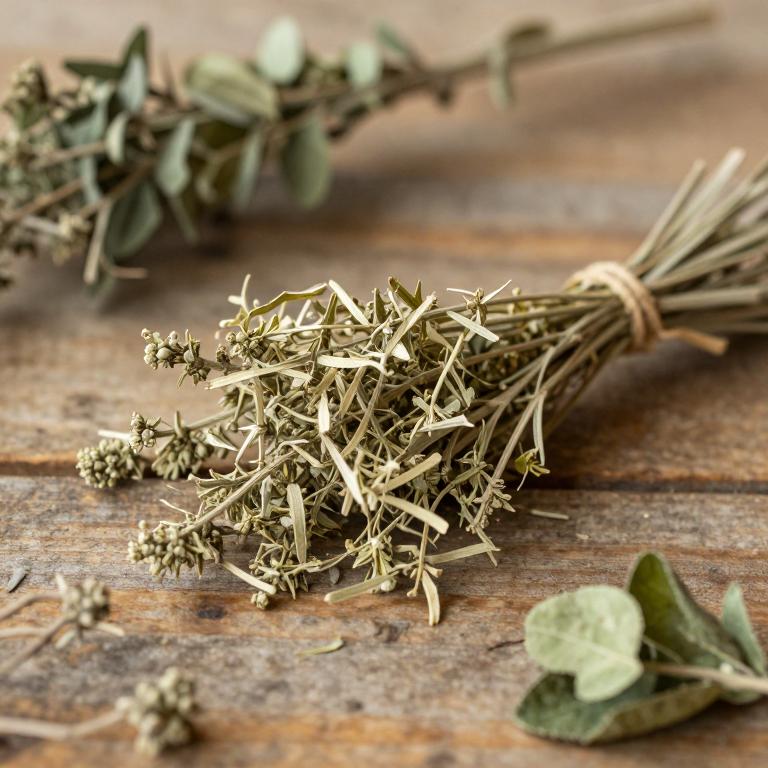
, scientifically known as Decaspermum blancoi, is a significant medicinal plant native to the Philippines. Often referred to as "limon" or "citrus," it is valued in traditional medicine for its potent antimicrobial and antioxidant properties. This aromatic shrub offers diverse therapeutic potential for treating various ailments and promoting overall wellness.
- Family
- Myrtaceae
- Native range
- Asia-Tropical
- Parts used
- Leaf · Fruit
- Common names
- Not available
- Scientific synonyms
- Nelitris Rubra · Decaspermum Grandiflorum
Names and Synonyms
Scientific Names
Accepted name
Decaspermum blancoiSynonyms
- Nelitris rubra
- Decaspermum grandiflorum
Sources: Wikidata, Catalogue of Life
Taxonomical Classification
This plant belongs to the kingdom Plantae and is classified under the phylum Streptophyta within the class Equisetopsida. Following the subclass Magnoliidae, it is organized into the order Myrtales and the family Myrtaceae. Ultimately, it is identified by the genus Decaspermum.
| Rank | Classification |
|---|---|
| Kingdom | Plantae |
| Phylum | Streptophyta |
| Class | Equisetopsida |
| Subclass | Magnoliidae |
| Order | Myrtales |
| Family | Myrtaceae |
| Genus | Decaspermum |
Sources: The World Checklist of Vascular Plants (WCVP)
Distribution
This plant is found within the diverse tropical regions of the Malesia botanical zone. Specifically, its natural occurrence is documented in the Philippines. This localized distribution highlights its significance to the unique ecosystems found in the archipelago. Within this specific geographical range, the species thrives under favorable environmental conditions. Consequently, its presence is a key characteristic of the Philippine botanical landscape.
| Region | Area |
|---|---|
| Malesia | Philippines |
Sources: The World Checklist of Vascular Plants (WCVP)
Botanical Identification
Life history
The life history of Decaspercum blancoi is characterized by its classification as a phanerophyte, a life form where the perennating buds are located high above the ground on woody stems. Within this botanical framework, the species exhibits a specific growth habit identified as a phanerophyte (Life_form_1), ensuring its survival through unfavorable seasons by protecting its regenerative tissues on elevated structures. Furthermore, its ecological positioning can be more granularly described as a phanerophyte (Life_form_2), which encompasses various strategies for perennial survival, though it specifically relies on the woody structural stability characteristic of this group to maintain its presence in its natural habitat.
- Life form :
- phanerophyte
Morphology
The morphology of Decaspercum blancoi is characterized by its distinct growth habit and structural composition. It functions as a self-supporting climber, utilizing its physical structure to ascend. Although it exhibits climbing tendencies, it is classified as an independent organism rather than a parasite, meaning it does not rely on a host for nutrients. Furthermore, while it occupies various ecological niches, its primary growth form is terrestrial rather than epiphytic. In terms of texture and structural rigidity, the plant possesses a woody constitution, providing the necessary firmness to support its climbing mechanism.
- Climber :
- self-supporting
- Epiphyte :
- terrestrial
- Parasite :
- independent
- Woodiness :
- woody
Sources: Global Inventory of Floras and Traits (GIFT)
Plant Parts
Decaspermum blancoi has 3 reported plant parts identified across 14 scientific publications and several other databases that are studied for medicinal purposes. The most consistently reported plant part include leaf, fruit, seed.
| Plant part | Supporting sources | Consensus |
|---|---|---|
| Leaf | 9 supporting sources | ★★★★☆ |
| Fruit | 4 supporting sources | ★★☆☆☆ |
| Seed | 1 supporting sources | ★☆☆☆☆ |
Leaf
- BioMed research international
- Current medical mycology
- Zhongguo Zhong yao za zhi = Zhongguo zhongyao zazhi = China journal of Chinese materia medica
- Natural product research
- Organic letters
View 4 additional sources
- Pharmaceuticals (Basel, Switzerland)
- Journal of food science and technology
- Journal of evidence-based integrative medicine
- Acta parasitologica
Fruit
- Pharmaceutical biology
- Journal of separation science
- Journal of food science and technology
- Antioxidants (Basel, Switzerland)
Seed
- Fitoterapia
Chemicals
Decaspermum blancoi has 150 reported phytochemicals identified across 14 scientific publications and several other databases. The most consistently reported chemicals include 1,8-Cineole, Linalool, Flavonoids, Anthocyanins, Myrtenyl acetate.
| Chemical | Supporting sources | Consensus |
|---|---|---|
| 1,8-Cineole | 9 supporting sources | ★★★★☆ |
| Linalool | 7 supporting sources | ★★★★☆ |
| Flavonoids | 6 supporting sources | ★★★☆☆ |
| Anthocyanins | 5 supporting sources | ★★★☆☆ |
| Myrtenyl acetate | 4 supporting sources | ★★☆☆☆ |
| Tannins | 4 supporting sources | ★★☆☆☆ |
| Borneol | 3 supporting sources | ★★☆☆☆ |
| CARVACROL | 3 supporting sources | ★★☆☆☆ |
| GERANYL ACETATE | 3 supporting sources | ★★☆☆☆ |
| LIMONENE | 3 supporting sources | ★★☆☆☆ |
1,8-Cineole
- Dr. Duke
- Experimental parasitology
- Chemistry & biodiversity
- RSC advances
- Asian Pacific journal of tropical biomedicine
View 4 additional sources
- Journal of complementary & integrative medicine
- Natural product research
- Foods (Basel, Switzerland)
- Molecules (Basel, Switzerland)
Linalool
- Dr. Duke
- Chemistry & biodiversity
- Molecules (Basel, Switzerland)
- RSC advances
- Asian Pacific journal of tropical biomedicine
View 2 additional sources
- Natural product research
- Foods (Basel, Switzerland)
Flavonoids
- Microbial cell factories
- Molecules (Basel, Switzerland)
- Journal of food science and technology
- Journal of evidence-based complementary & alternative medicine
- Medical mycology
View 1 additional sources
- BMC complementary medicine and therapies
Anthocyanins
- Microbial cell factories
- Pharmaceutical biology
- Journal of food science and technology
- Scientific reports
- World journal of clinical cases
Myrtenyl acetate
- Dr. Duke
- Chemistry & biodiversity
- Molecules (Basel, Switzerland)
- Foods (Basel, Switzerland)
Tannins
- Journal of pharmacy & bioallied sciences
- Journal of evidence-based complementary & alternative medicine
- Medical mycology
- BMC complementary medicine and therapies
Borneol
- Dr. Duke
- Scientific reports
- Experimental parasitology
CARVACROL
- Dr. Duke
- Scientific reports
- Chemistry & biodiversity
GERANYL ACETATE
- Dr. Duke
- Journal of complementary & integrative medicine
- Molecules (Basel, Switzerland)
LIMONENE
- Dr. Duke
- Chemistry & biodiversity
- RSC advances
Activities
Decaspermum blancoi has 380 reported activities identified across 14 scientific publications and several other databases. The most consistently reported activities include Antioxidant, Antibacterial, Anticancer, Antimicrobial, Antiseptic.
| Activity | Supporting sources | Consensus |
|---|---|---|
| Antioxidant | 10 supporting sources | ★★★★★ |
| Antibacterial | 7 supporting sources | ★★★★☆ |
| Anticancer | 5 supporting sources | ★★★☆☆ |
| Antimicrobial | 4 supporting sources | ★★☆☆☆ |
| Antiseptic | 4 supporting sources | ★★☆☆☆ |
| Antifungal | 3 supporting sources | ★★☆☆☆ |
| Antiproliferative | 2 supporting sources | ★☆☆☆☆ |
| Antispasmodic | 2 supporting sources | ★☆☆☆☆ |
| Antiulcer | 2 supporting sources | ★☆☆☆☆ |
| Antiviral | 2 supporting sources | ★☆☆☆☆ |
Antioxidant
- Dr. Duke
- Scientific reports
- Molecules (Basel, Switzerland)
- Natural product research
- Antioxidants (Basel, Switzerland)
View 5 additional sources
- Pharmaceutical biology
- Nutrients
- Galen medical journal
- Journal of evidence-based complementary & alternative medicine
- Biomedicine & pharmacotherapy = Biomedecine & pharmacotherapie
Antibacterial
- Dr. Duke
- Current medical mycology
- Natural product research
- Foods (Basel, Switzerland)
- ACS omega
View 2 additional sources
- Pharmaceutical biology
- Phytotherapy research : PTR
Anticancer
- Dr. Duke
- Scientific reports
- Pharmaceuticals (Basel, Switzerland)
- Journal of evidence-based complementary & alternative medicine
- Phytotherapy research : PTR
Antimicrobial
- BioMed research international
- Natural product research
- Galen medical journal
- Journal of evidence-based complementary & alternative medicine
Antiseptic
- Dr. Duke
- RSC advances
- Journal of complementary & integrative medicine
- Biomedicine & pharmacotherapy = Biomedecine & pharmacotherapie
Antifungal
- Current medical mycology
- Natural product research
- Phytotherapy research : PTR
Antiproliferative
- Dr. Duke
- Molecules (Basel, Switzerland)
Antispasmodic
- Dr. Duke
- Journal of evidence-based complementary & alternative medicine
Antiulcer
- Dr. Duke
- Journal of evidence-based complementary & alternative medicine
Antiviral
- Dr. Duke
- Phytotherapy research : PTR
Preparations
Decaspermum blancoi has 20 reported preparations identified across 14 scientific publications and several other databases. The most consistently reported preparations include essential oils, aqueous extracts, essential oil, 80% ethanol extracts, 80% methanol extracts of the leaves.
| Preparation | Supporting sources | Consensus |
|---|---|---|
| Essential oils | 6 supporting sources | ★★★☆☆ |
| Aqueous extracts | 2 supporting sources | ★☆☆☆☆ |
| Essential oil | 2 supporting sources | ★☆☆☆☆ |
| 80% ethanol extracts | 1 supporting sources | ★☆☆☆☆ |
| 80% methanol extracts of the leaves | 1 supporting sources | ★☆☆☆☆ |
| Aqueous ethanol extracts | 1 supporting sources | ★☆☆☆☆ |
| Eos | 1 supporting sources | ★☆☆☆☆ |
| Methanolic extract ointment | 1 supporting sources | ★☆☆☆☆ |
| Myrtus extract | 1 supporting sources | ★☆☆☆☆ |
| Aqueous extract | 1 supporting sources | ★☆☆☆☆ |
Essential oils
- Natural product communications
- Experimental parasitology
- Foods (Basel, Switzerland)
- Malaria journal
- Journal of arthropod-borne diseases
View 1 additional sources
- Plants (Basel, Switzerland)
Aqueous extracts
- ACS omega
- Preparative biochemistry & biotechnology
Essential oil
- Journal of complementary & integrative medicine
- Natural product research
80% ethanol extracts
- Journal of ethnopharmacology
80% methanol extracts of the leaves
- Journal of evidence-based integrative medicine
Aqueous ethanol extracts
- Pakistan journal of pharmaceutical sciences
Eos
- Current microbiology
Methanolic extract ointment
- BioMed research international
Myrtus extract
- Antioxidants (Basel, Switzerland)
Aqueous extract
- Acta parasitologica