angel's trumpet
Datura innoxia · Accepted scientific name
Scientific literature: Very Extensive (218 studies) · ★★★★★
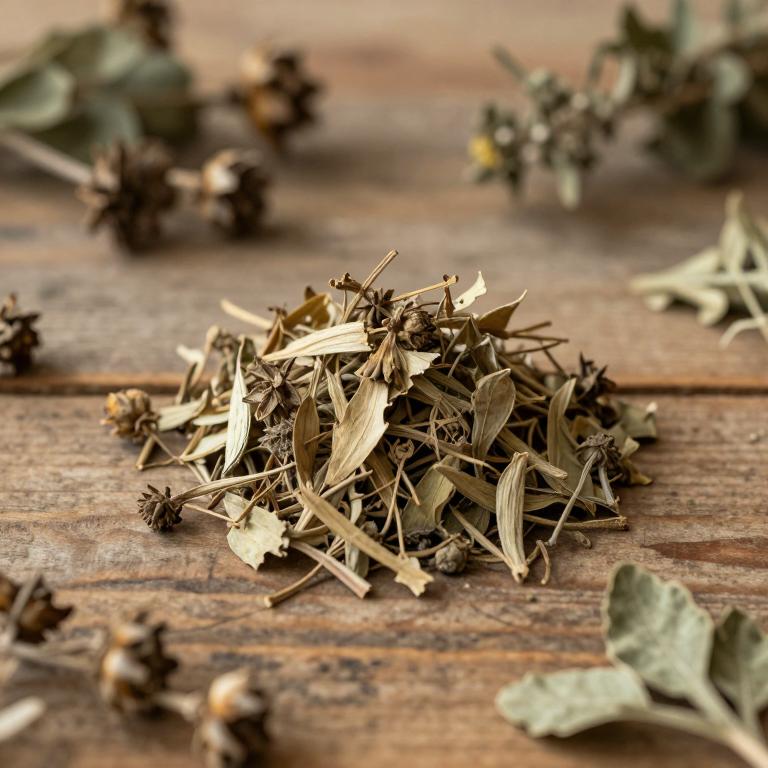
Angel's trumpet, scientifically known as Datura innoxia, is a striking perennial herb celebrated for its large, trumpet-shaped white flowers. While visually captivating, this plant contains potent tropane alkaloids, making it highly toxic. It is traditionally studied in ethnobotany for its profound psychoactive properties and historical medicinal applications.
Names and Synonyms
Common Names
- angel's trumpet
- downy thorn-apple
- Recurved Thorn-apple
- Fireweed
- Joy Juice
- Indian-apple
- angel's-trumpet
- angel’s trumpet
- hoary thorn-apple
- sacred datura
- thorn-apple
- Downy Thorn Apple
- Hairy Thorn Apple
- Hairy Thorn-apple
- Indian Apple
- Moonflower
- Prickly Datura
- Pricklyburr Datura
- Silky Thorn Apple
- White Thorn Apple
- pricklyburr
Scientific Names
Accepted name
Datura innoxiaSynonyms
- Datura guayaquilensis
- Datura meteloides
- Datura velutinosa
Regional and Traditional Names
Spanish:
- cacaito
- toloache
German:
- Feinstacheliger Stechapfel
- Grossbluetiger Stechapfel
- Weichstachliger Stechapfel
- Großblütiger Stechapfel
French:
- stramoine inoffensive
- stramoine à grandes fleurs
- datura innocente
- Stramoine a grandes fleurs
- Datura faux métel
- Faux métel
- Herbe à Sitarane
- Trompette-de-la-mort
Sources: Wikidata, Catalogue of Life
Taxonomical Classification
This plant belongs to the kingdom Plantae and the phylum Streptophyta, falling under the class Equisetopsida and subclass Magnoliidae. Within the order Solanales and family Solanaceae, it is specifically classified under the genus Datura. Thus, its formal taxonomic designation is Datura innoxia.
| Rank | Classification |
|---|---|
| Kingdom | Plantae |
| Phylum | Streptophyta |
| Class | Equisetopsida |
| Subclass | Magnoliidae |
| Order | Solanales |
| Family | Solanaceae |
| Genus | Datura |
Sources: The World Checklist of Vascular Plants (WCVP)
Distribution
This plant exhibits a varied geographical presence across several distinct regions of the European continent. In Northern Europe, its distribution can be observed within the borders of Great Britain. Moving into Middle Europe, the species is found in both Germany and the regions of Czechia and Slovakia. Its range extends further south to include parts of Southwestern Europe. Specifically, it is documented inhabiting the landscapes of France and the Baleares islands.
| Region | Area |
|---|---|
| Northern Europe | Great Britain |
| Middle Europe | Czechia-Slovakia |
| Middle Europe | Germany |
| Southwestern Europe | Baleares |
| Southwestern Europe | France |
| Southwestern Europe | Portugal |
| Southwestern Europe | Sardegna |
| Southwestern Europe | Spain |
| Southeastern Europe | Bulgaria |
| Southeastern Europe | Greece |
Sources: The World Checklist of Vascular Plants (WCVP)
Botanical Identification
Ecology
The ecology of Datura innoxia is characterized by its adaptability to diverse landscapes, ranging from sea level to a maximum elevation of 1600 m AMSL. It thrives in specific environmental niches, frequently inhabiting anthropogenic areas (Área Antrópica) as well as the semi-arid Caatinga (strictu sensu) biome. To survive in these habitats, the plant employs active defense mechanisms, utilizing chemical or physical deterrents to protect itself from herbivory.
- Defense :
- yes
- Elevational range max:
- 1600 m AMSL
- Elevational range min:
- 0 m AMSL
- Habitat :
- Área Antrópica, Caatinga (stricto sensu)
Life history
The life history of Datura innoxia is characterized by its status as an annual plant, completing its entire developmental cycle from germination to seed production within a single growing season. As a therophyte, it survives the unfavorable seasons primarily in the form of seeds, which remain dormant until environmental conditions become conducive to growth. This life form allows the species to effectively colonize disturbed habitats and exploit seasonal resources, relying on the rapid maturation of its vegetative and reproductive structures to ensure the continuity of the next generation before the onset of dormancy.
- Life form :
- therophyte
- Lifecycle :
- annual
Morphology
The morphology of Datura innoxia is characterized by its growth form as a non-woody herb. As a terrestrial plant, it functions as an independent organism, neither acting as a parasite nor an epiphyte. The plant is self-supporting rather than a climber or liana, maintaining a structural habit that does not require external support. In terms of stature, it exhibits variable height, typically ranging from a minimum of 0.3 m to a maximum of 2 m, with an average plant height of approximately 1 m.
- Aquatic :
- terrestrial
- Climber :
- self-supporting
- Epiphyte :
- terrestrial
- Growth form :
- herb
- Parasite :
- independent
- Plant height max:
- 2 m
- Plant height mean:
- 1 m
- Plant height min:
- 0.3 m
- Woodiness :
- non-woody
Physiology
The physiology of Datura innoxia is characterized by a C3 photosynthetic pathway, which dictates its carbon fixation processes and metabolic efficiency. Its vegetative morphology features elliptic-shaped leaves that vary significantly in size, with lengths ranging from a minimum of 4 cm to a maximum of 20 cm, and widths spanning from 1.3 cm to 12 cm. Furthermore, the plant does not function as a nitrogen fixer, relying instead on available soil nitrogen for its nutritional requirements and growth.
- Leaf form :
- elliptic
- Leaf length max:
- 20 cm
- Leaf length min:
- 4 cm
- Leaf width max:
- 12 cm
- Leaf width min:
- 1.3 cm
- Nitrogen fixer :
- no
- Photosynthetic pathway :
- C3
Reproduction
The reproduction of Datura innoxia is characterized by a biotic pollination syndrome, primarily facilitated by insects. The plant produces large, white flowers that typically measure between 14 cm and 16.5 cm in length. The flowering period is seasonal, generally beginning in August and concluding in October, though the timing can be variable. Following successful pollination, the plant develops fruit in the form of a capsule. These capsules are dehiscence-type, meaning they open at maturity to release the seeds. The seeds themselves exhibit a range of masses, with a minimum weight of approximately 0.0088 g, a mean mass of roughly 0.0167 g, and a maximum weight of up to 0.1226 g.
- Dehiscence :
- dehiscent
- Flower colour :
- white
- Flower length max:
- 16.5 cm
- Flower length min:
- 14 cm
- Flowering time :
- Aug
- Flowering time :
- Oct
- Fruit type :
- capsule
- Pollination syndrome :
- insect
- Pollination syndrome :
- biotic
- Seed mass max:
- 0.1226 g
- Seed mass mean:
- 0.0167287373333333 g
- Seed mass min:
- 0.0088 g
Sources: Global Inventory of Floras and Traits (GIFT)
Plant Parts
Datura innoxia has 4 reported plant parts identified across 8 scientific publications and several other databases that are studied for medicinal purposes. The most consistently reported plant part include leaf, seed, fruit, root.
| Plant part | Supporting sources | Consensus |
|---|---|---|
| Leaf | 3 supporting sources | ★★☆☆☆ |
| Seed | 3 supporting sources | ★★☆☆☆ |
| Fruit | 1 supporting sources | ★☆☆☆☆ |
| Root | 1 supporting sources | ★☆☆☆☆ |
Leaf
- African journal of traditional, complementary, and alternative medicines : AJTCAM
- Frontiers in microbiology
- Scientific reports
Seed
- African journal of traditional, complementary, and alternative medicines : AJTCAM
- Zhongguo Zhong yao za zhi = Zhongguo zhongyao zazhi = China journal of Chinese materia medica
- Zhongguo yi xue ke xue yuan xue bao. Acta Academiae Medicinae Sinicae
Fruit
- Zeitschrift fur Naturforschung. C, Journal of biosciences
Root
- Clinical neuropharmacology
Chemicals
Datura innoxia has 49 reported phytochemicals identified across 8 scientific publications and several other databases. The most consistently reported chemicals include scopolamine, hyoscyamine, ATROPINE, Flavonoids, Meteloidine.
| Chemical | Supporting sources | Consensus |
|---|---|---|
| scopolamine | 4 supporting sources | ★★☆☆☆ |
| hyoscyamine | 3 supporting sources | ★★☆☆☆ |
| ATROPINE | 2 supporting sources | ★☆☆☆☆ |
| Flavonoids | 2 supporting sources | ★☆☆☆☆ |
| Meteloidine | 2 supporting sources | ★☆☆☆☆ |
| 3alpha,6beta-Ditigloyloxytropane | 1 supporting sources | ★☆☆☆☆ |
| 7-Hydroxy-3,6-ditigloyloxytropane | 1 supporting sources | ★☆☆☆☆ |
| ANTHOCYANIN | 1 supporting sources | ★☆☆☆☆ |
| Apoatropine | 1 supporting sources | ★☆☆☆☆ |
| CATECHIN | 1 supporting sources | ★☆☆☆☆ |
scopolamine
- Dr. Duke
- Clinical neuropharmacology
- Plant physiology and biochemistry : PPB
- Frontiers in microbiology
hyoscyamine
- Dr. Duke
- Plant physiology and biochemistry : PPB
- Plant science : an international journal of experimental plant biology
ATROPINE
- Dr. Duke
- Clinical neuropharmacology
Flavonoids
- African journal of traditional, complementary, and alternative medicines : AJTCAM
- BMC plant biology
Meteloidine
- Dr. Duke
- Journal of biomolecular structure & dynamics
3alpha,6beta-Ditigloyloxytropane
- Dr. Duke
7-Hydroxy-3,6-ditigloyloxytropane
- Dr. Duke
ANTHOCYANIN
- BMC plant biology
Apoatropine
- Dr. Duke
CATECHIN
- BMC complementary and alternative medicine
Activities
Datura innoxia has 118 reported activities identified across 8 scientific publications and several other databases. The most consistently reported activities include Antioxidant, Cytotoxic, Toxic, Aldose-Reductase-Inhibitor, Allelochemic.
| Activity | Supporting sources | Consensus |
|---|---|---|
| Antioxidant | 2 supporting sources | ★☆☆☆☆ |
| Cytotoxic | 2 supporting sources | ★☆☆☆☆ |
| Toxic | 2 supporting sources | ★☆☆☆☆ |
| Aldose-Reductase-Inhibitor | 1 supporting sources | ★☆☆☆☆ |
| Allelochemic | 1 supporting sources | ★☆☆☆☆ |
| Allergenic | 1 supporting sources | ★☆☆☆☆ |
| Amnesigenic | 1 supporting sources | ★☆☆☆☆ |
| Analgesic | 1 supporting sources | ★☆☆☆☆ |
| Anesthetic | 1 supporting sources | ★☆☆☆☆ |
| Anhydrotic | 1 supporting sources | ★☆☆☆☆ |
Antioxidant
- Dr. Duke
- BMC complementary and alternative medicine
Cytotoxic
- Dr. Duke
- BMC complementary and alternative medicine
Toxic
- Dr. Duke
- Zeitschrift fur Naturforschung. C, Journal of biosciences
Aldose-Reductase-Inhibitor
- Dr. Duke
Allelochemic
- Dr. Duke
Allergenic
- Dr. Duke
Amnesigenic
- Dr. Duke
Analgesic
- Dr. Duke
Anesthetic
- Dr. Duke
Anhydrotic
- Dr. Duke
Conditions
Datura innoxia has 6 reported investigations on conditions identified across 8 scientific publications and several other databases. The most consistently reported conditions include Aspergillus niger, Micrococcus luteus, cognitive decline, coma, delirium.
| Condition | Supporting sources | Consensus |
|---|---|---|
| Aspergillus niger | 1 supporting sources | ★☆☆☆☆ |
| Micrococcus luteus | 1 supporting sources | ★☆☆☆☆ |
| Cognitive decline | 1 supporting sources | ★☆☆☆☆ |
| Coma | 1 supporting sources | ★☆☆☆☆ |
| Delirium | 1 supporting sources | ★☆☆☆☆ |
| Dementia | 1 supporting sources | ★☆☆☆☆ |
Aspergillus niger
- BMC complementary and alternative medicine
Micrococcus luteus
- BMC complementary and alternative medicine
Cognitive decline
- Journal of biomolecular structure & dynamics
Coma
- Clinical neuropharmacology
Delirium
- Clinical neuropharmacology
Dementia
- Journal of biomolecular structure & dynamics
Preparations
Datura innoxia has 9 reported preparations identified across 8 scientific publications and several other databases. The most consistently reported preparations include aerial parts (except fruits), hydroponically-inoculated with Agrobacterium rhizogenes, leaf extract, leaves, methanolic leaf and seed extracts.
| Preparation | Supporting sources | Consensus |
|---|---|---|
| Aerial parts (except fruits) | 1 supporting sources | ★☆☆☆☆ |
| Hydroponically-inoculated with agrobacterium rhizogenes | 1 supporting sources | ★☆☆☆☆ |
| Leaf extract | 1 supporting sources | ★☆☆☆☆ |
| Leaves | 1 supporting sources | ★☆☆☆☆ |
| Methanolic leaf and seed extracts | 1 supporting sources | ★☆☆☆☆ |
| Methanolic leaf extracts | 1 supporting sources | ★☆☆☆☆ |
| Root | 1 supporting sources | ★☆☆☆☆ |
| Seeds | 1 supporting sources | ★☆☆☆☆ |
| Suspension cultures | 1 supporting sources | ★☆☆☆☆ |
Aerial parts (except fruits)
- Zeitschrift fur Naturforschung. C, Journal of biosciences
Hydroponically-inoculated with agrobacterium rhizogenes
- Plant science : an international journal of experimental plant biology
Leaf extract
- African journal of traditional, complementary, and alternative medicines : AJTCAM
Leaves
- Scientific reports
Methanolic leaf and seed extracts
- African journal of traditional, complementary, and alternative medicines : AJTCAM
Methanolic leaf extracts
- Frontiers in microbiology
Root
- Clinical neuropharmacology
Seeds
- Zhongguo Zhong yao za zhi = Zhongguo zhongyao zazhi = China journal of Chinese materia medica
Suspension cultures
- The Journal of biological chemistry